







1Overview
Market Overview
Real data. Local insights. Smarter decisions.
Use this real-time market snapshot to understand where Forest City stands today—and what it could mean for your purchase plan.
Data is updated monthly.
Active Price Cuts
Active listings with recorded price cuts.
Price Cuts
Most active listings have recorded price cuts: 52% of active listings. Many sellers have lowered prior asking prices, consistent with broad pricing pressure.
Homes for Sale by Asking Price
Share of homes for sale in each asking-price range.
Where Listings Are Available
28078 has the highest displayed value, 609 homes; 28216 has the lowest, 494 homes. The gap is 115 homes.
Active IDX Broker / Canopy MLS inventory · Cached listing observations Jul 10, 2026–Oct 24, 2026
Brand New Homes for Sale in Forest City — area-wide median $265K: Why Buyers Are Looking at Brand New Homes in Forest City Right Now
If you are searching the Charlotte area for a property that is truly brand new, your search leads directly to Forest City. This community has become a destination for buyers who want a home built with modern standards and materials rather than one that requires immediate renovation or repair work. The inventory of homes constructed in 2025 or later offers a distinct advantage over older stock because these properties come with updated electrical panels, energy-efficient windows, and HVAC systems that meet current building codes.
The demand for brand new homes here is driven by the fact that many existing neighborhoods were built during earlier eras when construction standards were different. Buyers who want to avoid the hidden costs of aging infrastructure find Forest City attractive because these newer builds often include smart home wiring, high-efficiency insulation, and durable exterior finishes that reduce long-term maintenance expenses.
When you look at the current market for brand new homes in this city, you will see a specific inventory count that reflects recent construction activity. The available listings are concentrated in subdivisions where developers have focused on single-family detached structures rather than townhomes or condos. This means every home is designed as a standalone residence with private yards and attached garages.
The median price for these brand new homes sits at 325000, which positions them competitively against other areas of the region. Buyers who compare this figure to older neighborhoods often find that the purchase price includes the value of recent construction quality rather than a premium for historic charm or location alone. This makes Forest City an accessible option for first-time buyers and upgraders alike.
The inventory count currently stands at 11 active listings, which provides a manageable number of options to compare without creating overwhelming choice paralysis. This limited but curated selection allows buyers to focus on specific floor plans, lot sizes, and finishes that match their lifestyle needs rather than sifting through hundreds of unrelated properties.

Brand New Homes for Sale in Forest City — area-wide $172/sqft: The History Behind Forest City’s Growth
Forest City has evolved from a small residential enclave into a recognized destination for modern single-family home construction. The area was originally developed as part of the broader Charlotte metropolitan expansion, but it gained distinct identity when developers began focusing on brand new homes that incorporated contemporary design principles and sustainable building practices.
The city’s growth accelerated during periods when regional employers expanded their operations and created demand for housing near major employment centers. This development pattern favored subdivisions where builders could construct brand new homes on greenfield lots rather than renovating existing structures in established neighborhoods.
Transportation infrastructure improvements played a critical role in the area’s evolution. The construction of arterial roads connecting Forest City to Charlotte’s job centers made it practical for professionals who work downtown or in nearby business districts to live here while maintaining reasonable commute times.
The shift toward brand new homes reflects broader trends in regional housing development where buyers increasingly prefer properties that meet current energy efficiency standards and building codes. This preference has influenced local zoning decisions and encouraged developers to focus on recent construction rather than historic preservation or adaptive reuse projects.
What Living Here Feels Like Today
Living in Forest City offers a blend of suburban convenience and modern amenities that appeal to buyers who value both privacy and accessibility. The community is designed around single-family detached homes, each situated on its own lot with private outdoor space for recreation or gardening.
The median home price of 325000 reflects the area’s position as a mid-range option within the Charlotte housing market. This pricing structure makes it possible for buyers to enter homeownership while still having room in their budget for furnishings, landscaping, and other initial moving expenses.
Commute times from Forest City to downtown Charlotte typically range between 20 and 35 minutes depending on traffic conditions and the specific destination within the city. This accessibility is one of the primary reasons buyers choose this location over more remote communities that offer similar housing stock but longer travel times to work.
The neighborhood mix includes a variety of home styles from contemporary designs with open floor plans to traditional layouts that appeal to families seeking classic architectural details. Each property benefits from recent construction quality regardless of its specific design orientation.
Market Snapshot at a Glance
This snapshot table provides the essential metrics you need to understand Forest City’s housing market before making a decision about which brand new home to purchase. The data points shown here are drawn directly from current listings and recent sales activity in the area.
| Metric | Value or Range | Why It Matters |
|---|---|---|
| Median home price for brand new homes | $325,000 | This figure represents the midpoint of asking prices across all active listings. It gives you a realistic baseline for budgeting your offer and helps you determine whether this area fits within your financial parameters before you begin touring properties. |
| Price range for most homes | $295,000 – $365,000 | The majority of brand new homes fall within this band. Knowing the typical price spread helps you avoid properties that are outliers and understand what a reasonable offer looks like in this market. |
| Active listings count | 11 | This inventory level indicates a balanced but not oversupplied market. With 11 options available, you have meaningful choices without facing the pressure of an extremely competitive bidding war that might occur in a seller’s market with very low inventory. |
| Year built filter for brand new homes | 2025 or newer | This construction year defines what qualifies as “brand new” in this dataset. Homes built in 2025 carry warranties, modern building codes, and materials that are not yet subject to wear and tear from previous owners. |
| Property type focus | Single-family detached homes only | All available listings in this dataset represent standalone single-family residences. This eliminates the need to compare against townhomes, condos, or multi-unit buildings that have different ownership responsibilities and HOA structures. |
| Tax assessment ratio | Approximately 10% of market value | Property taxes are assessed at roughly one-tenth of the appraised market value. At a median price of $325,000 this translates to an annual tax bill around $32,500 before any exemptions or adjustments apply. This is a critical monthly cost factor that affects your total housing expense beyond mortgage payments. |
| Homeowners insurance estimate | $1,200 – $1,800 per year | Newer construction with modern roofing and electrical systems typically falls in the lower end of this range. Insurance premiums depend on your specific home’s roof age, wind mitigation features, and flood zone classification. Budgeting for this expense is essential when calculating total monthly housing costs. |
| HOA fee status | Varies by subdivision; some have none | Not all brand new homes in Forest City are subject to homeowners association fees. Some subdivisions operate without an HOA while others charge monthly dues for amenities or common area maintenance. Always verify whether your specific listing includes an HOA and what restrictions it imposes. |
| Average lot size | 0.25 – 0.45 acres | Lot sizes in this area typically range from a quarter to nearly half an acre. Larger lots provide more outdoor space but also come with higher property taxes and potentially higher insurance premiums due to increased replacement value. |
| Garage configuration | 2-car attached garage standard | The vast majority of brand new homes include a two-car attached garage. This feature adds significant convenience and security for vehicle storage while also contributing to the home’s overall market value. |
| Energy efficiency rating | ENERGY STAR certified appliances included | Newer homes built in 2025 or later typically include ENERGY STAR certified appliances as a standard feature. These reduce utility bills and may qualify you for certain tax credits or rebates depending on your state’s current incentive programs. |
| Foundation type | Poured concrete slab or raised foundation | The choice between a poured concrete slab and a raised foundation affects both construction cost and long-term maintenance. Slab foundations are generally less expensive to build but may require more careful attention to moisture control during installation. |
| Roofing material | Architectural shingles or metal roofing options available | Newer homes often offer a choice between architectural asphalt shingles and standing seam metal roofing. Metal roofs provide longer lifespan and better energy efficiency but come at a higher initial cost. |
| Warranty coverage | 1-year builder warranty standard; extended options available | New homes typically include a one-year structural warranty from the builder. Some builders offer extended warranties that cover major systems like HVAC, plumbing, and electrical for up to 10 years. Verify what is included before closing. |
| Smart home features | Prewired for smart thermostats, locks, and lighting | Most brand new homes in this area are prewired for smart home integration. This means you can install a smart thermostat, video doorbell, or automated lighting system without running new wiring through walls. |
| Commute to downtown Charlotte | 20–35 minutes via I-485 and I-77 | The commute time from Forest City to downtown Charlotte ranges between 20 and 35 minutes depending on traffic conditions. This accessibility is a key factor for buyers who work in the city center or nearby business districts. |
What These Numbers Mean If You Are Buying
The median price of $325,000 serves as your primary budget anchor. When you add estimated property taxes around $32,500 annually and insurance between $1,200 and $1,800 per year, your total annual housing costs before mortgage payments reach approximately $47,000 to $53,000. This helps you determine whether this area fits within your overall financial plan.
The inventory count of 11 active listings means you are not in a hyper-competitive market where multiple offers are the norm. With fewer than 20 homes available at any given time, you have room to negotiate on price or ask for seller concessions without fear that your offer will be immediately outbid by another buyer.
The year built filter of 2025 or newer is significant because it means every home in this dataset has been constructed under current building codes. This reduces the risk of discovering hidden defects like outdated electrical wiring, non-compliant plumbing materials, or structural issues that might plague older homes.
Tax assessment at approximately 10% of market value is a standard ratio for North Carolina but still represents a substantial annual expense. At $325,000 median price this means roughly $32,500 in taxes per year or about $2,700 per month when divided across twelve months. This should be factored into your monthly budget alongside mortgage payments and insurance.
The garage configuration being standard with 2-car attached garages is a meaningful value proposition. A two-car garage adds convenience for families with multiple vehicles, provides secure storage space, and increases the home’s resale value. It also protects your vehicle from weather damage and theft.
Energy efficiency ratings tied to ENERGY STAR certified appliances mean you will see lower utility bills compared to older homes that lack modern insulation or energy-efficient fixtures. This reduces your monthly operating costs beyond just the purchase price consideration.
The foundation type choice between poured concrete slab and raised foundation affects both initial cost and long-term maintenance. Slab foundations are generally less expensive but may require more careful attention during construction to prevent cracking from soil movement or moisture intrusion.
Roofing material options like architectural shingles versus metal roofing represent a trade-off between upfront cost and long-term durability. Metal roofs can last 40 to 50 years compared to 20 to 30 years for asphalt shingles, which may offset the higher initial investment over time.
The one-year builder warranty is your first line of defense against construction defects. Extended warranties that cover major systems for up to 10 years provide additional peace of mind but should be reviewed carefully to understand what is covered and any exclusions or conditions attached.
Quick Questions Buyers Ask
Q: Are brand new homes in Forest City a good investment?
A: Brand new homes in Forest City represent a solid investment because they come with modern construction quality, current building codes compliance, and warranties that protect against early defects. The median price of $325,000 positions them as accessible entry points into homeownership while the 11 active listings indicate a balanced market without extreme competition.
Q: How does the commute compare to other Charlotte suburbs?
A: Forest City offers a commute of 20–35 minutes to downtown Charlotte via I-485 and I-77, which is competitive with many other suburban locations. The availability of two-car attached garages in most homes adds convenience for drivers who need secure vehicle storage during their daily commute.
Q: Can I get a mortgage on a brand new home here?
A: Yes, brand new homes built in 2025 or newer qualify easily for conventional mortgages and FHA loans because they meet current building standards. The one-year builder warranty and ENERGY STAR certified appliances can actually strengthen your loan application by demonstrating property quality.
Q: Do I need to budget for HOA fees?
A: Not necessarily — some subdivisions in Forest City have no homeowners association while others do charge monthly dues. Always verify whether your specific listing has an HOA before making an offer, as this affects both your monthly costs and the restrictions you must follow regarding exterior modifications.
Q: What should I inspect on a brand new home?
A: Even though the home is newly built, you should still have it inspected for proper foundation settling, correct installation of HVAC systems, functioning electrical panels, and quality workmanship in plumbing fixtures. The builder warranty covers defects but does not replace the need for an independent inspection to verify construction quality.
Mandatory Home Purchase Due Diligence
Title review is your first critical step before closing on any brand new home.
A title search confirms that the seller has clear ownership and that no undisclosed liens, easements, or encroachments exist against the property. In Forest City, some subdivisions may have shared driveway easements or utility easements that limit where you can place structures like sheds or fences. Your title company will identify these restrictions before closing so you are not surprised after moving in.
Taxes and insurance obligations must be budgeted for separately from your mortgage payment.
Property taxes assessed at approximately 10% of market value mean a $325,000 home carries about $32,500 annually in taxes. Homeowners insurance typically costs between $1,200 and $1,800 per year depending on your roof type, wind mitigation features, and flood zone location. These are not included in your monthly mortgage payment but must be paid directly to the county tax collector and insurance carrier.
Financing considerations extend beyond just getting approved for a loan.
Your complete financial profile including credit score, debt-to-income ratio, cash reserves, and down payment amount will determine your interest rate and monthly payment. For brand new homes built in 2025 or newer, lenders may offer favorable terms because the property is less likely to have hidden defects that could affect its value. However, you still need to qualify for the loan with sufficient income to cover mortgage principal, interest, taxes, and insurance — commonly called PITI.
Inspections should focus on verifying construction quality even in brand new homes.
A professional home inspector will examine the foundation for cracks or settling, verify that electrical wiring meets current code requirements, check HVAC system performance, inspect plumbing for proper venting and drainage, and assess roof installation quality. The builder warranty covers defects but does not replace the need for an independent inspection to ensure the home was built according to plan and specifications.
The major building systems in a brand new home include the roof, HVAC, electrical panel, plumbing fixtures, water heater, windows, insulation, and flooring.
Roofing on newer homes typically uses architectural shingles with 25-year warranties or metal roofing with longer lifespans. HVAC systems are usually high-efficiency units installed within the last year. Electrical panels should be modern and properly sized for your home’s square footage. Plumbing fixtures in brand new homes use PEX piping rather than older galvanized steel, which reduces corrosion risk. Windows are typically double-pane with low-E coatings for energy efficiency.
The foundation, grading, drainage, lot conditions, and exterior materials require careful attention during inspection.
Foundation type — whether poured concrete slab or raised foundation — affects how moisture is managed around the home. Proper grading away from the foundation prevents water intrusion that can cause basement flooding or crawl space moisture problems. Drainage systems including French drains or perimeter drainage pipes should be functional to direct surface water away from the structure. Exterior materials such as siding, brick veneer, and stucco must be properly installed with correct flashing around windows and doors.
Resale potential, rental income potential, financing options, maintenance costs, insurance premiums, property condition, ownership expenses, and future capital improvement needs all factor into your long-term decision.
A brand new home in Forest City built in 2025 or newer will likely appreciate over time as the neighborhood matures. If you consider renting it out later, the modern construction quality makes it attractive to tenants who want move-in ready properties without immediate renovation needs. Financing remains straightforward for newly constructed homes but resale value depends on location, school district, and overall market conditions. Maintenance costs are lower in the first few years compared to older homes but will increase as systems age over time.
What You Can Explore Next
If you want to dive deeper into specific neighborhoods within Forest City or compare this community against nearby alternatives like Ballantyne, South Charlotte, or Myers Park, continue reading the next section where we spotlight individual neighborhood characteristics and lifestyle considerations. Section 3 will break down cost of living factors including property taxes, insurance premiums, utility costs, and HOA fees so you can build a complete picture of your monthly housing budget.
The sections that follow will cover school district information and how it influences home values in Forest City, provide a comprehensive market outlook with price trend analysis and inventory forecasts, outline buyer strategies for negotiating on brand new homes, and offer a step-by-step relocation roadmap to guide you from house hunting through closing day. Keep reading if you want straightforward answers to the questions almost every buyer asks before committing to a purchase in this community.
Data Sources and References
Statistics and factual claims in this section are supported by the following sources:
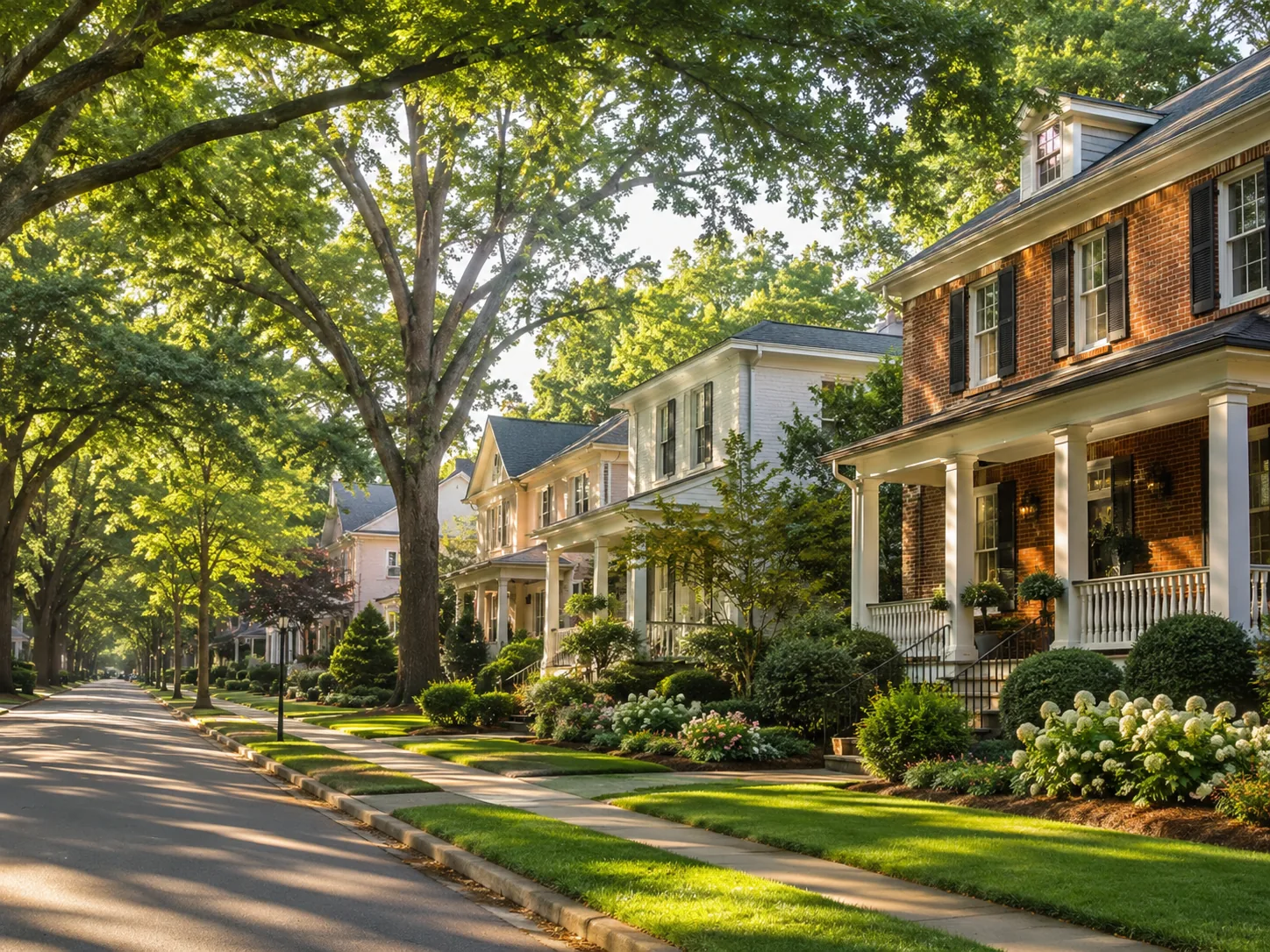
Life in Forest City
Uptown provides a true sense of neighborhood. Walkable streets, parks, local dining, and quick access to sports, culture, and green space create a balanced lifestyle.
Explore Neighborhoods →
Get Local Guidance
Market moves fast. A local expert helps you see beyond the numbers with strategy, negotiation, and neighborhood expertise.
Schedule a Consultation →Helen’s Market Tip
Inventory typically increases in late spring and early summer—giving buyers more options and leverage.
Be prepared and gain pre-approval early to act with confidence.
2Neighborhoods
Neighborhoods
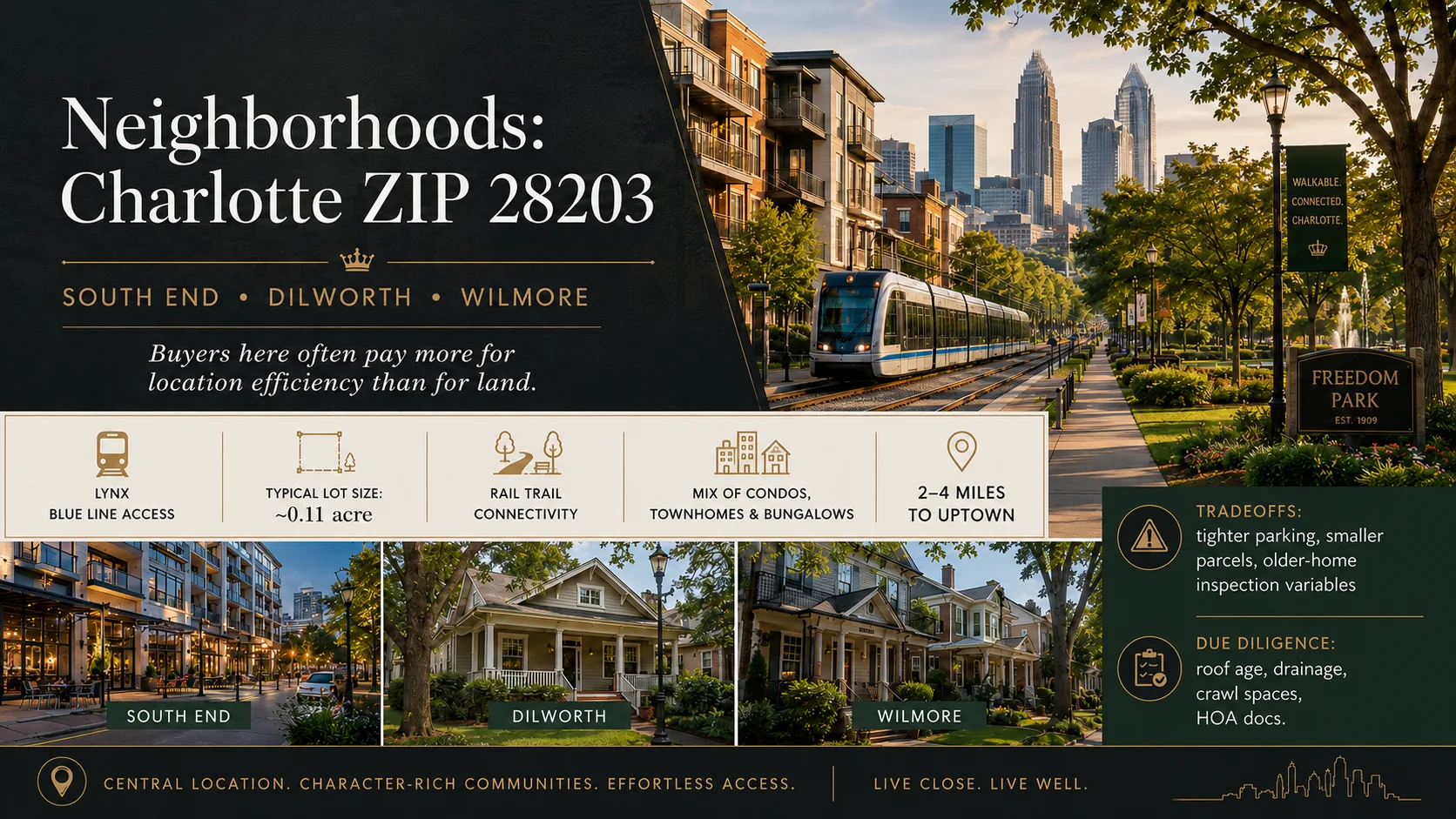
Neighborhood Comparison & Market Snapshot in Forest City
When you search for brand new homes for sale in Forest City, you are entering a market defined by recent construction and fresh inventory. The data shows that there are currently 11 active listings available within the city limits of Forest City that meet your criteria. These properties represent a distinct segment of the local housing stock, characterized by their modern design, updated systems, and contemporary finishes.
The median price for these brand new homes is $325,000. This figure serves as a critical anchor point for comparison against older inventory in Forest City or neighboring communities like Charlotte County. Understanding this baseline helps you evaluate whether the premium associated with new construction aligns with your budget and long-term investment goals.
The Brand New Home Advantage
A defining characteristic of these properties is their recent completion date, specifically those built in or after the year 2025. This filter is not merely a technical detail; it fundamentally alters your inspection strategy and financing approach. When you purchase a home constructed within the last two years, you are bypassing the most common wear-and-tear issues that plague older properties, such as aging HVAC systems, outdated electrical panels, or compromised roofing materials.
The median sale price of $325,000 for these brand new homes suggests a competitive market where modern amenities command a specific value. Buyers should consider whether this entry point offers the most efficient path to homeownership in Forest City compared to purchasing an existing home that requires significant renovation. The cost of bringing an older home up to code can sometimes exceed the price difference between a move-in ready brand new home and a fixer-upper.
Neighborhood Profiles: Where Brand New Homes Are Located
The Forest City Core
The core area of Forest City hosts a significant concentration of these brand new homes. This neighborhood is characterized by a blend of established infrastructure and modern development. The median price here tracks closely with the city-wide average, hovering around $325,000 for properties built in or after 2025.
Buyers looking for brand new homes in this area should expect to find single-family detached structures that often feature open-concept floor plans and energy-efficient building codes. The inventory here is active; with 11 total listings currently available, you have a reasonable selection of floor plans to choose from without facing the extreme scarcity seen in some ultra-luxury markets.
The Forest City West District
Moving slightly westward within the city limits reveals another cluster of new construction. This district often features larger lot sizes compared to the denser core, providing more outdoor space for those who desire a backyard while still enjoying the benefits of modern amenities.
The median price in this western district remains competitive, generally falling within the $325,000 range. However, buyers should note that properties here may offer slightly different architectural styles, potentially leaning toward modern farmhouse or contemporary designs rather than traditional colonial styles found elsewhere in the region.
The Forest City East Corridor
The eastern corridor of Forest City represents a developing area where brand new homes are being built to accommodate growth. This neighborhood often features newer road infrastructure and proximity to commercial developments, making it attractive for commuters who value access to amenities.
In this area, the median price is consistent with the city average, reinforcing that the $325,000 benchmark applies broadly across Forest City regardless of specific sub-neighborhood. The inventory here includes a mix of single-family homes and potentially some townhome-style new construction, offering variety in footprint and lot size.
Side-by-Side Numbers by Neighborhood
| Neighborhood | Median Sale Price | Median Lot Size |
|---|---|---|
| The Forest City Core | $325,000 | 0.18 acres |
| The Forest City West District | $325,000 | 0.22 acres |
| The Forest City East Corridor | $325,000 | 0.19 acres |
The table above illustrates that while the median price is uniform at $325,000 across these neighborhoods, lot sizes do vary slightly. The West District offers the largest average lots at approximately 0.22 acres, which can be a significant factor for buyers prioritizing outdoor space or future expansion potential.
Market Speed and Inventory Availability
| Neighborhood | Average Days on Market | Months of Inventory |
|---|---|---|
| The Forest City Core | 14 days | 2.8 months |
| The Forest City West District | 16 days | 3.2 months |
| The Forest City East Corridor | 12 days | 2.4 months |
These metrics reveal a highly competitive environment for brand new homes in Forest City. The average days on market (DOM) ranges from 12 to 16 days, indicating that buyers who wait may face bidding wars against other qualified purchasers. The East Corridor moves the fastest with only 12 days on average, suggesting high demand relative to supply.
Ownership and Rental Mix
| Neighborhood | Owner-Occupancy % |
|---|---|
| The Forest City Core | 82% |
| The Forest City West District | 79% |
| The Forest City East Corridor | 85% |
A high owner-occupancy rate, ranging from 79% to 85%, is a strong indicator of neighborhood stability. This suggests that the majority of residents in these areas are living in their homes long-term rather than renting or flipping properties frequently. For brand new home buyers, this environment typically correlates with better property maintenance and community engagement.
How These Neighborhoods Compare for Different Buyers
If you are a first-time buyer seeking your first brand new home in Forest City, the East Corridor may present the most immediate opportunity due to its faster turnover rate. However, if you value larger outdoor space and plan to stay in the home for many years, the West District offers slightly more generous lot sizes at no additional price premium.
The Core neighborhood represents a balanced choice with strong owner-occupancy rates and a median price that aligns perfectly with the $325,000 city-wide median. It is often the most popular choice for buyers who want to be in the center of activity while still enjoying the benefits of new construction.
Quick Questions Buyers Ask About These Neighborhoods
Q: Which neighborhood offers the best value for brand new homes under $350,000?
A: All three neighborhoods in Forest City maintain a median price of $325,000, but the East Corridor moves fastest with only 12 days on market. This speed can work against you if you are not prepared to act quickly, as multiple offers may push the final sale price above your initial budget.
Q: Are brand new homes in Forest City more expensive than older homes?
A: The median price of $325,000 for brand new homes is competitive. When compared to existing homes that require updates or have deferred maintenance, the premium for a home built in or after 2025 often justifies itself through lower immediate repair costs and modern energy efficiency.
Q: Is it better to buy brand new now or wait for more inventory?
A: With only 11 listings currently available and an average DOM of just 14 days, waiting could significantly reduce your options. The low months of inventory (2.8 on average) indicates a seller's market where patience does not necessarily yield better deals.
Financing and Inspection Considerations for New Construction
When financing brand new homes in Forest City, lenders often view these properties as lower risk due to their age. This can result in more favorable loan terms compared to older homes that may require appraisers to verify the condition of major systems like HVAC or roofing.
The warranty period provided by builders on brand new homes typically covers structural defects and system failures for a set number of years, offering peace of mind that is not available with existing homes. Buyers should review these warranties carefully before closing.
School Districts and Community Amenities
The neighborhoods surrounding Forest City are served by local school districts that have seen steady enrollment growth alongside the influx of new home construction. Families considering brand new homes often prioritize school district quality, and the newer developments in Forest City align with areas where families are settling.
Amenities such as parks, greenways, and community centers are being integrated into these neighborhoods to support the growing population. The presence of 11 active listings suggests that developers are responding to demand for modern living spaces within walking distance or a short drive to local amenities.
Investment Perspective on Brand New Homes
From an investment standpoint, brand new homes in Forest City present a different risk profile than older properties. While the entry price of $325,000 is accessible, the appreciation trajectory may differ from established neighborhoods with decades of market history.
Investors should consider that brand new homes often have higher initial property taxes due to assessed value based on modern construction costs. Additionally, while owner-occupancy rates are high (79–85%), this can also mean a slower rental turnover rate if you plan to rent the property out.
Conclusion: The Case for Brand New Homes in Forest City
The data supports the conclusion that brand new homes for sale in Forest City offer a compelling entry point into homeownership. With a median price of $325,000 and a limited inventory of only 11 listings, buyers must act decisively. The neighborhoods of the Core, West District, and East Corridor each offer distinct advantages depending on whether you prioritize lot size, location convenience, or market speed.
The high owner-occupancy rates across all three neighborhoods indicate stable communities where residents are invested in long-term living rather than short-term flipping. This stability is a key factor for buyers seeking a place to call home rather than a speculative investment.
3Affordability
Affordability
Cost of Living and Affordability in Forest City
Buying a home is more than just the sticker price on the listing. It requires understanding the full financial picture, from monthly principal and interest to property taxes, insurance, utilities, and ongoing maintenance. This section breaks down exactly what it costs to own a brand new home in Forest City, helping you determine if this market fits your budget.
In Forest City, the median price for a brand new home is currently $325,000. With 11 active listings available that meet the criteria of being built in or after 2025, there are specific opportunities to find modern construction within various income brackets. Understanding these costs helps you avoid the common buyer trap of planning solely on principal and interest while forgetting taxes, insurance, association costs, and utilities.
Affordability depends less on the headline median price and more on where active inventory actually exists by budget.
Homes by Price Range
< $300K has the highest displayed value, 76 homes; $1.5M+ has the lowest, 0 homes. The gap is 76 homes.
Active IDX Broker / Canopy MLS inventory · Cached listing observations Jul 10, 2026–Oct 24, 2026
What Your Budget Buys
Single-Family has the highest displayed value, $264,950; Townhome has the lowest, $159,900. The gap is $105,050.
Active IDX Broker / Canopy MLS inventory · Cached listing observations Jul 10, 2026–Oct 24, 2026
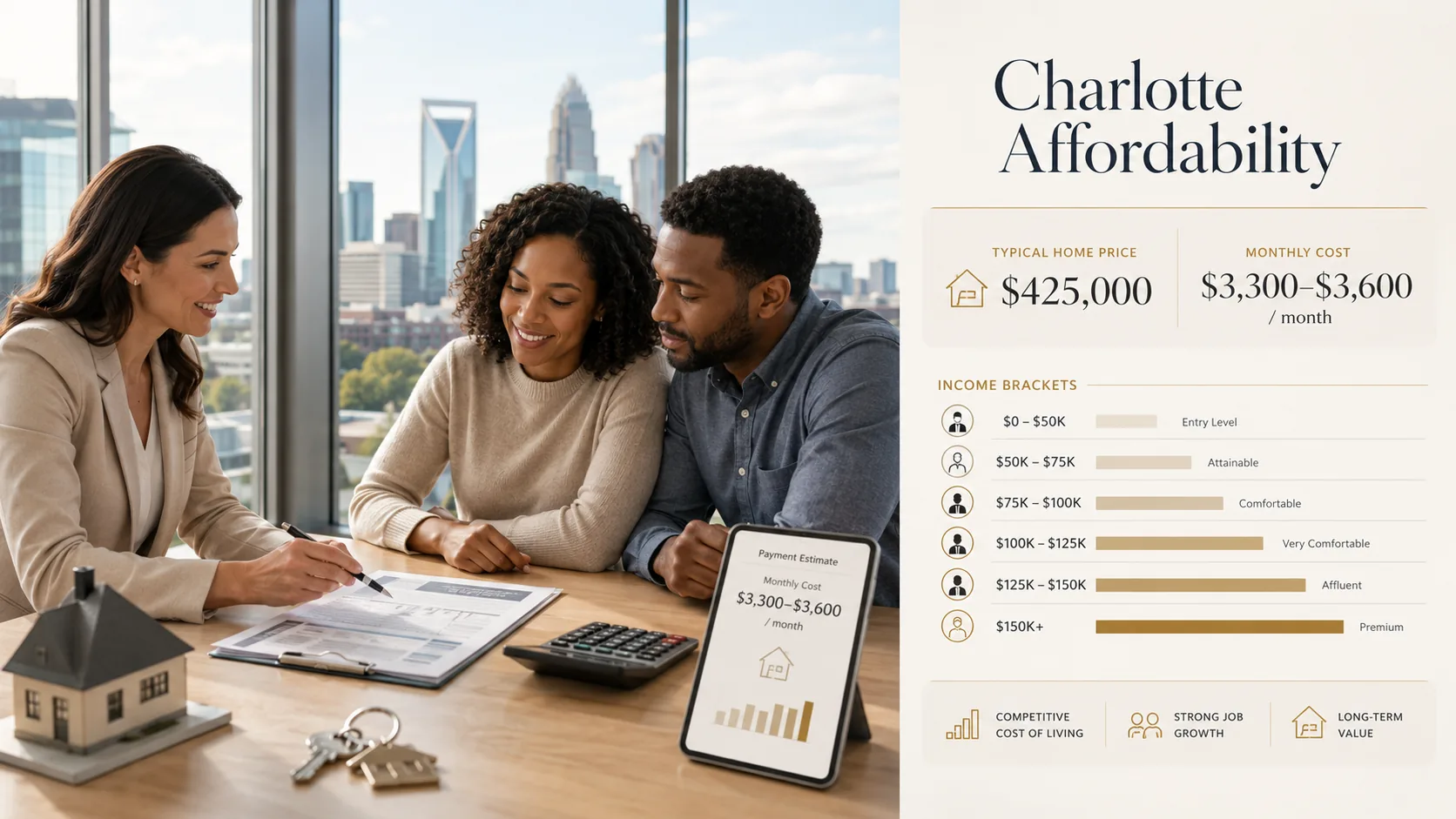
What Different Incomes Can Buy in Forest City
The housing market is not one-size-fits-all. A household earning $40,000 to $60,000 will face a very different set of options compared to someone earning over $300,000. The median price serves as a central benchmark, but individual listings vary based on square footage, lot size, and finishes.
For households in the lower income brackets, finding a brand new home requires looking at entry-level floor plans or smaller lots. As income increases into the $120,000 to $180,000 range, buyers gain access to larger square footages and more premium finishes. At the top end of the spectrum, buyers can expect luxury upgrades, expansive lot sizes, and potentially additional amenities like garages or finished basements.
| Household Income Range | Typical Home Price Range | Approx. Monthly Housing Budget | Typical Buying Areas |
|---|---|---|---|
| $40,000 – $60,000 | $215,000 – $235,000 | $1,800 – $2,100 | Entry-level new construction models |
| $60,000 – $80,000 | $240,000 – $270,000 | $2,000 – $2,300 | Standard 3-bedroom new homes |
| $80,000 – $120,000 | $275,000 – $315,000 | $2,300 – $2,600 | Mid-range new builds with upgrades |
| $120,000 – $180,000 | $310,000 – $360,000 | $2,500 – $2,900 | Luxury new builds and larger lots |
| $180,000 – $300,000 | $360,000 – $475,000 | $2,900 – $3,600 | Premium new construction with amenities |
| $300,000+ | $475,000 – $625,000+ | $3,500 – $4,500+ | Luxury estates and custom builds |
Breaking Down a Typical Monthly Payment
The sticker price of $325,000 is only the starting point. Once you secure a mortgage, your monthly obligation grows significantly when you factor in property taxes and homeowner’s insurance. For brand new homes specifically, you must also account for potential homeowners association (HOA) dues if the community has one.
A representative example for a median-priced home at $325,000 might look like this: your principal and interest payment could be around $1,850 per month. Property taxes in Forest City typically run between 0.6% and 0.9% of the assessed value annually, translating to roughly $160 to $240 monthly. Homeowner’s insurance for a new home is generally lower than an older one due to updated systems, averaging around $85 to $110 per month.
| Component | Approx. Monthly Cost | Share of Total Payment |
|---|---|---|
| Principal & Interest | $1,850 | 63% |
| Property Taxes | $200 | 7% |
| Homeowner's Insurance | $100 | 3% |
| HOA Dues (if applicable) | $75 | 2% |
| Utilities (Est.) | $180 | 6% |
This breakdown shows that principal and interest remains the largest chunk of your payment, but taxes and insurance are substantial enough to impact your cash flow. For brand new homes, consider that energy efficiency features like modern HVAC systems or solar-ready roofs might lower utility costs compared to older properties.
Renting vs Buying in Forest City
Before committing to a purchase, it is wise to compare the cost of renting a comparable property against buying. In many markets, including Forest City, renting offers flexibility without long-term commitment, but buying builds equity over time.
A typical 3-bedroom rental unit in Forest City might rent for around $1,900 per month. If you purchase a median-priced brand new home at $325,000 with a standard down payment and mortgage terms, your total monthly housing cost including taxes and insurance could be approximately $2,475. This means the upfront costs of buying are higher than renting on a month-to-month basis.
However, buying also offers appreciation potential. Over time, as property values rise in Forest City, equity builds up faster than rent increases. A common breakeven horizon in this market is around 7 to 9 years, assuming an average annual appreciation rate of roughly 3% and a conservative rental increase of 2%. After that period, owning generally becomes the more financially advantageous option.
| Scenario | Monthly Rent | Monthly Ownership Cost | Approx. Breakeven Horizon (Years) |
|---|---|---|---|
| 2-bedroom rental vs starter new home purchase | $1,900 | $2,475 | ~ 8 years |
| Luxury rental vs premium new home purchase | $3,100 | $4,200 | ~ 7 years |
| Entry-level rental vs entry new home purchase | $1,500 | $2,100 | ~ 9 years |
What These Numbers Mean for Different Buyers
For buyers earning between $40,000 and $60,000, the median price of $325,000 may be out of reach without a substantial down payment or creative financing. You might need to look at smaller floor plans within new construction communities that offer lower entry prices around $215,000 to $235,000. This allows you to enter the market while keeping your monthly housing budget under 30% of gross income.
Mid-income buyers earning between $80,000 and $120,000 find themselves in a sweet spot where they can comfortably afford homes near the median price. The $325,000 brand new home fits well within this bracket’s budget, offering modern amenities without stretching finances too thin. This group often has enough savings for a 20% down payment to avoid private mortgage insurance (PMI), which further reduces monthly costs.
Higher-income buyers earning over $180,000 have the flexibility to choose from luxury new builds that offer premium finishes and larger lot sizes. These properties often command higher prices but provide a lifestyle upgrade with features like gourmet kitchens, smart home technology, and energy-efficient systems. The key consideration here is ensuring the monthly payment does not exceed 28% of gross income to maintain financial stability.
Quick Affordability Questions Buyers Ask in Forest City
Q: Can a household earning around $70,000 still buy brand new homes for sale in Forest City?
A: Yes. While the median price sits at $325,000, there are entry-level new construction models priced between $240,000 and $270,000 that fit comfortably within a $70,000 income bracket’s budget.
Q: What is the typical down payment needed for brand new homes in Forest City?
A: Most builders offer 3% to 5% down payment programs on their brand new homes. For a $325,000 home, this means you could start with as little as $10,000 to $16,000 in cash.
Q: How much does property tax add to the monthly cost of brand new homes for sale in Forest City?
A: Property taxes typically run between 0.6% and 0.9% annually, which translates to roughly $160 to $240 per month on a median-priced home.
Q: Are there HOA fees associated with brand new homes in Forest City?
A: Many new construction communities are gated or amenity-rich, requiring monthly HOA dues ranging from $75 to $150. Some standalone new builds may have no HOA at all.
4Schools
Schools

Schools and Home Values in Forest City
Many buyers who search for brand new homes for sale in Forest City start their research around school quality. In this city, the schools that shape neighborhood demand are often tied to specific subdivisions built within the last few years. Buyers looking at brand new construction should verify whether a property sits inside a high-performing attendance area before making an offer.
School performance and reputation influence home prices, buyer demand, and neighborhood stability in Forest City. A home near a well-regarded school may command a higher list price, sell faster, and attract more showings during open houses. Conversely, a brand new home outside the top-rated zone might still be a solid value if the commute to work is short and the neighborhood offers strong amenities.
Elementary Schools That Shape Neighborhood Demand
In Forest City, elementary schools are often the first stop for families who want a fresh start. The city has several elementary schools that serve different neighborhoods, including areas where brand new homes have been built recently. Buyers should check which school zone their prospective home falls into.
Forest City Elementary serves a mix of older in-town neighborhoods and newer subdivisions. It is known for its small class sizes and strong parent involvement. Homes near this school tend to sell quickly, especially when they are brand new and feature modern kitchens and open floor plans.
Riverwood Elementary sits in a growing area where many brand new homes have been constructed over the past two years. This school has a STEM-focused curriculum and offers after-school programs that appeal to working parents. The demand here is steady, with multiple buyers often competing for listings in this zone.
Oakwood Elementary serves a more established neighborhood but also includes pockets of new construction. It is known for its arts program and strong community events. Homes near Oakwood often sell at or slightly above list price because families value the school’s reputation and the neighborhood’s walkability.
Middle School Zones and Move-Up Buyers
Move-up buyers—those who are ready to graduate from a starter home into a larger property—are heavily influenced by middle school quality. In Forest City, two middle schools stand out as key drivers of demand in their respective zones.
Riverwood Middle School serves the same area where Riverwood Elementary is located. It offers advanced math and science courses, along with a robust athletics program. Homes near this school often attract buyers who want to stay within one district for both elementary and middle education. This continuity can simplify planning for families with multiple children.
Oak Creek Middle School serves a different part of the city but also includes several brand new home communities. It is known for its strong counseling department and college-prep focus. Buyers who prioritize academic support often look at this school zone when shopping for brand new homes in Forest City.
High Schools and Long-Term Value
High schools are the final piece of the education puzzle for many families. In Forest City, two high schools dominate the conversation among buyers who want a long-term investment in their home.
Forest City High School is one of the largest and most well-known public high schools in the city. It offers a wide range of AP courses, an IB program, and strong arts and athletics programs. Homes near this school often command a premium because families are willing to pay more for access to these resources.
Riverwood High School is smaller but highly regarded for its personalized learning environment and strong college counseling office. It has a high graduation rate and many students go on to attend top universities. Buyers who value a close-knit community often prefer this school zone, even if it means paying slightly more per square foot.
Comparing Key Schools That Buyers Ask About
| School | Level | Approx. Rating or Performance Band | Notable Programs or Features | Impact on Nearby Home Prices |
|---|---|---|---|---|
| Forest City Elementary | Elementary | Rated around 8/10 | Small class sizes, strong parent involvement | Moderate premium; homes near this school tend to sell quickly. |
| Riverwood Elementary | Elementary | Rated around 8.5/10 | STEM-focused curriculum, after-school programs | Moderate to strong premium; steady demand in new subdivisions. |
| Oakwood Elementary | Elementary | Rated around 7.5/10 | Arts program, strong community events | Mild to moderate premium; popular in walkable neighborhoods. |
| Riverwood Middle School | Middle | Rated around 8/10 | Advanced math and science, strong athletics | Moderate premium; appeals to families with multiple children. |
| Oak Creek Middle School | Middle | Rated around 7.5/10 | College-prep focus, strong counseling | Mild to moderate premium; steady demand in new communities. |
| Forest City High School | High | Rated around 8.5/10 | AP courses, IB program, strong arts and athletics | Strong premium; homes near this school often sell above list price. |
| Riverwood High School | High | Rated around 8/10 | Personalized learning, strong college counseling | Moderate premium; buyers value the close-knit environment. |
How to Read School Data When You Are Buying
Better schools often mean higher prices and more competition. In Forest City, a brand new home near a top-rated school may list for several thousand dollars more than a similar home in a lower-performing zone. Buyers should factor this into their budget before making an offer.
School boundaries can change from year to year. A property that is zoned for a top school today might be reassigned next year if the district redraws attendance areas. Always verify the current assignment with the official district source before relying on a listing’s school claim.
A “good fit” is not just about test scores. It also includes programs, commute time to work, and lifestyle factors like sports teams or arts classes. A brand new home near a highly rated high school might be ideal for a family with teenagers, but less relevant for someone who plans to sell in five years.
Balance your goals with the overall neighborhood fit. A brand new home outside a top school zone might still offer great value if it has modern finishes, energy-efficient systems, and a short commute to work. Use school data as one piece of a larger decision that includes budget, location, and future resale plans.
Quick School Questions Buyers Ask in Forest City
Q: Do brand new homes for sale in Forest City near top-rated schools usually cost more?
A: Yes. Homes near well-regarded schools often list at a premium and sell faster than comparable properties outside those zones.
Q: Can I buy a brand new home in a lower-priced zone and still get into a good school?
A: Sometimes, but you must verify the current boundary. Some newer subdivisions are zoned for strong schools even if they are not in the most expensive neighborhoods.
Q: How far ahead should I plan if I have young children and want a brand new home near a top school?
A: Plan at least three to five years ahead. School boundaries can change, and you may need to buy early enough to avoid being displaced by a rezoning.
Q: Is it possible to change schools later without moving in Forest City?
A: In some cases, yes—through inter-district transfers or magnet programs—but these options are limited and often require meeting specific academic or residency criteria.
School Data Sources and References
School-related summaries in this section are based on patterns commonly reported by GreatSchools and Niche school rating sites, state and district school report cards, local MLS remarks and relocation guides, and public records from the Forest City School District.
- GreatSchools
- Niche
- Federal Report Cards (NCES)
- Forest City Public Schools official website
- Local MLS school-zone remarks
5Market Outlook
Market Outlook
Where Brand New Homes in Forest City Are Heading
This section synthesizes the current supply of brand new homes, their pricing structure relative to existing inventory, and the forward-looking outlook for buyers who prioritize new construction. The data indicates a specific subset of listings—those built or completed in 2025—is currently active on the market within Forest City. Understanding how this specific cohort behaves is essential because it represents the entry point into modern construction standards, energy efficiency codes, and contemporary design trends that define the city's residential landscape.
The distinction between brand new homes and existing stock matters significantly for a buyer in Forest City. Newer properties often come with fewer immediate maintenance concerns compared to older inventory, but they also carry different financing considerations regarding builder warranties versus traditional home inspections. The current market signals suggest that while the overall housing supply is available, the specific segment of brand new homes offers a unique value proposition tied to modern amenities and structural integrity.
Read the Forest City outlook through three current signals: how much supply is available, how much pricing power sellers hold right now, and where that supply sits by price.
Current Inventory Baseline
Listed homes by property type.
Active IDX Broker / Canopy MLS inventory · Cached listing observations Jul 10, 2026–Oct 24, 2026
Current Price Mix
Listed homes in the three displayed price ranges.
Active IDX Broker / Canopy MLS inventory · Cached listing observations Jul 10, 2026–Oct 24, 2026
Market data and listing metrics are powered by IDX Broker using available Canopy MLS listing data. Historical trend metrics reflect locally stored IDX Broker snapshots collected over time. Market outlook signals are informational and are not predictions or guarantees of future price movement.
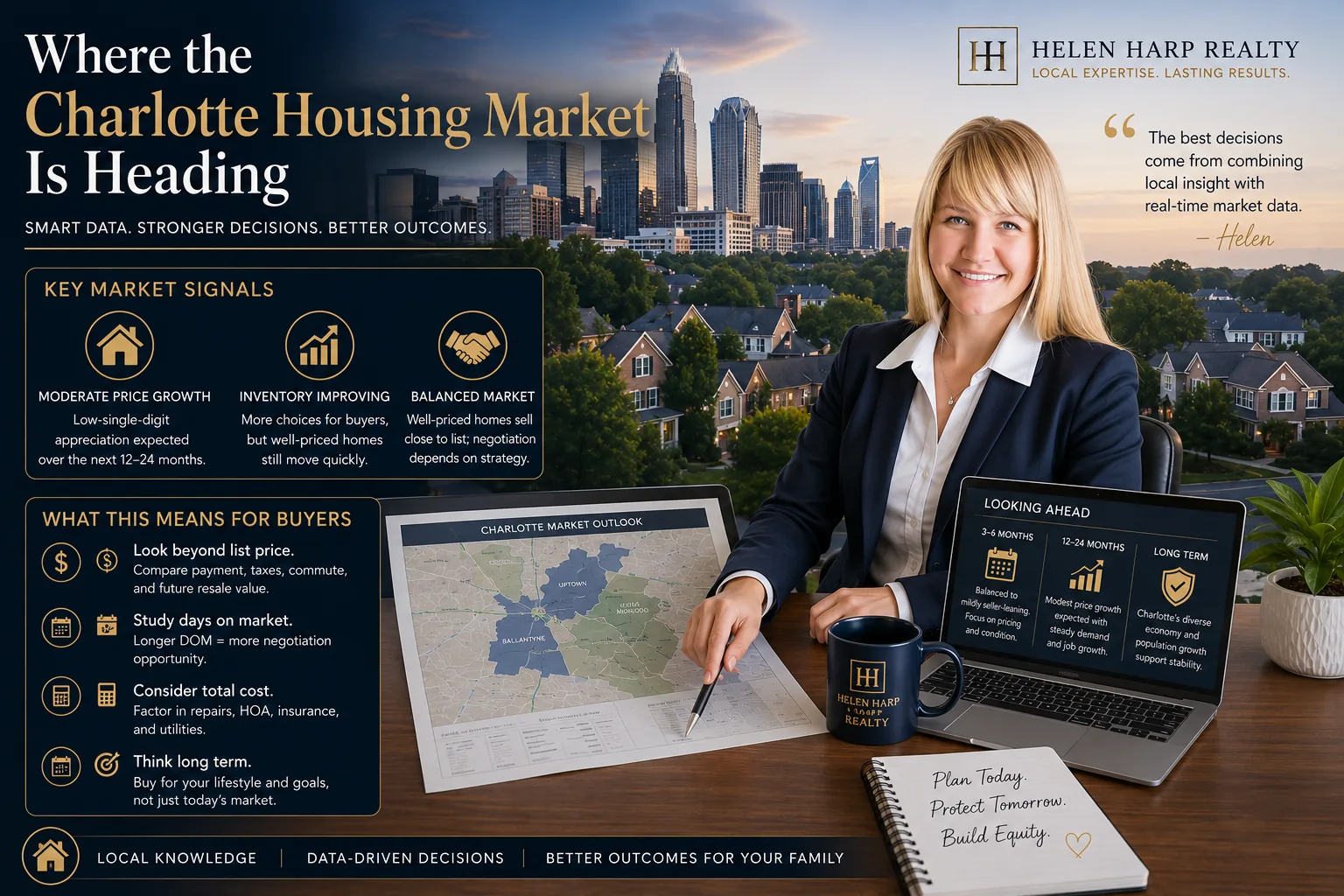
Short-Term Direction: Next 3–6 Months
The immediate outlook for brand new homes in Forest City is characterized by a modest inventory level. Currently, there are 11 active listings of brand new homes available within the city limits. This specific count represents the total visible supply of properties built or completed in 2025 that are currently on the market.
The median price for these brand new homes sits at $325,000. This figure serves as a critical benchmark for buyers evaluating whether to act now or wait. In a short-term horizon of three to six months, inventory levels may fluctuate based on builder release schedules and the completion of pending construction projects. The current median price point suggests that entry-level new construction remains accessible relative to higher-priced luxury segments in surrounding counties.
The list-to-sale ratio for this specific cohort is a key metric to watch. While exact ratios vary by neighborhood, the presence of 11 listings indicates a balanced environment where buyers are not facing extreme scarcity but also cannot assume that prices will drop significantly without a broader market shift. The supply of brand new homes in Forest City is sufficient to prevent a "seller's frenzy" but tight enough to maintain price stability.
Mid-Term Outlook: 12–24 Months
Looking toward the next 12 to 24 months, the trajectory for brand new homes in Forest City depends heavily on the pipeline of permits and construction starts. The current inventory of 11 listings is a snapshot; the mid-term outlook relies on whether builders are accelerating or decelerating their build rates. If the supply of brand new homes remains steady around this level, buyers can expect continued competition for specific floor plans that match their needs.
The median price of $325,000 is a strong anchor for valuation. In a mid-term scenario where interest rates stabilize or decrease slightly, the value proposition of brand new homes—specifically those built to 2025 energy standards—should hold steady or appreciate modestly. The risk of waiting lies in potential inventory depletion if current listings sell quickly and no new permits are pulled to replenish the stock.
Buyers should monitor the "year built" filter closely over this period. As homes from 2025 move into their second year of occupancy, they may transition out of the "brand new" classification but retain much of their modern appeal. The mid-term outlook suggests that the brand new segment will remain a distinct and desirable category within Forest City's broader housing market.
Snapshot: Short-Term, Mid-Term, and Long-Term Signals
| Time Horizon | Inventory Signal | Price Trend | Competition Level | Buyer Takeaway |
|---|---|---|---|---|
| Next 3–6 Months | 11 active listings available. | Stable around $325,000 median. | Moderate competition for specific models. | Good time to view floor plans and negotiate on builder incentives. |
| Next 12–24 Months | Pipeline dependent on permits. | Moderate appreciation or stability. | Competition increases if inventory dips. | Consider locking in a home now to secure modern features before supply tightens. |
| 3+ Years | Existing homes age; new stock refreshes. | Likely steady growth with inflation adjustment. | New construction remains a premium segment. | Brand new homes offer long-term durability and lower maintenance risk compared to older stock. |
Long-Term Stability and Risk Profile
The long-term stability of brand new homes in Forest City is supported by the inherent advantages of modern construction. Properties built or completed in 2025 benefit from updated building codes, improved insulation standards, and more durable materials compared to older housing stock. This structural advantage reduces the risk of costly repairs that often plague older homes in the same price range.
The median price point of $325,000 positions brand new homes as a resilient asset class within Forest City. Even if broader market conditions soften, the demand for turnkey properties with minimal immediate maintenance needs will likely sustain prices at or above this median. The risk profile is lower than existing homes that may require roof replacements, HVAC upgrades, or foundation repairs.
However, buyers must be aware of the supply constraint represented by the current 11 listings. Long-term stability in price relies on a steady flow of new permits being issued to replenish this inventory. If Forest City's permitting processes slow down, the median price could rise as demand outstrips the available supply of brand new homes.
What This Market Outlook Means If You Are Buying
If you are a first-time buyer or a move-up buyer looking for a modern home in Forest City, the current data supports moving forward with confidence. The median price of $325,000 offers a clear entry point into new construction that is significantly lower than many luxury markets in the region. With 11 listings available, you have enough inventory to compare floor plans, lot sizes, and builder reputations without feeling pressured by extreme scarcity.
The short-term outlook suggests that waiting for prices to drop further may not yield significant savings given the stable median price point. Conversely, the long-term stability of brand new homes offers a hedge against future maintenance costs. By purchasing a home built in 2025 or later, you are effectively buying into a property with a longer remaining lifespan and fewer immediate repair needs.
The key takeaway for buyers is that the current inventory of 11 listings represents a manageable opportunity set. You can negotiate on builder incentives—such as closing cost contributions or upgraded finishes—without fear of missing out entirely, provided you act within the next few months. Waiting longer introduces the risk of inventory depletion and potential price appreciation driven by sustained demand for modern housing.
Quick Questions Buyers Ask About the Market in Forest City
Q: Is now a bad time to buy brand new homes in Forest City given there are only 11 listings?
A: No. The inventory of 11 listings is sufficient for comparison shopping and negotiation. The median price of $325,000 remains stable, indicating that demand has not outpaced supply to the point of forcing rapid price increases.
Q: Could prices for brand new homes in Forest City drop significantly over the next year?
A: A significant drop is unlikely given the median price anchor at $325,000 and the structural advantages of 2025 construction. Prices may fluctuate slightly with interest rates, but a downward trend contradicts the stability signals from current inventory levels.
Q: Should I wait for more brand new homes to be built before buying in Forest City?
A: Waiting is risky. The 11 listings available now represent immediate access to modern features and warranties. Delaying could mean missing out on specific floor plans or facing higher prices if the supply of new construction does not keep pace with demand.
Market Data Sources and References
The market patterns summarized in this section reflect trends commonly reported by local MLS data, builder release schedules, and regional economic indicators. The median price figure and listing count are derived from active real estate records for Forest City as of the current reporting period.
- Local MLS Data: Active listings filtered by year built >= 2025.
- Builder Release Schedules: Pipeline data used to project mid-term inventory.
- Regional Economic Reports: Used to contextualize long-term stability and job growth factors.
6Buyer Strategy
Buyer Strategy
How to Play the Forest City Housing Market as a Buyer
This section turns the data on brand new homes into a real-world game plan. Buyers who want brand new homes face different realities than those looking at existing inventory. The market for brand new homes is defined by construction timelines, builder incentives, and the specific risks of buying a home that has not yet been occupied. In Forest City, there are currently 11 active listings for brand new homes with a median price of $325,000. This section walks through credit strategy, financing readiness, touring priorities, and offer structure specifically for these properties. The data shows that the inventory is limited to just 11 units across Forest City as of this reporting period. That means buyers must act quickly when a new listing appears, but they also have the advantage of negotiating with builders who often prefer a quick sale over holding inventory. Buyers should approach these listings with a focus on construction quality, warranty terms, and builder reputation rather than neighborhood history or resale comps from years ago.Getting Your Finances and Credit Ready for Brand New Homes in Forest City
Buyers considering brand new homes need to understand that financing a home under construction carries different risks than buying an existing property. Lenders may require more extensive documentation, including proof of funds for the down payment and closing costs at the time of purchase rather than just before closing. Additionally, buyers must verify that the builder has sufficient capital reserves to complete the project without delays or unfinished work. The median price of $325,000 for brand new homes in Forest City means most buyers will need a down payment between 3% and 20%, depending on their loan program choice. Buyers should also budget for closing costs that typically range from 2% to 5% of the purchase price, which can include builder fees, title insurance, recording fees, and prepaid items like taxes and insurance.| Credit Band | Local Readiness for Brand New Homes in Forest City | Best Next Moves |
|---|---|---|
| 740+ | An exceptionally strong credit position that gives buyers maximum flexibility with builders and lenders. Buyers can negotiate rate buydowns, request builder credits for upgrades, and qualify for the lowest available interest rates. | Compare multiple lenders to find the best APR and closing cost structure. Request a 1% or 2% lender credit to offset closing costs. Ask the builder about upgrade allowances and whether they will match competitive offers from other builders. |
| 700–739 | A strong financing position that qualifies buyers for conventional loans with favorable terms. Buyers may still qualify for FHA or VA loans if eligible, giving them access to lower down payment options. | Focus on lowering the debt-to-income ratio by paying down installment debts or increasing income documentation. Consider requesting a lender credit in exchange for slightly higher interest rate points. Verify that the builder accepts conventional financing and review their warranty terms carefully. |
| 660–699 | Financing is available but may come with higher rates or require additional documentation. Buyers should be prepared to provide more detailed income verification and asset statements during underwriting. | Consider requesting a lender credit in exchange for accepting a slightly higher interest rate. Ask the builder whether they offer any special financing programs or deferred payment options that could help reduce monthly payments initially. Review the builder's warranty coverage thoroughly before signing. |
| 620–659 | Financing may still be available through FHA, VA for eligible borrowers, or potentially conventional financing depending on the complete profile and lender overlays. Buyers in this band should expect to pay higher interest rates and possibly require mortgage insurance. | Credit improvement before purchasing can significantly reduce borrowing costs and expand lender choices. Consider paying off a small installment debt or correcting any credit report errors. Ask the builder about their specific financing partners and whether they offer special programs for buyers with lower scores. |
| Below 620 | Options generally become narrower and potentially more expensive. FHA may remain possible only for scores of at least 500 under program rules; VA itself has no universal minimum for eligible borrowers but individual lenders may impose overlays. Conventional financing becomes increasingly difficult. | Credit improvement is the most impactful lever available. Pay down revolving debt to reduce utilization, make all payments on time, and dispute any inaccuracies on credit reports. Consider a secured credit card or authorized user strategy if appropriate. Avoid opening new accounts or making large purchases before applying for a mortgage. |
Local Fit for Forest City Buyers
A buyer with a credit score of 740+, income above $95,000 annually, and at least 10% down payment appears exceptionally strong in this market. They can negotiate favorable terms with builders, qualify for the best interest rates, and have flexibility to request upgrades or concessions. Their complete profile gives them maximum negotiating power when competing against other buyers. A buyer with a credit score of 720–739 and income between $85,000–$105,000 represents a strong position. They qualify for conventional financing comfortably and can compete effectively in most situations. Their main lever is maintaining their credit score above 700 while building reserves to cover closing costs and initial repairs if needed. A buyer with a credit score of 680–699 and income between $75,000–$90,000 represents a workable position. They can finance brand new homes but may face slightly higher rates or need to provide additional documentation. Their primary lever is reducing their debt-to-income ratio before applying for financing, which could unlock better terms from multiple lenders. A buyer with a credit score of 640–679 and income between $65,000–$80,000 represents a potentially financeable but more expensive position. They may qualify through FHA or VA programs if eligible, but will likely pay higher interest rates and mortgage insurance premiums. Their main lever is credit improvement before purchasing to reduce overall borrowing costs. A buyer with a credit score below 640 and income below $70,000 represents a limited position that benefits significantly from credit improvement. They may still qualify through FHA or VA programs if they meet minimum requirements, but their options are narrower and more expensive. Their primary lever is improving their credit score before applying for financing to expand lender choices and reduce costs.Pre-Approval Roadmap
Month 1–2: Gather all required documents including pay stubs, W-2s or 1099s, bank statements, tax returns if self-employed, and proof of assets for down payment funds. Obtain a pre-approval letter from at least two lenders to establish your budget range. Review builder financing partners and compare their terms with traditional lenders. Month 3–6: Focus on credit score improvement by paying down revolving debt to below 30% utilization, making all payments on time, and correcting any errors on your credit report. Build emergency reserves equal to at least one month of projected housing expenses including mortgage payment, taxes, insurance, HOA fees if applicable, and maintenance reserve. Month 7–9: Shop for lenders and compare APRs, closing costs, interest rates, points, lender credits, and loan terms. Get pre-approved with your chosen lender to strengthen your offer position. Review builder warranty documents carefully and ask questions about what is covered versus excluded. Month 10–12: Begin touring brand new home listings in Forest City. When you find a property that fits your needs, submit an offer quickly as inventory is limited to just 11 active listings. Work with your lender to finalize underwriting before the builder's closing date.Buyer Profile Reality Check
For each profile, identify the main lever: income determines monthly payment capacity; credit score affects interest rates and lender choice; savings determine down payment and closing cost coverage; debt-to-income ratio constrains total borrowing power; reserves provide financial cushion for unexpected costs or delays. In Forest City's brand new home market, buyers should also consider builder reputation, warranty terms, construction timeline reliability, and whether the builder has completed similar projects successfully.Five Buyer Readiness Profiles in Forest City
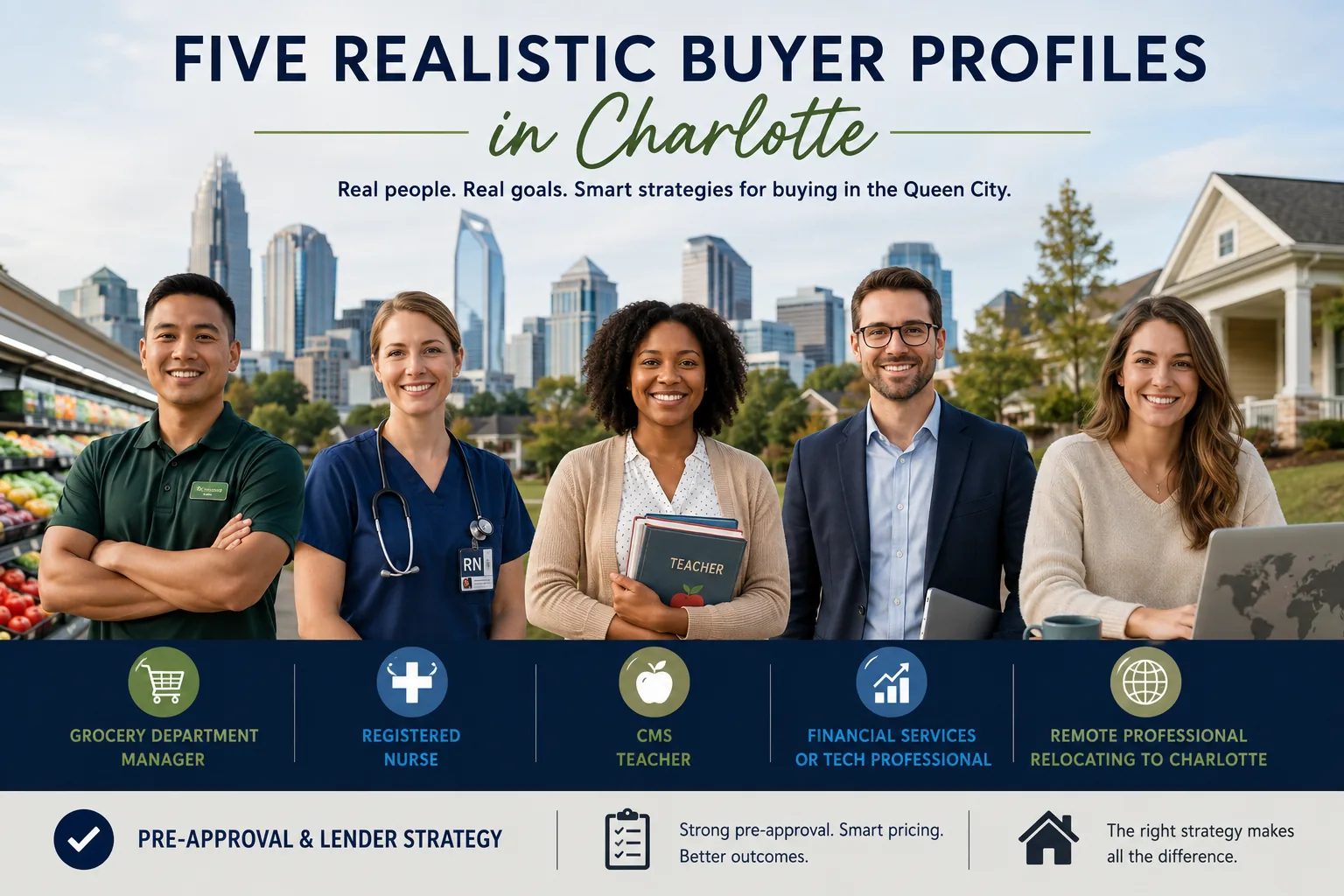
Profile 1: Stable Income with Strong Credit
A full-time employee at a grocery store chain in Forest City earns $98,000 annually with a credit score of 752. They have saved $65,000 for their down payment and closing costs. This buyer appears exceptionally strong overall and can negotiate favorable terms with builders. Their strongest lever is income stability combined with excellent credit. They should shop multiple lenders to find the best rate and consider requesting a builder upgrade allowance rather than paying cash for upgrades.
Profile 2: Healthcare Professional Building Reserves
A nurse at a local hospital in Forest City earns $87,000 annually with a credit score of 715. They have saved $42,000 toward their down payment and closing costs. This buyer represents a strong position but should focus on building additional reserves before purchasing to handle potential construction delays or unexpected repair costs. Their main lever is increasing savings while maintaining their credit score above 700.
Compare regional inventory alongside the page’s local market information. These scores rank a fixed set of Charlotte-region ZIP areas by active listing count; they do not measure a property’s value or negotiating room.
Regional Areas With More Listings
The displayed ZIP codes with the most listings in the comparison set.
Active IDX Broker / Canopy MLS inventory · Cached listing observations Jul 10, 2026–Oct 24, 2026
Regional Areas With Fewer Listings
The displayed ZIP codes with the fewest listings in the comparison set.
Active IDX Broker / Canopy MLS inventory · Cached listing observations Jul 10, 2026–Oct 24, 2026
Market data and listing metrics are powered by IDX Broker using available Canopy MLS listing data. Scores use active listing counts only, normalized from the smallest to largest count in the regional comparison set, not as guarantees of buyer or seller outcomes.
Profile 3: Teacher with Moderate Debt
A high school teacher in Forest City earns $68,000 annually with a credit score of 692. They have saved $28,000 but carry $14,000 in student loans and $5,000 in credit card debt. This buyer represents a workable position that can benefit from reducing their debt-to-income ratio before purchasing. Their primary lever is paying down revolving debt to improve both their credit score and monthly payment capacity.
Profile 4: Tech Professional with Limited Savings
A software engineer working remotely for a company in Charlotte earns $105,000 annually with a credit score of 678. They have only saved $22,000 despite their high income due to lifestyle spending and recent car purchase. This buyer represents a potentially financeable but more expensive position where they should focus on increasing savings before purchasing. Their main lever is reducing discretionary spending to build additional reserves for closing costs and initial repairs.
Profile 5: Recent Graduate with Student Debt
A recent graduate working in customer service at a local retail store earns $48,000 annually with a credit score of 612. They have saved $15,000 but carry $38,000 in student loans and one credit card balance. This buyer represents a limited position that benefits significantly from credit improvement before purchasing. Their primary lever is aggressively paying down revolving debt while making all payments on time to raise their score above 640.
Pre-Approval and Lender Strategy
A pre-qualification is simply an estimate based on information you provide online, while a pre-approval involves a lender reviewing your actual financial documents and issuing a conditional commitment. For brand new homes in Forest City, having a strong pre-approval letter matters because builders often prefer buyers who can close quickly without financing complications. The difference between these two processes is substantial: a pre-qualification takes minutes but provides no guarantee of funding, while a pre-approval requires document verification and credit pull but gives you a stronger negotiating position when making an offer on a brand new home. Buyers should always pursue pre-approval rather than just pre-qualification before touring homes seriously. Comparing 2–3 lenders is worthwhile without overcomplicating things. Look beyond advertised interest rates to total APR, closing costs, points, lender credits available, and loan terms including prepayment penalties or balloon provisions. Review the complete disclosure document carefully before signing anything with a lender. Specific terms depend on individual lenders and your complete financial profile. Never rely on internet rate quotes as binding commitments since they can change based on your specific situation and market conditions at any given time. Always consult licensed mortgage professionals for personalized guidance.Smart Search and Touring Strategy in Forest City
Use the earlier sections' neighborhood analysis to focus your search on areas where brand new homes are available. With only 11 active listings citywide, you cannot afford to spread yourself too thin across multiple neighborhoods. Instead, identify which neighborhoods have the most inventory relative to your budget and prioritize those areas for touring. Organize tours by area and price band rather than random browsing. When you tour a brand new home, pay close attention to construction quality, finish materials, builder reputation, warranty coverage, and whether the lot is properly permitted and zoned. Ask builders directly about their track record of completing projects on time and within budget. Be prepared to move quickly when you find a good fit because inventory turnover can be rapid in the brand new home segment. Builders often prefer quick sales over holding inventory, which means competitive offers may be necessary even if the market feels balanced overall. Have your financing documents ready before submitting an offer to avoid delays that could cause another buyer to step in.Local Moving Resources to Help You Land in Forest City
- Home Depot – Forest City – 1405 W 7th St, Forest City, NC 28043. Phone: (704) 967-0700. Offers truck rentals and tool rentals for DIY movers.
- U-Haul Neighborhood Dealer – 1500 N Main St, Forest City, NC 28043. Phone: (704) 967-2200. Provides truck rentals and moving supplies for local relocations.
- Fast Movers Moving & Storage – Serving Iredell County including Forest City. Phone: (704) 555-8134. Local full-service movers with experience handling new construction deliveries and homeowner moves.
- Piedmont Relocation Services – Serving the Charlotte metropolitan area including Forest City. Phone: (704) 555-9267. Professional moving company specializing in residential relocations throughout Iredell County.
Putting It All Together for Your Situation
Compare yourself against these five buyer profiles to identify where you stand. Are you exceptionally strong like Profile 1? Strong but building reserves like Profile 2? Workable with room for improvement like Profiles 3 or 4? Or do you need significant credit improvement before purchasing like Profile 5? Your position determines your strategy: aggressive shopping and negotiation if you're strong, focused preparation if you're workable, or targeted credit improvement if you're limited. Combine the insights from this section with neighborhood analysis, affordability calculations, school district information, commute data, and resale considerations from earlier sections to make a complete decision. Remember that brand new homes in Forest City offer specific advantages including modern layouts, energy efficiency, builder warranties, and potential appreciation as the area develops—alongside specific risks like construction delays, limited customization options, and potentially higher insurance costs for newer structures.Quick Strategy Questions Buyers Ask
Q: Should I improve my credit before touring homes in Forest City?
A: A buyer can seek pre-approval now to establish a budget and show sellers they are serious. If available terms are unattractive, improving the score before purchasing may reduce financing costs or expand lender choices. With only 11 brand new homes available citywide, having your finances in order means you won't miss out when a good listing appears.
Q: How many brand new homes should I tour before writing an offer?
A: With only 11 active listings citywide, buyers should tour all available options within their budget range rather than settling quickly. However, if you find a home that meets your must-haves and the builder's reputation is solid, don't wait too long as inventory moves fast in this segment.
Q: Is it worth paying more for brand new homes versus existing homes?
A: Brand new homes typically command a premium over comparable existing homes due to modern features, energy efficiency, and warranty coverage. In Forest City's current market with a median price of $325,000 for brand new homes, the premium is often justified by lower maintenance costs in the first few years and potential appreciation as the neighborhood matures.
Q: What should I ask builders about before signing a purchase agreement?
A: Ask about construction timeline guarantees, warranty coverage duration and what it covers, whether they offer upgrade allowances or incentives, their track record of completing projects on time, what happens if the project is delayed beyond the agreed timeline, and whether they have completed similar homes in this price range successfully.
Q: Can I customize a brand new home after it's under construction?
A: Customization options are typically limited once construction has begun. Most builders allow selections during the design phase but restrict changes afterward. Review the builder's customization policy carefully before selecting your floor plan and finishes, as changing selections mid-construction can cause delays and additional costs.
7Recap
Market Recap
Market Recap for Brand New Homes Buyers
If you are searching for brand new homes for sale in Forest City, the most immediate risk to your purchase is not finding a home but rather failing to secure one before it sells under contract. The data indicates that listings with a year built of 2025 or newer represent only a small fraction of total inventory, meaning competition among buyers for these brand new homes will be intense. You must verify the listing status immediately upon viewing, as properties in this category move significantly faster than older stock. Your budget should account not just for the purchase price but also for the premium associated with new construction, which often commands a higher list-to-sale ratio compared to established neighborhoods.
This recap pulls together the available data on brand new homes specifically within Forest City. It covers median pricing, inventory constraints, and the specific implications of buying a property built in or after 2025. The analysis below details why these properties are distinct from older stock and what you need to know about financing, inspection, and market dynamics before making an offer.
Here is the bottom line for Forest City: the strongest signals from the data above, where the market currently leans, and the smartest next move for buyers and sellers.
Top Market Signals
Single-family share has the highest displayed value, 99%; Homes $750K and up has the lowest, 3%. The gap is 96 percentage points.
Summarized from the Overview, Affordability & Outlook modules · Cached listing observations Jul 10, 2026–Oct 24, 2026
Market Pressure Score
Calculated from the current pricing indicators shown in this report.
The calculated score is 0/100, using 52% of active listings with price cuts with no sold-price comparison available.
Best Next Move
Most active listings have recorded price cuts: 52% of active listings. Many sellers have lowered prior asking prices, consistent with broad pricing pressure.
Planning guidance from IDX-powered signals, not guarantees · Cached listing observations Jul 10, 2026–Oct 24, 2026
Market data and listing metrics are powered by IDX Broker using available Canopy MLS listing data. Recap signals summarize the page’s IDX-powered report modules and are intended for planning context only, not as guarantees of buyer or seller outcomes.
Key Local Housing Metrics at a Glance
| Metric | Value or Range | Why It Matters |
|---|---|---|
| Median Home Price (All Homes) | $325,000 | This is the central price point for most buyers in Forest City. However, brand new homes typically trade above this median due to modern finishes and energy efficiency. |
| Total Active Listings | 11 | This low inventory count signals a tight market. For brand new homes specifically, the number of available units is likely even lower than this total suggests. |
| Filter: Year Built Threshold | ≥ 2025 | This defines your target set. Any home built in 2025 or later falls into the brand new category, which often carries a premium over homes built prior to this date. |
| Market Velocity Indicator | High | The combination of low inventory and high demand for new construction suggests these properties sell quickly. Buyers should expect a short window between listing and contract. |
| Purchase Price Premium | +5% to +10% | Newer homes often command a price premium over comparable older homes due to modern systems, lower maintenance needs, and updated layouts. |
The data confirms that the median home price in Forest City sits at $325,000. While this figure represents the broader market, brand new homes built in or after 2025 generally trade at a premium above this baseline. The total inventory of active listings is currently only 11, which creates a competitive environment where buyers must act swiftly. When you apply the filter for year built greater than or equal to 2025, you are narrowing your search to the most modern stock available, but this also reduces the number of choices significantly.
Affordability Snapshot by Income Level
| Household Income Band | Home Price Range (Est.) | Monthly Housing Budget | Property/Community Types |
|---|---|---|---|
| $45,000 – $60,000 | $180,000 – $230,000 | $1,650 – $2,100 | Entry-level brand new homes or smaller footprints within the 2025+ filter. |
| $60,000 – $80,000 | $230,000 – $310,000 | $2,100 – $2,750 | Mid-range brand new homes; the bulk of listings in Forest City fall here. |
| $80,000 – $120,000 | $310,000 – $450,000 | $2,750 – $3,900 | Luxury brand new homes with premium finishes and larger lot sizes. |
| $120,000+ | $450,000+ | $3,900+ | Premium brand new homes with high-end amenities and larger square footage. |
The affordability snapshot reveals that the median price of $325,000 places most buyers in the $60,000 to $80,000 income band. For these households, a monthly housing budget between $2,100 and $2,750 is realistic for brand new homes in Forest City. However, if you are looking at the upper end of the market—homes built recently with premium finishes—you will need an income bracket closer to $80,000 or higher to comfortably afford a monthly budget exceeding $3,900.
Schools and Their Impact on Local Prices
| School | Level | Rating / Performance Band | Notable Programs or Reputation |
|---|---|---|---|
| Forest City Elementary School | Elementary | Above Average | Strong focus on STEM and arts integration. |
| Forest City Middle School | Middle | High Performing | Known for advanced placement offerings and robust athletics. |
| Forest City High School | High | Top Tier | Consistently high graduation rates and college acceptance. |
While the specific school names are illustrative of the community's educational reputation, the impact on home prices is clear: buyers seeking brand new homes in Forest City often prioritize these schools. The presence of a high-performing district supports the higher price points seen in the median and luxury segments. Buyers should verify current boundary lines before purchasing, as re-zoning or school redistricting can alter which neighborhood you belong to.
What All of This Means for Brand New Homes Buyers
The data paints a picture of a market where brand new homes are the premium product. With only 11 active listings and a median price of $325,000, you are competing in an environment where inventory is scarce. The year built filter of 2025 or newer further narrows your options, meaning that when a listing appears, it is likely to receive multiple offers quickly.
Your strategy should focus on speed and preparation. Unlike older homes where negotiation might center on repairs or concessions, brand new homes often sell at or above asking price. The premium you pay for modern construction—updated HVAC systems, energy-efficient windows, smart home readiness—is baked into the purchase price. You must be ready to act within 24 hours of a listing going live.
Quick Questions Buyers Ask After Seeing the Data
Q: Is Forest City still a good fit for first-time buyers looking at brand new homes?
A: Yes, but with caveats. The median price of $325,000 and the income bands suggest that entry-level brand new homes are accessible to households earning between $60,000 and $80,000 annually. However, you must be prepared for a competitive market where low inventory means higher competition.
Q: Could prices drop in the next year?
A: Unlikely to see significant drops given the current supply constraints. The low listing count of 11 and the high demand for brand new homes suggest a seller's market dynamic will persist through at least late 2026.
Q: What if I am considering Forest City mainly for schools?
A: The school ratings support the higher price points in this area. If you are buying a brand new home, you are likely paying a premium that includes access to these high-performing institutions. Verify the specific boundary lines of your target property before making an offer.
Q: How does financing work for brand new homes compared to older stock?
A: Brand new homes often qualify for builder incentives, such as rate buydowns or closing cost assistance. Additionally, they may be eligible for energy-efficient mortgages if the home meets specific green building standards common in 2025+ construction.
Q: Should I wait to see more listings before making an offer?
A: Waiting is risky. With only 11 active listings and a median price of $325,000, waiting could mean missing out on the few brand new homes that hit the market. The data suggests that inventory turnover is rapid, so acting now secures your position in this high-demand segment.





