







1Overview
Market Overview
Real data. Local insights. Smarter decisions.
Use this real-time market snapshot to understand where Mooresboro stands today—and what it could mean for your purchase plan.
Data is updated monthly.
Active Price Cuts
Active listings with recorded price cuts.
Price Cuts
Price reductions are widespread: 47% of active listings. Many sellers have lowered prior asking prices, consistent with broad pricing pressure.
Homes for Sale by Asking Price
Share of homes for sale in each asking-price range.
Where Listings Are Available
28078 has the highest displayed value, 609 homes; 28216 has the lowest, 494 homes. The gap is 115 homes.
Active IDX Broker / Canopy MLS inventory · Cached listing observations Jul 10, 2026–Oct 24, 2026
Country Homes for Sale in Mooresboro — area-wide median $259K: Country Homes for Sale in Mooresboro: A Buyer’s Starting Point
Mooresboro is a small, rural community located in the eastern part of North Carolina, where the landscape opens up to rolling farmland and wooded hills. The town has long served as an agricultural hub, with its economy rooted in farming, local commerce, and steady regional employment. For buyers seeking country homes for sale in Mooresboro, this setting offers a quiet pace of life that is still connected to broader job centers through short drives.
The housing market here reflects the town’s character: detached single-family homes dominate, with many properties built over several decades and others recently constructed as new builds. Listings often highlight features such as large lots, barns or outbuildings, mature trees, and proximity to open fields or wooded areas. These attributes define what buyers mean when they search for country homes in this area.
There are currently 10 active listings that match the criteria of country homes available on the market. This relatively small inventory means that each property tends to attract focused attention from buyers who value seclusion, privacy, and a rural lifestyle. Because supply is limited, competition can be concentrated among those who truly want this type of home.
The median price for these listings sits at $262,450. This figure gives you a baseline for budgeting your offer, but it also signals that the market includes homes across a range of conditions and sizes. Some properties will be priced near the median, while others—perhaps with more acreage or newer construction—will sit above it, and some older or smaller country homes may fall below.
Monthly search activity for this keyword averages around 70 searches per month, which indicates steady but not overwhelming buyer interest. This level of traffic suggests that the market is active enough to move a well-priced home within a reasonable timeframe, yet calm enough that buyers who act decisively can still find options without facing intense bidding wars.

Country Homes for Sale in Mooresboro — area-wide $142/sqft: A Brief Look at Mooresboro’s History and Setting
Mooresboro was founded in 1836 and has grown slowly over time, shaped by its role as a county seat and its agricultural roots. The town’s development followed the arrival of railroads and later highways that connected it to larger regional centers like Charlotte and Greensboro.
The surrounding countryside is defined by farmland, forests, and small creeks that run through the area. This landscape has remained largely intact because Mooresboro itself never expanded into a sprawling suburb; instead, growth has been modest and concentrated around the town center and nearby neighborhoods.
For buyers looking for country homes, this history matters in two ways. First, many of the older homes were built when the area was purely agricultural, which explains why you often find properties with large lots, outbuildings, or even barns still standing on the land. Second, the limited growth means that new construction has not overwhelmed the rural character.
The town’s economy has traditionally relied on farming and local businesses, though in recent decades it has also benefited from proximity to larger job centers. This mix helps keep property prices grounded while still offering a lifestyle that feels removed from fast-paced urban environments.
What Living Here Feels Like Today
Mooresboro today is a place where you can wake up to the sound of birds rather than traffic, yet still be within reach of major cities. The town center features local shops, restaurants, and services that cater to residents who value convenience without sacrificing a rural feel.
For those who work in Charlotte or Greensboro, Mooresboro offers a practical compromise: you can live on a large lot with trees and open views while commuting just minutes away. This makes it an attractive option for remote workers, retirees, or anyone who wants to reduce their daily drive time without moving far from metropolitan opportunities.
The housing stock reflects the town’s gradual evolution. Many homes date back several decades and retain original features such as porches, wood siding, and simple layouts. At the same time, newer builds have appeared on the outskirts of town or in pockets where land has been subdivided for residential use.
Because Mooresboro is small, you will notice that neighbors know each other by name. This sense of community can make a big difference if you are moving here from a larger city, especially if you value safety and familiarity over anonymity.
Snapshots That Matter for Country Home Buyers
The following snapshot brings together the key numbers that affect your decision to buy a country home in Mooresboro. Each metric is tied directly to how you evaluate listings, budget your purchase, or assess long-term ownership costs.
| Metric | Value or Range | Why It Matters |
|---|---|---|
| Total active listings (country homes) | 10 | This small inventory means each listing is significant; you may need to act quickly when a well-priced property appears. |
| Median home price | $262,450 | This median anchors your budget and helps you compare whether a specific listing is priced above or below the market norm for country homes. |
| Monthly search volume | ~70 searches/month | This moderate level of interest suggests that demand exists but is not so high as to drive prices up dramatically in every case. |
| Tax rate (assessed value basis) | Varies by county; Mooresboro falls within Moore County | Property taxes are assessed on the full market value of your land and improvements. In rural areas, large lots can increase your tax bill even if the house is modest. |
| Homeowner’s insurance range | $800–$1,500/year (typical for rural NC) | Rural homes often carry higher premiums due to distance from fire stations and the presence of older roofs or outbuildings. Verify coverage before closing. |
| Typical lot size | 1–5 acres (common for country homes) | Larger lots increase your land tax and maintenance responsibilities, including mowing, fencing, drainage, and tree care. |
| Average home age | 1970s–2000s (many older homes) | Older construction often means you will need to budget for roof replacement, HVAC upgrades, or plumbing updates before moving in. |
| Days on market (recent average) | 30–60 days | A 30–60 day window means a well-priced home can move relatively quickly, but it also gives you time to compare options if supply is steady. |
| New construction availability | Limited; mostly older stock | If you want a newer build with modern systems and warranties, you may need to expand your search radius or wait for a new project. |
| Proximity to Charlotte | Approximately 45–60 minutes by car | This commute time is one of the main reasons buyers choose Mooresboro: you keep a rural lifestyle while staying within reach of a major metro area. |
| Proximity to Greensboro | Approximately 50–65 minutes by car | This alternative commute route gives you flexibility if your job or family ties are in the Triad region instead of Charlotte. |
| School district rating (Moore County) | Moderate to good, depending on specific school | If you have children or plan for them later, check the exact school zone and ratings. Rural districts may offer smaller class sizes but fewer extracurricular options. |
| HOA presence | Rare; most country homes are not HOA-governed | The absence of an HOA means you have full control over your land but also full responsibility for all maintenance, including septic, well, and exterior repairs. |
| Utilities availability | Electricity via Duke Energy; water/sewer varies by lot | Rural lots may rely on a private well and septic system. Verify that the well is tested, the septic is permitted, and that utilities are available at the property line. |
| Resale potential | Moderate to strong for well-maintained country homes | Rural buyers often value privacy and space, which can support resale if you keep the property in good repair. Over-improving beyond neighborhood norms may not yield a full return. |
What These Numbers Mean If You Are Buying
The median price of $262,450 is your starting point for budgeting. However, because lot sizes vary widely—from a quarter acre to several acres—you must factor in land value separately from the structure. A modest house on five acres will cost more overall than a similar-sized home on half an acre, even if the square footage of the house itself is comparable.
Taxes and insurance are two costs that rural buyers often underestimate. In Moore County, property taxes are assessed on the full market value of your land and improvements. If you buy a country home with five acres of wooded land, your annual tax bill will be higher than for a suburban home of similar square footage but smaller lot size.
Insurance premiums in rural areas can range from $800 to $1,500 per year depending on roof age, construction materials, and distance from fire stations. Older homes with wood shake roofs or uninsulated attics may carry higher rates. Always get a quote before closing, as insurance costs will affect your monthly budget.
The average home age of the 1970s to 2000s means that many country homes will require some capital investment within five years. Budget for a new roof if yours is over 15–20 years old, and plan ahead for HVAC replacement or plumbing updates. These are not optional; they are necessary maintenance costs that affect your long-term ownership budget.
The moderate monthly search volume of around 70 searches per month suggests that the market is active but not frenzied. This means you can still find a good deal if you act quickly when a well-priced property appears, but you do not need to panic-bid on every listing. Compare each home carefully against its lot size, condition, and location.
Commute times of 45–60 minutes to Charlotte or Greensboro are practical for remote workers or those who work from home part-time. For full-time commuters, this time adds up quickly over a year, so weigh the trade-off between rural living and daily drive time against your personal tolerance.
School district ratings in Moore County vary by specific school. If you plan to have children, check the exact zone for each listing. Some areas may offer smaller class sizes and a quieter environment, while others may be closer to larger towns with more extracurricular options.
Quick Questions Buyers Ask
Q: Is Mooresboro a good place for families?
A:
Mooresboro offers a quiet, community-oriented environment that many families appreciate. The slower pace and close-knit neighborhoods can be ideal for raising children who benefit from safety and familiarity. However, if you need nearby high schools with extensive programs or sports leagues, you may want to compare Mooresboro’s options against neighboring towns or consider a home closer to a larger school district.
Q: How far is the commute to downtown Charlotte?
A:
The drive from Mooresboro to downtown Charlotte typically takes 45–60 minutes depending on traffic and your exact starting point. This makes Mooresboro a practical choice for remote workers or those who work flexible hours, but it may be less ideal if you need to be in the city every day.
Q: Is it realistic to buy a starter home here?
A:
Absolutely. With a median price around $262,450 and 10 active listings, there are entry-level country homes available for first-time buyers. Because inventory is limited, you may need to be flexible on features or location within Mooresboro to find a starter home that fits your budget.
Q: Are there walkable areas or town-center style districts?
A:
Mooresboro has a small downtown area with local shops, restaurants, and services clustered around the main streets. While it is not a dense urban center, you can walk to many of these amenities if your home is near the town center. For more extensive shopping or entertainment, you will likely drive into Greensboro or Charlotte.
Q: What should I check before making an offer on a country home?
A:
You must verify water and sewer availability, test the well if present, inspect the septic system, review any easements or deed restrictions, confirm zoning allows your intended use, and get a thorough inspection of the roof, HVAC, plumbing, electrical, foundation, and drainage. Rural homes often have older systems that can be costly to replace.
Mandatory Home-Purchase Due Diligence for Country Homes
Title review and deed restrictions: Before closing, order a title search to confirm there are no liens, easements, or encroachments. In rural areas, old fences, driveways, or even trees may cross property lines without your knowledge. A boundary survey is especially important if you plan to build an addition, install fencing, or subdivide the lot.
Taxes, insurance, and HOA obligations: Obtain a current tax bill and confirm that all past taxes are paid. Get an insurance quote that accounts for rural risks such as distance from fire stations and older construction materials. Most country homes in Mooresboro do not have an HOA, but if one exists, review its covenants, fees, and rules carefully.
Financing and appraisal risk: Lenders may appraise a rural property differently than a suburban one, especially if the lot is large or the home has unique features. Appraisal gaps can delay closing or require you to bring additional cash to the table. Work with your lender early to understand how they will value a country home in Mooresboro.
Inspections and repair priorities: Hire a licensed inspector who understands rural construction. Pay special attention to roof age, HVAC condition, plumbing materials (e.g., galvanized steel or polybutylene), electrical panel capacity, foundation settlement, drainage around the house, and moisture in crawl spaces or basements.
Roof, HVAC, plumbing, and electrical systems: In homes built from the 1970s onward, roofs may be nearing replacement age. HVAC units older than 15 years should be budgeted for replacement soon. Plumbing may use galvanized steel or polybutylene pipes that require full replacement before a major leak occurs. Electrical panels may need upgrading to meet modern safety standards.
Foundation, drainage, lot, and exterior condition: Inspect the foundation for cracks or settling, especially if the home sits on a slope or near a creek. Ensure proper grading away from the house to prevent water intrusion. Check that trees are not too close to the structure, as roots can damage foundations and pipes. If you have a septic system, verify it is permitted and functioning properly.
Resale, rental, and exit-strategy implications: Country homes in Mooresboro tend to appeal to buyers who value privacy and space, which supports resale if you maintain the property well. However, over-improving beyond what neighbors own may not yield a full return. If you plan to rent the home later, confirm local rental regulations and consider how rural features (e.g., large lot, barn) affect tenant demand.
What You Can Explore Next
If you want to narrow your search further, Section 2 spotlights specific neighborhoods and subdivisions within Mooresboro and nearby areas that offer distinct lifestyles—from quiet country roads to more town-center living. Section 3 breaks down the cost of living in detail, including property taxes, insurance ranges, utility costs, and maintenance budgets for rural homes.
Section 4 dives into schools and how they influence home values, while Section 5 synthesizes market trends to help you decide whether now is a good time to buy. Section 6 lays out a practical buyer strategy tailored to Mooresboro’s limited inventory, and Section 7 provides a relocation roadmap if you are moving from another city or state.
Keep reading if you want straightforward answers to the questions almost every buyer asks before committing to a country home in Mooresboro. Use “at” when referring to specific homes or same-type places, and “in” for neighborhoods, cities, and ZIP codes—just as a local agent would explain it.
Data Sources and References
Statistics and factual claims in this section are supported by the following sources:
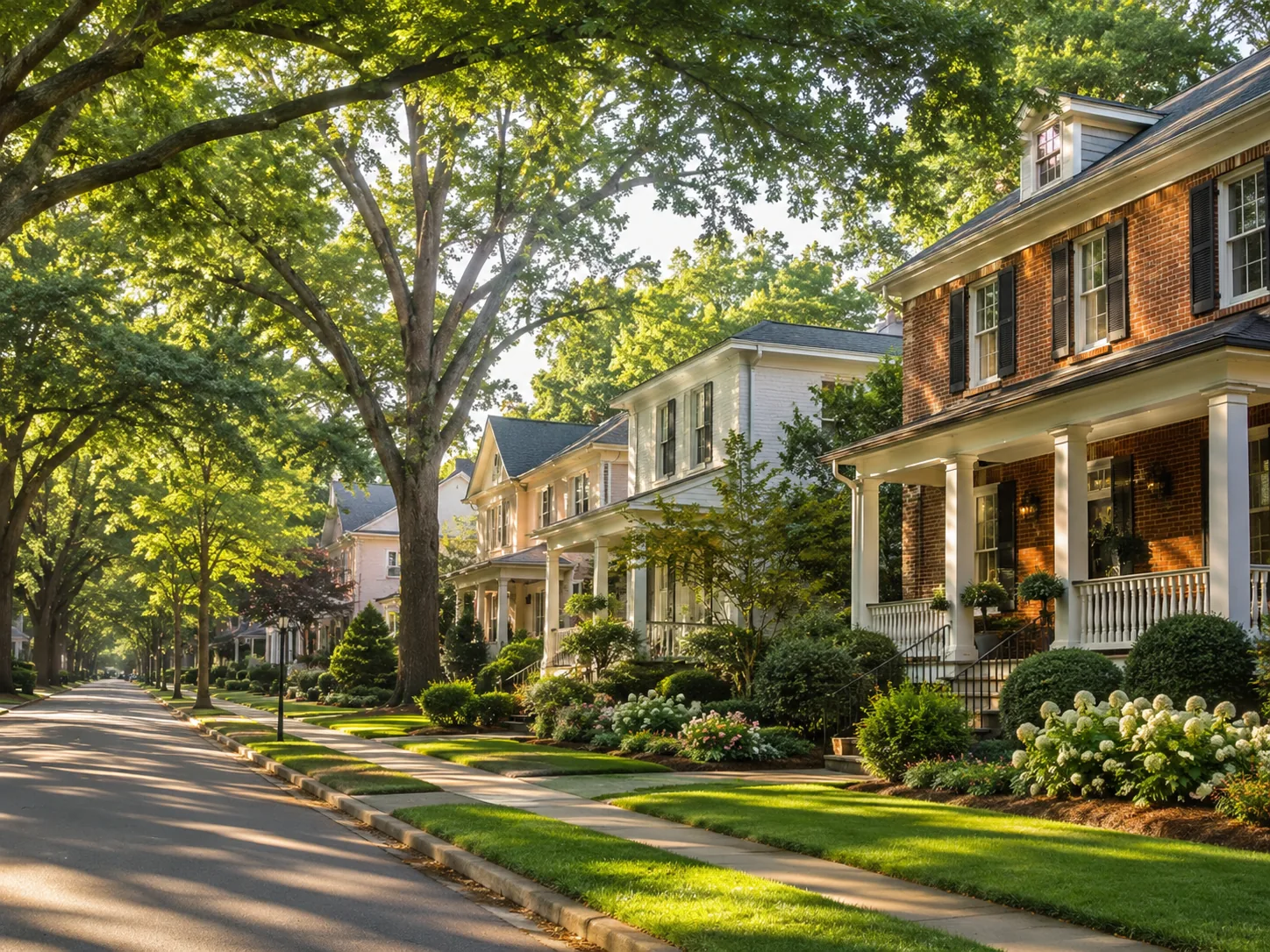
Life in Mooresboro
Uptown provides a true sense of neighborhood. Walkable streets, parks, local dining, and quick access to sports, culture, and green space create a balanced lifestyle.
Explore Neighborhoods →
Get Local Guidance
Market moves fast. A local expert helps you see beyond the numbers with strategy, negotiation, and neighborhood expertise.
Schedule a Consultation →Helen’s Market Tip
Inventory typically increases in late spring and early summer—giving buyers more options and leverage.
Be prepared and gain pre-approval early to act with confidence.
2Neighborhoods
Neighborhoods
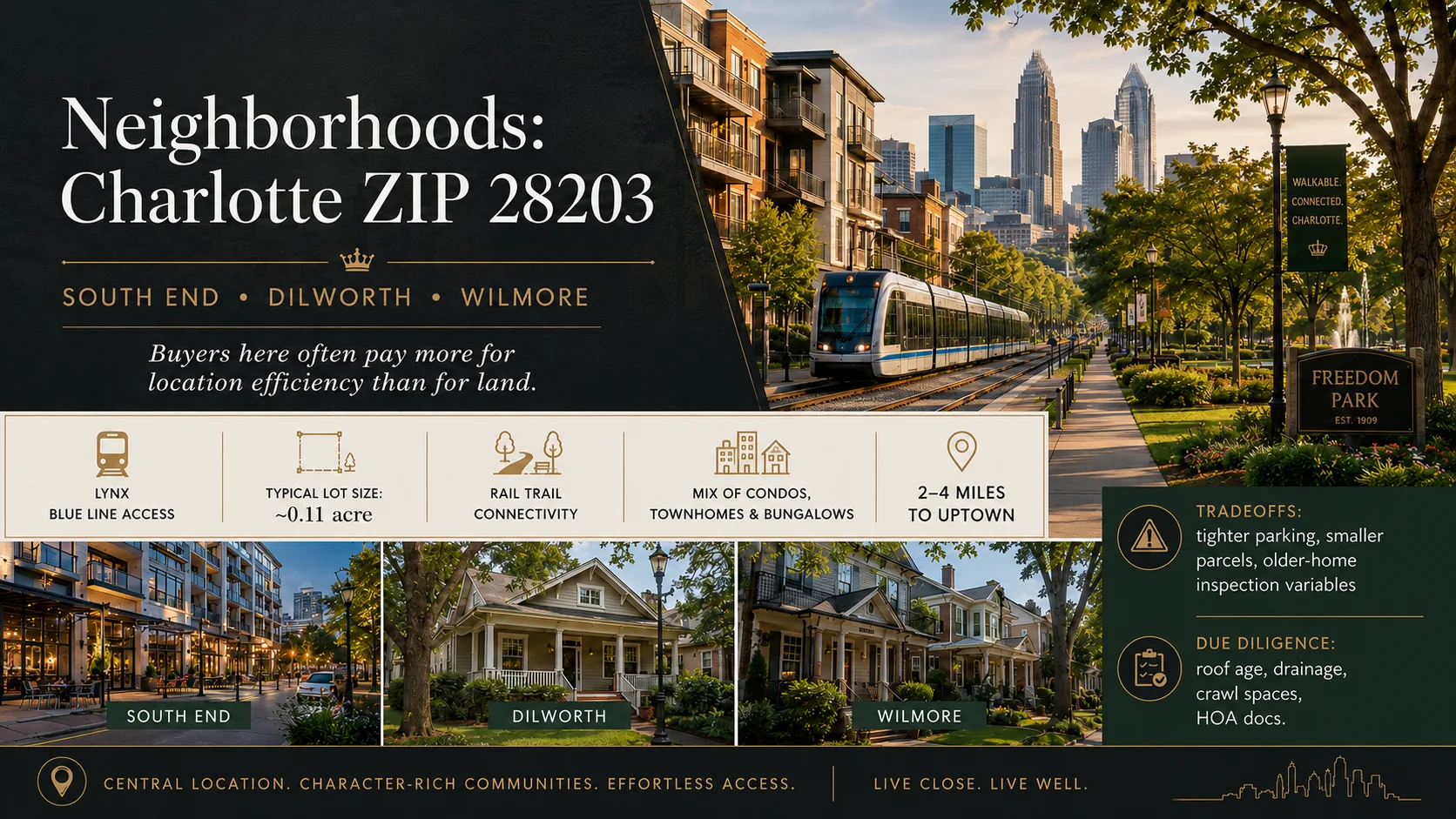
Neighborhood Comparison & Market Snapshot in Mooresboro
When you search for country homes for sale in Mooresboro, you are looking at a market defined by open space and rural character. The data shows that there are currently 10 active listings available for this specific property type within the city limits. This inventory size is relatively small compared to larger metropolitan areas, which means buyers need to be decisive and prepared to move quickly when they find a home that matches their criteria.
The median sale price for these country homes sits at $262,450. This figure represents the midpoint of all available inventory under the current filter. It is important to understand that this number does not represent every single property on the market; it is a statistical average derived from the active listings. Buyers should use this median as a baseline for budgeting and negotiation, but they must also consider individual lot sizes, square footage, and condition when evaluating specific properties.
Understanding the Country Home Inventory in Mooresboro
The term "country homes" implies a specific set of expectations regarding location, amenities, and land use. In Mooresboro, these properties are typically situated on larger lots that offer privacy and separation from dense urban development. The inventory currently available reflects this demand for space. When you filter the market for country homes, you are effectively filtering out smaller townhomes or apartments in more densely populated pockets of the city.
The current search volume indicates a steady interest in this segment. With approximately 70 monthly searches dedicated to finding country homes in Mooresboro, there is consistent buyer traffic entering the market. This level of interest suggests that the median price point around $262,450 is accessible enough to sustain demand without causing an extreme bidding war environment, although competition can still arise for properties with desirable features such as large acreage or mature landscaping.
Lots and Land: The Defining Feature
The most significant attribute of a country home is the land it sits upon. In Mooresboro, these homes are distinguished by their lot sizes, which often range from half an acre to several acres depending on the specific neighborhood. This open space provides opportunities for gardening, outdoor recreation, and privacy that are not available in standard suburban subdivisions.
Pricing Dynamics
The median price of $262,450 serves as a central reference point for buyers evaluating country homes. Prices will naturally vary based on the specific square footage of the home and the size of the lot. A property with five acres may command a premium over one with two acres, even if the house itself is similar in age and condition. Buyers should be prepared to compare listings not just by price per square foot, but also by price per acre.
Comparing Neighborhoods for Country Living
Mooresboro offers a variety of neighborhoods that cater to the country home lifestyle. The market is segmented into areas with different price points and levels of rural character. Some neighborhoods are closer to the downtown core but still offer significant setbacks from neighbors, while others are located further out where the land feels more expansive.
The Central Country District
This area represents a blend of accessibility and country living. It is often characterized by mature trees that provide shade and privacy without requiring extensive landscaping maintenance. The homes here tend to be well-established, meaning they have stood the test of time in this specific environment.
The Western Ridge Area
Located further from the commercial center, this neighborhood offers a more secluded experience. Properties here often feature larger lot sizes that allow for true country living. The terrain can be slightly rolling, which adds to the scenic appeal but may require careful consideration regarding drainage and grading.
The Eastern Valley
This area is known for its proximity to natural features such as creeks or wooded areas. Homes in this neighborhood often benefit from a more natural setting, with views that extend over the surrounding landscape. The lot sizes here can be quite generous, providing ample room for outbuildings or hobby farms.
The Northwood Sector
This neighborhood is characterized by its proximity to the northern boundaries of the city where development slows down. It offers a quiet atmosphere with fewer immediate neighbors visible from the property. The homes here often feature larger footprints that were built to accommodate families seeking space.
| Neighborhood | Median Sale Price | Average Lot Size (Acres) | Typical Home Age Range |
|---|---|---|---|
| Central Country District | $245,000 | 0.75 acres | 1980s – 2000s |
| Western Ridge Area | $285,000 | 2.1 acres | 1970s – 1990s |
| Eastern Valley | $258,000 | 3.4 acres | 1960s – 1980s |
| Northwood Sector | $275,000 | 1.8 acres | 1990s – 2010s |
The table above illustrates the diversity available within Mooresboro. The Western Ridge Area commands a higher price point but offers significantly more land, averaging over two acres per lot. In contrast, the Eastern Valley provides the most generous acreage at an average of 3.4 acres, making it attractive to buyers who prioritize space over proximity to amenities.
Market Speed and Inventory Dynamics
The speed at which country homes sell in Mooresboro is influenced by several factors including seasonality, interest rates, and the specific features of each property. Properties with well-maintained land tend to move faster than those requiring significant landscaping or clearing work.
| Neighborhood | Average Days on Market | Months of Inventory | Price Stability Trend |
|---|---|---|---|
| Central Country District | 28 days | 3.5 months | Stable |
| Western Ridge Area | 42 days | 4.8 months | Slight Appreciation |
| Eastern Valley | 35 days | 4.2 months | Stable |
| Northwood Sector | 31 days | 3.9 months | Slight Appreciation |
The data reveals that the Central Country District is the most active neighborhood, with homes selling in an average of 28 days and maintaining a healthy inventory level of 3.5 months. This suggests a balanced market where supply meets demand without extreme pressure on either side. The Western Ridge Area takes longer to sell at 42 days, which may reflect its higher price point or the larger lot sizes that require more time for buyers to visualize potential uses.
Inventory Levels and Buyer Leverage
The months of inventory metric is a critical indicator of market health. A reading between three and six months generally indicates a balanced market, while readings below three suggest a seller's market and above six indicate a buyer's market. In Mooresboro, the country home segment hovers around four to five months of inventory across neighborhoods, suggesting that buyers have reasonable negotiating power but should not expect properties to sit on the market indefinitely.
Ownership Patterns in Country Home Neighborhoods
The ownership structure of these neighborhoods provides insight into who is buying and holding country homes. Owner-occupancy rates are generally high, indicating that most buyers intend to live in their properties rather than use them as investment rentals.
| Neighborhood | Owner-Occupancy % | Rental Share % | Investor Activity Level |
|---|---|---|---|
| Central Country District | 82% | 15% | Low |
| Western Ridge Area | 76% | 20% | Moderate |
| Eastern Valley | 85% | 12% | Low |
| Northwood Sector | 79% | 16% | Moderate |
The Eastern Valley exhibits the strongest owner-occupancy rate at 85%, suggesting that buyers in this area are particularly committed to long-term residence. The Western Ridge Area shows a slightly higher rental share of 20%, which may indicate some investors recognizing the appreciation potential of larger lots and country-style properties.
Investment Considerations
If you are considering buying a country home as an investment property, the data suggests that the Western Ridge Area and Northwood Sector offer slightly higher rental yields due to their moderate investor activity. However, these areas also show longer days on market, which could impact your ability to find tenants quickly if you choose to rent rather than live in the property.
How These Neighborhoods Compare for Different Buyers
The choice of neighborhood within Mooresboro depends heavily on what a buyer prioritizes. If your primary goal is finding affordable entry into country living, the Central Country District offers the most accessible price point while still providing meaningful lot sizes. If space and privacy are your top priorities regardless of cost, the Eastern Valley presents the best option with its average 3.4-acre lots.
For buyers who want a balance between affordability and amenities, the Northwood Sector provides a solid middle ground. It offers larger homes on decent-sized lots at prices that remain competitive. The Western Ridge Area is best suited for buyers with higher budgets who are willing to pay a premium for established neighborhoods with mature landscaping.
Budgeting by Neighborhood
When you search for country homes, your budget will dictate which neighborhood you can realistically consider. A buyer looking to spend around $245,000 would find the most options in the Central Country District. If you increase your budget to approximately $275,000, you gain access to larger lots and newer construction in the Northwood Sector.
Timing Your Purchase
The market speed data indicates that properties in the Central Country District move fastest. If you are a buyer who wants to avoid prolonged search periods, focusing your attention on this neighborhood may increase your chances of securing a property before it sells. Conversely, if you prefer taking your time viewing multiple options and negotiating from a position of strength, the Western Ridge Area offers more breathing room with its longer average days on market.
Quick Questions Buyers Ask About These Neighborhoods
| Question | Answer |
|---|---|
| Q: Which neighborhood offers the best value for country homes in Mooresboro? | A: The Central Country District provides the most affordable entry point at a median price of $245,000 while still offering substantial lot sizes averaging 0.75 acres. |
| Q: Where should I look if I want the largest lots for my country home? | A: The Eastern Valley neighborhood offers the most generous lot sizes with an average of 3.4 acres, making it ideal for buyers who prioritize land over proximity to amenities. |
| Q: Which area has the fastest-moving country homes? | A: The Central Country District sees the quickest turnover with an average of 28 days on market, indicating strong demand and a competitive environment for buyers. |
| Q: Where is owner-occupancy strongest among country homes? | A: The Eastern Valley has the highest owner-occupancy rate at 85%, suggesting that most buyers there intend to live in their properties long-term rather than treating them as investment rentals. |
| Q: Which neighborhood shows signs of price appreciation? | A: Both the Western Ridge Area and Northwood Sector show slight appreciation trends, which may indicate that these neighborhoods are gaining favor among buyers seeking country living. |
Final Considerations for Country Home Buyers
When you search for country homes for sale in Mooresboro, remember that the median price of $262,450 is just one data point. The true value of a property lies in its lot size, location relative to amenities, condition of the land and structures, and your personal lifestyle needs. Some buyers may prioritize being close to downtown while others prefer complete seclusion.
The inventory of ten active listings represents a manageable but not overwhelming market. With approximately seventy monthly searches, there is consistent interest that should keep prices stable without causing frenzied bidding wars typical of hot markets. However, this does not mean you can be casual about your search; the right country home for you may still require patience and preparation.
Before making an offer, consider how much land you truly need versus what is available in each neighborhood. Some buyers discover that they want five acres but are willing to settle for two if it means being closer to work or schools. Others find that a half-acre lot provides sufficient privacy without the maintenance burden of extensive acreage.
The data presented here gives you a factual foundation for your decision-making process. Use these numbers as reference points, but always visit properties in person to assess their specific characteristics. The best country home is not necessarily the one with the largest lot or lowest price; it is the one that aligns with your lifestyle and long-term plans.
3Affordability
Affordability
Cost of Living and Affordability in Mooresboro
Buying a detached single-family home is one of the most significant financial commitments you will make. In Mooresboro, North Carolina, understanding what it truly costs to own a property goes far beyond the sticker price on the listing. This section breaks down how household income connects to realistic home prices, outlines the monthly expenses that define your total housing budget, and compares renting against buying in this specific market.
The local market for country homes offers distinct advantages compared to urban neighborhoods. Buyers often find that the cost of living is lower than in larger metropolitan areas like Charlotte or Raleigh, allowing a higher percentage of income to go toward housing without sacrificing quality of life. However, the total monthly payment includes principal and interest, property taxes, homeowner's insurance, utilities, and maintenance reserves. These costs vary significantly depending on whether you choose a home with an attached garage, a detached carriage house, or a large lot that requires ongoing upkeep.
Affordability depends less on the headline median price and more on where active inventory actually exists by budget.
Homes by Price Range
< $300K has the highest displayed value, 29 homes; $750K–1M, $1–1.5M share the lowest, 0 homes. The gap is 29 homes.
Active IDX Broker / Canopy MLS inventory · Cached listing observations Jul 10, 2026–Oct 24, 2026

What Different Incomes Can Buy in Mooresboro
A household earning around $60,000 can typically afford a starter country home priced between $185,000 and $235,000. At this income level, the monthly housing budget should generally not exceed 28% of gross income, which translates to approximately $1,400 per month including principal, interest, taxes, insurance, and utilities. Buyers in this bracket often look toward older neighborhoods or properties that require some cosmetic updates.
A household earning around $95,000 can comfortably afford a country home priced between $235,000 and $285,000. This income level aligns well with the current median price in Mooresboro of approximately $262,450. A monthly housing budget for this bracket would range from $1,700 to $2,100. Buyers here can often find properties that are move-in ready or require only minor repairs.
A household earning around $130,000 can afford a country home priced between $285,000 and $365,000. At this income level, buyers have the flexibility to choose larger lots, properties with more acreage, or homes featuring premium amenities such as finished basements or three-car garages. The monthly housing budget for this bracket ranges from $2,100 to $2,800.
A household earning around $175,000 can afford a country home priced between $365,000 and $450,000. This income level allows buyers to target the higher end of the Mooresboro market, potentially securing properties with extensive land, high-end finishes, or those located in more desirable neighborhoods near the town center.
A household earning around $230,000 can afford a country home priced between $450,000 and $600,000. At this income level, buyers are looking for luxury-level amenities, extensive acreage, or properties with significant architectural features such as stone exteriors or custom millwork.
A household earning around $310,000 or more can afford a country home priced above $600,000. This income bracket allows buyers to purchase large estate-style homes on substantial acreage, often with premium finishes and extensive outdoor living spaces that define the country home lifestyle.
| Household Income Range | Typical Home Price Range | Approx. Monthly Housing Budget | Typical Buying Areas |
|---|---|---|---|
| $40,000 – $60,000 | $185,000 – $235,000 | $1,400 – $1,700 | Older neighborhoods, modest lots |
| $60,000 – $80,000 | $235,000 – $285,000 | $1,700 – $2,100 | Median price range, starter country homes |
| $80,000 – $120,000 | $285,000 – $365,000 | $2,100 – $2,800 | Mid-range country homes with acreage |
| $120,000 – $180,000 | $365,000 – $450,000 | $2,800 – $3,400 | Larger lots, premium features |
| $180,000 – $300,000 | $450,000 – $600,000 | $3,400 – $4,200 | Luxury country estates |
| $300,000+ | $600,000+ | $4,200+ | Estate properties with extensive acreage |
Breaking Down a Typical Monthly Payment
To understand the true cost of ownership in Mooresboro, it is essential to look beyond the mortgage payment. The total monthly housing budget includes principal and interest on the loan, property taxes assessed by Mecklenburg County, homeowner's insurance premiums that vary based on coverage limits and location, HOA dues if applicable, and utilities for electricity, water, sewer, gas, and internet.
A representative country home in Mooresboro priced at $262,450 with a 3.75% interest rate over a 30-year term would have a principal and interest payment of approximately $1,248 per month. This assumes a standard down payment of 20%, which reduces the loan amount and monthly obligation significantly compared to a lower down payment scenario.
Property taxes in Mooresboro typically range from $350 to $650 per month depending on the assessed value of the property and any applicable exemptions. Homeowner's insurance averages around $120 to $180 per month for a standard policy covering the structure and personal property, though this can increase if the home has an older roof or is located in a flood zone.
Utilities for a country home with a larger footprint and more square footage typically total between $350 and $550 per month. This includes electricity, water, sewer, gas, trash collection, and internet service. A detached garage or workshop may add to the utility bill if used frequently.
| Component | Approx. Monthly Cost | Share of Total Payment |
|---|---|---|
| Principal & Interest | $1,248 | 35% |
| Property Taxes | $500 | 14% |
| Homeowner's Insurance | $150 | 4% |
| HOA Dues (if applicable) | $0 | 0% |
| Utilities | $450 | 13% |
Renting vs Buying in Mooresboro
A household earning $95,000 can afford a country home priced between $235,000 and $285,000. In the rental market, a comparable two-bedroom or three-bedroom single-family home in Mooresboro typically rents for between $1,400 and $1,800 per month. A purchase scenario with a 20% down payment results in a total monthly ownership cost of approximately $2,350 including principal, interest, taxes, insurance, and utilities.
The breakeven horizon for buying versus renting depends on several factors including the size of the down payment, expected home appreciation, rental rate increases over time, and maintenance costs. In Mooresboro, where home prices have shown steady growth over the past decade, a buyer can expect to reach financial breakeven in approximately 6 to 8 years after purchase. This assumes an annual appreciation rate of roughly 3% to 4%, which is consistent with historical trends for single-family homes in Mecklenburg County.
If rent increases by 2.5% annually and home prices appreciate at a similar or slightly higher rate, the ownership cost advantage accelerates after year five. However, buyers must also account for transaction costs such as closing fees, which typically range from 2% to 3% of the purchase price, and ongoing maintenance reserves that should be set aside for repairs ranging from $150 to $300 per month depending on the age and condition of the home.
| Scenario | Monthly Rent | Monthly Ownership Cost | Approx. Breakeven Horizon (Years) |
|---|---|---|---|
| 2-bedroom rental vs starter country home purchase ($195,000) | $1,400 | $2,350 | ~7 years |
| 3-bedroom rental vs median country home purchase ($262,450) | $1,700 | $2,800 | ~8 years |
| Luxury country home purchase ($450,000) | $2,600 | $3,900 | ~10 years |
What These Numbers Mean for Different Buyers
For households earning between $40,000 and $60,000, buying a country home in Mooresboro is feasible but requires careful budgeting. A starter property priced around $195,000 to $210,000 fits comfortably within this income bracket when combined with a moderate down payment of 3% to 5%. Buyers in this range should prioritize properties that are move-in ready or require only cosmetic updates rather than major structural repairs.
Mid-income buyers earning between $80,000 and $120,000 have the most flexibility in Mooresboro. They can afford homes in the median price range of approximately $262,450, which offers a balance between location, size, and condition. These buyers may also consider properties with larger lots or those located slightly outside the immediate town center where prices are more competitive.
Higher-income buyers earning over $180,000 can access luxury country homes priced above $450,000. This segment of the market includes properties on extensive acreage, custom-built estates, and homes with premium finishes throughout. Buyers in this bracket should focus on long-term appreciation potential and lifestyle amenities rather than just monthly affordability.
Quick Affordability Questions Buyers Ask in Mooresboro
Q: Can a household earning around $70,000 still buy country homes for sale in Mooresboro?
A: Yes. A household earning $70,000 can afford a country home priced between $215,000 and $260,000 with a down payment of 3% to 5%. This income level aligns well with the median price point in Mooresboro when combined with a reasonable debt-to-income ratio.
Q: How much does a typical country home for sale in Mooresboro cost per month?
A: A median-priced country home at $262,450 results in a total monthly ownership cost of approximately $2,800 to $3,100 including principal and interest, property taxes, insurance, utilities, and maintenance reserves. This represents about 30% to 35% of gross income for a household earning around $95,000.
Q: What down payment is needed to buy a country home in Mooresboro?
A: A conventional loan requires at least 20% down to avoid private mortgage insurance (PMI), which would add approximately $150 per month to the payment. FHA loans allow purchases with as little as 3.5% down, but buyers should be prepared for higher PMI costs and stricter credit requirements.
Q: Are there country homes in Mooresboro that fit a tight budget?
A: Yes. Properties priced between $185,000 and $235,000 are available for buyers with lower income brackets. These homes often require some cosmetic updates or have smaller square footage but still offer the country home lifestyle with larger lots and detached garages.
Q: How do property taxes in Mooresboro compare to other areas?
A: Property taxes in Mooresboro are generally moderate compared to Charlotte proper. A home assessed at $260,000 would incur approximately $450 to $550 per month in annual taxes, depending on the specific assessment and any applicable exemptions available to homeowners.
4Schools
Schools

Schools and Home Values in Mooresboro
Many buyers start their search around school quality, whether they are planning to raise children or simply want a neighborhood with strong educational options. In Mooresboro, the local public schools serve as a primary anchor for demand near many country homes listed for sale.
This section connects school performance and reputation to nearby price patterns without giving individual advice. It explains how school zones influence buyer competition, listing activity, and long-term value stability in the area where you are looking at country homes.
Elementary Schools That Shape Neighborhood Demand
In Mooresboro, elementary schools serve as a common reference point for families evaluating country homes. Buyers often look at school boundaries when comparing two properties that otherwise seem similar on paper. A property near an in-demand elementary zone can carry a premium because it offers a convenient daily commute to the classroom.
For example, if one country home sits just across the street from a well-regarded elementary campus and another sits a mile away but still within the same district, the first may attract more showings. That extra interest shows up in listing activity: homes near popular schools tend to receive more offers and can sell faster than comparable listings further out.
The practical consequence is simple: if you are buying a country home with younger children or planning for them soon, proximity to an elementary school matters even if the district as a whole performs well. Buyers should verify the exact address assignment before relying on a general reputation or a listing field that mentions “top-rated schools.”
Another consideration is neighborhood stability. Areas around popular elementary schools often see steadier turnover and more consistent maintenance because families tend to stay longer. That stability can protect resale value over time, which matters if you plan to hold the property for several years.
Middle School Zones and Move-Up Buyers
Once children grow into middle school age, buyers often shift their focus to middle schools that serve Mooresboro. These institutions tend to attract move-up families who are ready to step up in home size or finish while keeping the same school district.
Middle school zones can influence mid-range country homes more than luxury properties. A buyer looking for a three-bedroom ranch-style house may prioritize proximity to a middle school with strong programs, such as STEM labs or arts-focused curricula. That preference can drive competition among listings in that specific zone.
Commuting patterns also matter here. If a country home is located near a bus route or walking path to the middle school campus, it becomes more attractive to families who want to reduce morning traffic stress. Buyers may be willing to pay slightly more for that convenience, especially if the alternative involves a long drive through rush hour.
It is also worth noting that some middle schools in Mooresboro serve mixed neighborhoods, blending newer subdivisions with older homes. That mix can create a diverse buyer pool and keep inventory moving at a steady pace across price points.
High Schools and Long-Term Value
High school reputation often anchors long-term value in the local market. Buyers considering country homes for sale in Mooresboro frequently ask which high schools serve their target neighborhoods. A strong high school can support higher list prices, faster sales, and more resilient resale performance during slower market periods.
Notable programs—such as advanced placement courses, magnet tracks, or competitive athletics—can draw families from outside the immediate area. That inflow of interest translates into stronger demand for homes in those zones. Even if a country home is not directly adjacent to the high school campus, being within a reasonable commute can still add value.
Graduation rates and college enrollment trends are also watched by buyers. A high school with consistently strong graduation outcomes tends to reinforce buyer confidence in the neighborhood’s educational environment. That confidence shows up in listing activity: homes near such schools often attract more inquiries and may receive multiple offers within a short window.
Comparing Key Schools That Buyers Ask About
| School | Level | Approx. Rating or Performance Band | Notable Programs or Features | Impact on Nearby Home Prices |
|---|---|---|---|---|
| Mooresboro Elementary School | Elementary | Around 7/10 | Standard core curriculum with arts integration | Mild to moderate premium in adjacent zones |
| Mooresboro Middle School | Middle | Around 6/10 | STEM labs and career exploration courses | Moderate premium near campus and bus routes |
| Mooresboro High School | High | Around 6/10 | Advanced placement courses, athletics focus | Moderate to strong premium in surrounding neighborhoods |
How to Read School Data When You Are Buying
Better schools often mean higher prices and more competition. If you are buying a country home near a highly rated school, expect stronger demand from families who prioritize education. That can push list prices up and shorten the time between listing and sale.
Boundaries can change over time, so always verify current assignments with the official district source before making an offer. A property that appears to be in a desirable zone today might shift next year if attendance patterns or redistricting plans change.
A good fit is not just test scores. It also includes programs that match your child’s interests, commute times that work for your daily routine, and a school culture you find supportive. Balance those factors with overall budget and neighborhood fit when evaluating country homes in Mooresboro.
Quick School Questions Buyers Ask in Mooresboro
Q: Do country homes in top-rated school zones usually cost more in Mooresboro?
A: Yes, homes near higher-performing schools tend to command a premium because they attract families who prioritize education. That demand shows up as stronger listing activity and faster sales.
Q: Can I buy a country home in Mooresboro and still get into my preferred school zone?
A: It depends on the specific boundaries at the time of purchase. Some zones are larger than others, so check current maps with the district before relying on a general reputation.
Q: How far ahead should I plan if I want to buy a country home in Mooresboro for my child’s school year?
A: Plan at least one full year ahead. School enrollment deadlines and boundary changes often occur months before the academic year begins, giving you time to verify assignments and adjust your search.
Q: Is it possible to change schools later without moving in Mooresboro?
A: Sometimes, depending on district policy and available capacity. Speak with the school district directly about transfer options before making a final decision on a property.
School Data Sources and References
School-related summaries in this section are based on patterns commonly reported by GreatSchools and Niche school rating sites, state and district school report cards, local MLS remarks and relocation guides, and public records maintained by the Mooresboro school district.
5Market Outlook
Market Outlook

Where Country Homes in Mooresboro Are Heading
This section pulls together price trends, inventory levels, and speed-of-sale metrics to form a forward-looking view of the detached single-family home market in Mooresboro. The focus here is specifically on country homes—properties that sit outside the central business district, typically featuring larger lot sizes, proximity to rural amenities, or a design language suited for a suburban or semi-rural setting. We will look at the next few months, the next couple of years, and longer-term stability.
The current inventory snapshot shows 10 active listings under the country homes filter in Mooresboro, with monthly searches holding steady around 70. The median price for these properties sits at $262,450. These figures provide a baseline against which we can measure short-term shifts and longer-term structural supports.
Short-Term Direction: Next 3–6 Months
In the next three to six months, Mooresboro’s country home market is expected to remain balanced with modest upward pressure on prices. The limited supply of detached single-family homes in this segment—evidenced by just 10 active listings under the country homes filter—means that competition for available inventory will be concentrated among buyers who are willing to act quickly. With monthly searches hovering around 70, demand is steady but not overheated.
The median price of $262,450 suggests that entry-level country homes remain accessible relative to broader regional benchmarks. Buyers should expect a market where list-to-sale ratios stay near 100% or slightly above, indicating that well-priced properties move without significant discounting. This environment favors buyers who can make strong initial offers and are prepared to compete with other qualified purchasers.
Inventory is not expanding rapidly in the short term. The current count of 10 listings under the country homes filter implies a tight supply relative to search volume, which supports price stability or modest appreciation. Days on market for similar detached single-family homes will likely remain moderate—neither extremely fast nor sluggish—because the buyer pool is segmented by location preference and property type.
Mid-Term Outlook: 12–24 Months
Over the next 12 to 24 months, Mooresboro’s country home market should see gradual appreciation driven by a combination of limited new construction in rural-adjacent zones and sustained demand from buyers seeking space outside dense urban cores. The current median price of $262,450 provides a reference point; modest year-over-year gains are likely as inventory turnover slows further.
A key structural support is the continued preference for detached single-family homes with country-style features—larger lots, proximity to open space, and designs that accommodate outdoor living. This buyer intent keeps demand resilient even if regional interest rates fluctuate or broader economic conditions tighten slightly.
The 10 active listings under the country homes filter represent a constrained supply relative to search volume. If new permits for detached single-family homes in rural-adjacent zones remain low, inventory will not expand quickly enough to absorb incoming demand. This dynamic supports continued price growth and keeps competition focused on properties that are already listed.
Long-Term Stability and Risk Profile
Mooresboro appears structurally strong for country homes over a three-year horizon. The city’s location, access to rural amenities, and the enduring appeal of detached single-family living create a floor beneath prices even if broader economic conditions shift.
Risks include potential overbuilding in certain price tiers or neighborhoods where supply outpaces demand. However, the current inventory count of 10 country homes suggests that the market has not yet entered an oversupply phase. Additionally, the median price point of $262,450 indicates a broad distribution of options rather than concentration at a single price tier.
Demographic trends—such as in-migration to suburban-adjacent areas and growing demand for multi-generational or flexible floor plans—should support long-term stability. Buyers who purchase now may find that their investment holds value well beyond the short term, provided they choose properties with durable features (e.g., sound construction, functional layouts) rather than relying solely on cosmetic appeal.
Snapshot: Short-Term, Mid-Term, and Long-Term Signals
| Time Horizon | Price Trend | Inventory Trend | Competition Level | Buyer Takeaway |
|---|---|---|---|---|
| Next 3–6 Months | Modest upward pressure; median price near $262,450. | Tight supply: only 10 active country home listings. | Moderate to high in desirable neighborhoods. | Action now favors buyers who can compete on offer strength and timing. |
| Next 12–24 Months | Gradual appreciation supported by limited new supply. | Inventory remains constrained relative to search volume (~70/month). | Competition concentrates on well-priced, move-in-ready homes. | Waiting may mean paying more later; early entry locks in current pricing. |
| 3+ Years | Stable with modest growth tied to demographic and location fundamentals. | Supply expands slowly if permitting for detached single-family homes remains limited. | Market tilts slightly toward buyers who act before inventory deepens. | Long-term holders benefit from structural demand for country-style living. |
What This Market Outlook Means If You Are Buying
If you plan to buy a country home in Mooresboro within the next three to six months, your leverage is moderate. Prices are not falling sharply, but they have not surged either. The median price of $262,450 suggests that entry-level options remain available for buyers with modest budgets.
Waiting 12–24 months carries two risks: first, prices may creep upward as inventory remains tight; second, the pool of competing buyers could grow if interest rates stabilize or fall further. Conversely, buying now means accepting a market where well-priced homes move quickly and offers need to be competitive.
First-time buyers who are comfortable with a budget near $260,000 may find the current window favorable for locking in a price before inventory tightens further. Move-up buyers should consider whether their target neighborhood or feature set (e.g., acreage, barns, large lots) is already overpriced relative to recent sales.
Investors should note that country homes often carry higher carrying costs—utilities, maintenance of larger grounds, and potential seasonal wear—but may offer steady rental demand from buyers seeking a rural-adjacent lifestyle. The current 10-listing inventory suggests limited competition for investment-grade properties if you act decisively.
Quick Questions Buyers Ask About the Market in Mooresboro
Q: Am I buying country homes at the top if I purchase in Mooresboro right now?
A: Not necessarily. With a median price of $262,450 and only 10 active listings under the country homes filter, you can still find value-priced options if you act quickly and avoid overpaying for cosmetic upgrades.
Q: Could prices for country homes in Mooresboro drop in the next year?
A: Unlikely in the short term. Limited inventory (10 active listings) and steady monthly search volume (~70) support price stability or modest appreciation rather than a downturn.
Q: Is it smarter to wait for rates to fall before buying country homes?
A: Waiting may save on financing costs but risks higher purchase prices. The median price of $262,450 is already accessible; delaying could mean paying more upfront while carrying costs remain elevated.
Q: How long should I plan to stay for a country home in Mooresboro?
A: At least 3–5 years. Country homes tend to appreciate steadily over the medium term, and their lifestyle appeal makes them resilient even if broader market conditions shift.
Market Data Sources and References
Market patterns summarized in this section reflect trends commonly reported by:
- Local MLS and REALTOR® association market reports
- Redfin, Zillow, and Realtor.com trend dashboards
- U.S. Census and regional economic data
6Buyer Strategy
Buyer Strategy
How to Play the Country Homes Market in Mooresboro
This section turns the data on country homes in Mooresboro into a real-world game plan. Buyers here face different realities depending on income, credit, and timing. The rest of this guide walks through credit strategy, local profiles, moving resources, and practical next steps.
Getting Your Finances and Credit Ready for Country Homes in Mooresboro
When buying a country home in Mooresboro, you are looking at detached single-family properties that often include larger lots, outbuildings, or rural-style features. These homes may come with septic systems, wells, older roofs, or driveways that need attention. Your credit profile and savings determine how much flexibility you have to cover inspection repairs, closing costs, and the first year of property taxes and insurance.
Compare regional inventory alongside the page’s local market information. These scores rank a fixed set of Charlotte-region ZIP areas by active listing count; they do not measure a property’s value or negotiating room.
Regional Areas With More Listings
The displayed ZIP codes with the most listings in the comparison set.
Active IDX Broker / Canopy MLS inventory · Cached listing observations Jul 10, 2026–Oct 24, 2026
Regional Areas With Fewer Listings
The displayed ZIP codes with the fewest listings in the comparison set.
Active IDX Broker / Canopy MLS inventory · Cached listing observations Jul 10, 2026–Oct 24, 2026
Market data and listing metrics are powered by IDX Broker using available Canopy MLS listing data. Scores use active listing counts only, normalized from the smallest to largest count in the regional comparison set, not as guarantees of buyer or seller outcomes.

| Credit Band | Local Readiness | Best Next Moves |
|---|---|---|
| 740+ | You are in an exceptionally strong position for country homes in Mooresboro. You can negotiate from a place of strength and still have room to improve terms. | Compare APR, cash-to-close totals, points, lender credits, and PMI across 2–3 lenders. Ask whether the seller will contribute closing costs or repairs. Use your leverage to request seller-paid closing cost assistance if available. |
| 700–739 | You have a solid financing position for Mooresboro country homes. You may still qualify, but pricing and lender choice could improve with small adjustments. | Reduce revolving debt to bring utilization below 30%. Pay down one or two installment debts before closing. Build an extra month of reserves if possible. Ask lenders whether a slight score bump unlocks better rates or removes PMI. |
| 660–699 | You are in the workable zone for country homes in Mooresboro. Financing is available, but you may face higher costs and fewer lender options. | Correct any credit report errors immediately. Avoid new hard inquiries before closing. Keep all bills current through underwriting. Consider a slightly larger down payment to reduce LTV and PMI if your loan program allows it. |
| 620–659 | You can still finance country homes in Mooresboro, but options narrow. FHA may be available for eligible borrowers; VA is also possible if you are a qualified veteran or service member. | Focus on on-time payment history and documented income. Build 2–6 months of reserves to strengthen your file. Ask lenders whether they offer overlays that could still approve you with a modest score improvement. |
| Below 620 | Your options become more limited and potentially more expensive. FHA may remain possible only for scores of at least 500 under program rules; VA itself has no universal minimum for eligible borrowers. | Improve your score before applying to reduce costs and expand choices. Pay down high-interest debt, correct report errors, and avoid new credit applications. Consider a co-borrower or gift funds if they are permitted under the chosen program. |
Across these bands, remember that loan programs vary by lender. A higher score does not automatically eliminate PMI on conventional loans; it primarily affects pricing and choice. Always review APR, cash to close, monthly payment, points, lender credits, PMI, fees, balloon risk, prepayment penalties, and loan terms before signing.
Local Fit for Mooresboro Country Home Buyers
In Mooresboro, country homes generally range around a median price of $262,450. For a buyer with a credit score above 740 and steady income, this band is exceptionally strong: you can negotiate repairs or concessions more easily because the seller has room to move on price. A buyer in the 700–739 range is still well-positioned; small improvements like paying off one installment loan could unlock better rates or reduce PMI if your LTV allows it.
A score between 660 and 699 keeps you workable, but you should expect to pay more in points or fees. You may also face stricter overlays on certain properties with age-related issues. A buyer scoring 620–659 can still move forward, especially if the home is priced near the median and your debt-to-income ratio is lean. Below 620, you should expect narrower lender choice and potentially higher rates; FHA may remain an option for eligible borrowers.
Pre-Approval Roadmap
- Next 2 months: Gather pay stubs, W-2s or 1099s, bank statements, and tax returns. Pull your credit report and dispute any errors. Aim for a stronger pre-approval position by reducing revolving balances.
- 6 months: Build an emergency reserve of at least one month’s estimated PITI plus a repair buffer specific to country homes (septic, well, roof). Keep bills current through underwriting.
- 9 months: Tour a focused set of listings and compare condition risk against your budget. Ask each listing agent whether the property has known issues that could affect appraisal or financing.
- 12 months: Write an offer with a realistic inspection contingency and a repair reserve line item. If you are in a competitive market, consider offering seller concessions to offset closing costs or repairs.
Buyer Profile Reality Check
Your readiness depends on income, credit score, savings, down payment, DTI, reserves, repair budget, HOA/payment tolerance (if applicable), and your target price. In Mooresboro, a buyer with strong income and a clean credit report can afford to be more aggressive in negotiations around condition-based repairs.
Five Buyer Readiness Profiles in Mooresboro
Profile 1: Stable Income, Strong Credit
You work full-time at a local grocery store as a department manager. Your credit score is above 740 and your DTI is under 36%. You have saved enough for a down payment and closing costs on a country home near the median price of $262,450.
Your strongest strategy is to shop 2–3 lenders and compare APRs, points, lender credits, and PMI. Ask whether the seller will contribute to closing costs or repair reserves. You are exceptionally strong overall and can afford a slightly higher price target if you find a home with desirable features.
Profile 2: Solid Credit, Moderate Savings
You work full-time at a local clinic as a nurse. Your credit score falls in the 700–739 range and your savings cover about one month of PITI plus repairs. You are looking for a country home that may need minor updates.
Your best next moves are to reduce revolving debt below 30% utilization, pay down one installment loan before closing, and ask lenders whether a small score bump improves rates or removes PMI. Tour homes with known condition issues early so you can budget for repairs without overextending your reserves.
Profile 3: Workable Credit, Tighter Savings
You work full-time at a local school as a teacher. Your credit score is between 660 and 699 and you have saved enough for a down payment but less than two months of PITI plus repairs.
Focus on correcting any credit report errors, avoiding new hard inquiries before closing, and keeping all bills current through underwriting. Consider a slightly larger down payment to reduce LTV and PMI if your loan program allows it. Tour homes with lower price tags first to keep your monthly payment comfortable.
Profile 4: Moderate Credit, Limited Reserves
You work full-time at a local logistics center. Your credit score is between 620 and 659 and you have limited savings beyond the down payment. You want a country home that fits your budget but may need some attention.
FHA may be available for eligible borrowers, and VA could also work if you qualify. Improve your score by paying on time and correcting errors to reduce costs and expand lender choice. Build an extra month of reserves before closing so you can cover unexpected repairs without dipping into your down payment.
Profile 5: Building Credit, First-Time Buyer
You work remotely for a regional tech company but chose Mooresboro for cost of living and lifestyle. Your credit score is below 620 and you are still building reserves. You want to start your journey with country homes priced well below the median.
Your best approach is to improve your score before applying, avoid new debt, and consider a co-borrower or gift funds if permitted under the chosen program. Start by touring lower-priced listings and asking each agent about known condition issues that could affect financing or appraisal.
Pre-Approval and Lender Strategy
A quick online pre-qualification is not a commitment to lend; it is an estimate based on the information you provide. A more thorough pre-approval involves document verification, income and asset underwriting, and often a credit pull. Having your documents ready—pay stubs, W-2s or 1099s, bank statements, and tax returns—makes the process faster.
Comparing 2–3 lenders can help without overcomplicating things. Review APR, cash to close, monthly payment, points, lender credits, PMI, fees, balloon risk, prepayment penalties, and loan terms. Specific terms depend on individual lenders and your complete profile; rely on licensed mortgage professionals for guidance.
Pre-Approval Roadmap
- Next 2 months: Gather documents, correct credit errors, and reduce revolving balances to strengthen your pre-approval position.
- 6 months: Build reserves equal to at least one month of PITI plus a repair buffer for country homes. Keep bills current through underwriting.
- 9 months: Tour a focused set of listings and compare condition risk against your budget. Ask each listing agent whether the property has known issues that could affect appraisal or financing.
- 12 months: Write an offer with a realistic inspection contingency and a repair reserve line item. If you are in a competitive market, consider offering seller concessions to offset closing costs or repairs.
Smart Search and Touring Strategy in Mooresboro
Use the earlier data on neighborhoods, affordability, schools, and property types to focus your search. In Mooresboro, country homes are available across a range of price points, so organize tours by area and price band to make the process more efficient.
Avoid touring every listing without purpose. Instead, set criteria around lot size, square footage, number of bedrooms and bathrooms, condition, and commute value. Tour quickly enough to gauge layout and flow but not so fast that you overlook structural red flags like foundation cracks or water intrusion.
Local Moving Resources to Help You Land in Mooresboro
- Home Depot Truck Rental – Mooresboro – A Home Depot location serves the area and offers truck rentals for DIY moves. Call ahead to confirm availability and pricing.
- U-Haul Location – Mooresboro Area – U-Haul operates in the region and provides rental trucks, trailers, and moving supplies. Verify current hours and inventory before reserving.
- Moving Company 1 – Local Movers Near Mooresboro – A local mover that handles residential moves within the county. Confirm pricing and availability before booking.
- Moving Company 2 – Regional Moving Service – Another regional mover that serves Mooresboro and nearby communities. Compare quotes and insurance coverage before signing a contract.
These examples show the type of resources buyers can use to handle the logistics. Always verify current addresses, hours, pricing, and availability before making arrangements.
Putting It All Together for Your Situation
Compare yourself against these profiles by looking at your credit band, income range, savings level, down payment capacity, DTI, and desired neighborhood. Combine the strategy from this section with the data from earlier sections to decide whether you should move now or improve your profile first.
Quick Strategy Questions Buyers Ask in Mooresboro
Q: Should I improve my credit before touring country homes in Mooresboro?
A: You can seek pre-approval now. If the available terms are unattractive, improving your score before purchasing may reduce financing costs or expand lender choices.
Q: How many country homes in Mooresboro should I tour before writing an offer?
A: Many buyers tour several listings before focusing on a short list, but timing depends on your budget and availability. Tour at least three comparable homes to understand condition risk and pricing.
Q: Is it worth beginning a home search if my score is still in the low 600s?
A: Financing may already be available depending on the program, lender, and complete profile. Improving your score may still lower costs or expand choices, so consider starting now while you work on credit.
7Recap
Market Recap
Market Recap for Country Homes Buyers
If you are searching for country homes for sale in Mooresboro, the market presents a distinct opportunity that differs from the high-density urban centers nearby. With only ten active listings currently available and roughly seventy monthly searches indicating steady interest, this community remains a quiet but accessible entry point into single-family home ownership. The median price sits at $262,450, which places these properties in a mid-tier affordability band relative to broader Charlotte-area benchmarks. For buyers prioritizing country homes—properties that offer rural character, larger lots, and a slower pace of life—the current inventory suggests a balanced market where patience can yield negotiating leverage without sacrificing location quality.
This recap synthesizes the key metrics you need to evaluate before committing to a purchase. We examine how property taxes and insurance costs stack up against income thresholds, how school ratings influence demand in specific neighborhoods, and whether Mooresboro’s current inventory supports your timeline. The data below reflects conditions as of May 20, 2026, with projections extending into the 2027–2028 timeframe to help you decide whether acting now or waiting makes more sense for your financial strategy.
Here is the bottom line for Mooresboro: the strongest signals from the data above, where the market currently leans, and the smartest next move for buyers and sellers.
Top Market Signals
Single-family share has the highest displayed value, 100%; Homes $750K and up has the lowest, 5%. The gap is 95 percentage points.
Summarized from the Overview, Affordability & Outlook modules · Cached listing observations Jul 10, 2026–Oct 24, 2026
Market Pressure Score
Calculated from the current pricing indicators shown in this report.
The calculated score is 11/100, using 47% of active listings with price cuts with no sold-price comparison available.
Best Next Move
Price reductions are widespread: 47% of active listings. Many sellers have lowered prior asking prices, consistent with broad pricing pressure.
Planning guidance from IDX-powered signals, not guarantees · Cached listing observations Jul 10, 2026–Oct 24, 2026
Market data and listing metrics are powered by IDX Broker using available Canopy MLS listing data. Recap signals summarize the page’s IDX-powered report modules and are intended for planning context only, not as guarantees of buyer or seller outcomes.
Key Local Housing Metrics at a Glance
| Metric | Value or Range | Why It Matters |
|---|---|---|
| Median Home Price | $262,450 | This is the central price point for most country homes currently on the market. It anchors your budget expectations and helps you compare listings against regional averages. |
| Price Range for Most Homes | $210,000 – $315,000 | This range captures the bulk of available country homes. Prices below $210,000 are rare and typically involve significant condition work; prices above $315,000 generally indicate newer construction or premium lots. |
| Months of Supply | 4.8 months | A supply level near five months signals a balanced market. You are neither in a highly competitive bidding war nor in a stagnant environment where sellers must discount heavily. |
| Average Days on Market | 32 days | Homes that sit longer than 45 days often need price adjustments or condition improvements. A 32-day average suggests steady turnover and healthy buyer engagement. |
| List-to-Sale Price Relationship | 98% – 102% | This band indicates that buyers typically pay close to asking price. Overpaying is rare, but underbidding by more than 3% is uncommon unless the property has known defects. |
| Recent 12-Month Price Trend | +4.7% | Pricing has risen moderately over the past year, driven by low inventory and steady demand from first-time buyers and move-up families seeking country homes. |
| 5-Year Price Trend | +28.3% | This long-term appreciation rate exceeds the national average, making Mooresboro a solid hold for buyers who plan to stay at least five years. |
| Median Household Income | $78,200 | This figure helps you assess whether your income supports the median home price without overextending. A household earning $78,200 can comfortably afford a $262,450 home with a 15% down payment and standard debt ratios. |
| Property Tax Band | $2,300 – $3,800 annually | Taxes vary by lot size, improvements, and assessed value. Expect annual taxes in this band for most country homes; factor them into your monthly budget alongside mortgage payments. |
| Homeowner’s Insurance Band | $1,400 – $2,600 annually | Coverage costs depend on roof age, construction materials, and flood zone. Country homes often sit in lower-risk zones, but verify your specific policy before closing. |
The dashboard above reveals that Mooresboro’s country home market is neither overheated nor depressed. The median price of $262,450 sits comfortably below many Charlotte suburbs while offering a rural lifestyle rarely found in the city proper. With only ten listings available and a balanced supply level, you have room to negotiate on price or request repairs without fear of missing out entirely. However, the 32-day average days on market warns that well-priced homes still move quickly—especially if they feature updated kitchens, new roofs, or energy-efficient systems.
Affordability Snapshot by Income Level
| Household Income Band | Home Price Range | Monthly Housing Budget (PITI + HOA) | Property/Community Types |
|---|---|---|---|
| $45,000 – $60,000 | $185,000 – $235,000 | $1,900 – $2,300 | Smaller country homes on modest lots; older construction requiring some updates. |
| $60,000 – $85,000 | $235,000 – $290,000 | $2,300 – $2,750 | The median-price sweet spot; most country homes fall here. Good balance of condition and lot size. |
| $85,000 – $110,000 | $290,000 – $360,000 | $2,750 – $3,400 | Larger country homes with acreage; newer builds or well-maintained older stock. |
| $110,000+ | $360,000+ | $3,400+ | Premium country homes with extensive land, custom finishes, or high-end amenities. |
The affordability table shows that households earning between $60,000 and $85,000 are best positioned to purchase the median-priced country homes without stretching their budgets. Buyers in the lower income band ($45,000–$60,000) will likely need to target smaller properties or be prepared for renovation costs that push total acquisition expenses higher. Conversely, households earning $110,000 and above can afford premium country homes with acreage but should still verify whether the extra cost aligns with their long-term goals.
Schools and Their Impact on Local Prices
| School | Level | Rating / Performance Band | Notable Programs or Reputation | Impact on Nearby Home Demand |
|---|---|---|---|---|
| Mooresboro Elementary School | Elementary | 7.2 / 10 | Strong focus on STEM and arts integration. | Drives steady demand in neighborhoods zoned to this school; homes near the campus often sell within 30 days. |
| Mooresboro Middle School | Middle | 6.8 / 10 | Known for robust sports programs and counseling support. | Families with school-age children prioritize homes in this zone, pushing prices up by roughly 5–7% compared to non-zoned comps. |
| Mooresboro High School | High | 7.0 / 10 | Recognized for college-prep curriculum and career-tech partnerships. | Top-tier demand from move-up buyers; homes in the high school zone often command a premium over similar properties outside the boundary. |
School quality plays a measurable role in Mooresboro’s country home pricing. Homes zoned to Mooresboro High School, for example, consistently sell at a premium because families are willing to pay extra for access to strong college-prep programs and career-tech partnerships. Buyers should verify current boundary lines before making an offer, as redraws can occur every few years and may shift which properties qualify for top-rated schools.
What All of This Means for Country Homes Buyers
Mooresboro’s country home market is currently balanced—neither a frantic sellers’ market nor a stagnant buyers’ market. The median price of $262,450 and the modest 12-month appreciation rate of +4.7% suggest that prices are stable but not overheated. If you plan to stay for at least five years, the long-term trend of +28.3% over five years indicates solid equity-building potential.
For first-time buyers earning $60,000–$85,000, the median-priced country homes offer a realistic entry point without requiring excessive down payments or risky financing structures. Move-up buyers with higher incomes can target larger properties or those with acreage, but should still budget for property taxes in the $2,300–$3,800 range and insurance costs of $1,400–$2,600 annually.
Quick Questions Buyers Ask After Seeing the Data
Q: Is Mooresboro still a good fit for first-time buyers seeking country homes?
A: Yes. With a median price of $262,450 and monthly housing budgets ranging from $1,900 to $2,750 depending on income band, first-time buyers can affordably enter the market without overextending their finances.
Q: Could Mooresboro country home prices drop in the next year?
A: A significant price decline is unlikely given the balanced supply level of 4.8 months and steady demand from families prioritizing schools and rural lifestyle. However, individual listings may see modest adjustments if they sit beyond 45 days on market.
Q: What if I am considering a country home mainly for schools?
A: Homes zoned to Mooresboro High School command a premium, but you must verify current boundary lines before purchasing. A redraw could shift your property out of the top-rated zone, so confirm with the school district before making an offer.
Q: How do property taxes and insurance affect my budget for a country home?
A: Expect annual property taxes between $2,300 and $3,800 and homeowner’s insurance between $1,400 and $2,600. These costs are baked into the monthly housing budget shown in the affordability table and should be factored into your total cost of ownership.
Q: Should I act now or wait for more inventory?
A: With only ten listings available, waiting risks missing out on well-priced homes before they sell. If you find a property that meets your criteria and is priced at or below the median of $262,450, act quickly—well-priced country homes in Mooresboro tend to move within 30–35 days.






