





1Overview
Market Overview
Real data. Local insights. Smarter decisions.
Use this real-time market snapshot to understand where Charlotte stands today—and what it could mean for your purchase plan.
Data is updated monthly.
Active Price Cuts
Active listings with recorded price cuts.
Price Cuts
Price reductions are widespread: 49% of active listings. Many sellers have lowered prior asking prices, consistent with broad pricing pressure.
Homes for Sale by Asking Price
Share of homes for sale in each asking-price range.
Where Listings Are Available
28078 has the highest displayed value, 609 homes; 28216 has the lowest, 494 homes. The gap is 115 homes.
Active IDX Broker / Canopy MLS inventory · Cached listing observations Jul 10, 2026–Oct 24, 2026
Terrata Homes for Sale in Charlotte — area-wide median $425K: Understanding Your Search for Terrata Homes Homes
If you are searching for new construction homes built by a reputable builder, your focus on Terrata Homes represents a deliberate choice toward quality craftsmanship and modern design. This developer has established itself as a significant player in the regional market, delivering residences that blend contemporary aesthetics with functional living spaces.
The current inventory of Terrata Homes homes reflects a dynamic construction pipeline where new listings are continually entering the marketplace. With approximately 20 active listings available across their portfolio, buyers have access to a meaningful selection of floor plans and home sites. This inventory level provides sufficient choice for those seeking specific features while maintaining manageable competition levels.
The median asking price for these homes sits at $512,900, which positions them within the upper-middle tier of new construction offerings in their respective markets. This pricing point suggests that buyers are looking for elevated finishes, thoughtful architectural details, and comprehensive builder warranties rather than entry-level new builds.
When you narrow your search specifically to Terrata Homes homes, you are making a decision about brand reputation alongside physical property attributes. The developer's consistent presence in the market signals stability and experience, which matters significantly when evaluating construction quality, timeline reliability, and post-closing support for homeowners.

Terrata Homes for Sale in Charlotte — area-wide $241/sqft: The Builder Behind Your Search
Terrata Homes has cultivated a reputation built on delivering homes that satisfy both aesthetic preferences and practical living requirements. Their approach to new home development emphasizes attention to detail in finishes, thoughtful integration of modern amenities, and designs that appeal to buyers seeking turnkey living solutions.
The current selection of 20 listings represents the developer's active construction pipeline at this moment. This number indicates a healthy level of market presence without suggesting oversaturation or an overwhelming inventory glut. Buyers can expect a curated range of options rather than being presented with hundreds of similar floor plans.
Pricing in the $512,900 median range suggests that these homes are positioned for buyers who value quality construction and contemporary design over the lowest possible purchase price. This price point typically correlates with higher-grade finishes, better lot placement, and more comprehensive builder warranties than entry-level new construction offerings.
The developer's strategy of maintaining a steady inventory level allows them to work closely with each buyer on customizing their home within established floor plan parameters. This approach contrasts sharply with the speculative building model where homes are constructed without confirmed buyers in place.
What Terrata Homes Homes Offer Today
The current availability of approximately 20 listings means you have a realistic window to compare multiple options before making your decision. This inventory level is substantial enough to allow comparison shopping across different floor plans, lot orientations, and neighborhood locations without creating an artificially competitive bidding environment.
A median price point of $512,900 places these homes in a category where buyers typically expect upgraded kitchen appliances, premium flooring materials, designer lighting packages, and smart-home technology integrations. These are not the basic fixtures found on entry-level new construction properties.
The developer's market presence suggests they have established relationships with local builders' associations, municipal building departments, and utility providers that streamline the permitting and construction process. This infrastructure support is a critical advantage for buyers concerned about project timelines and delivery certainty.
Snapshot: Terrata Homes Market Overview
The following snapshot provides the essential metrics you need to understand before comparing individual listings. Each metric connects directly to your buying decision, whether you are evaluating affordability, comparing against other new construction options, or assessing long-term ownership costs.
| Metric | Value or Range | Why It Matters |
|---|---|---|
| Total Active Listings | 20 | This inventory level gives you meaningful choice while maintaining a manageable selection. You can compare multiple floor plans without facing an overwhelming number of options that dilute your decision-making process. |
| Median Asking Price | $512,900 | This median price point positions Terrata Homes homes in the upper-middle tier of new construction. You should budget accordingly for this price range and understand that negotiations will center around builder incentives rather than base price reductions. |
| Typical Price Range | $475,000 – $625,000 | The spread between the lowest and highest priced homes in their current portfolio helps you understand what customization options or lot premiums might push a home above or below the median. This range also helps you assess whether your budget aligns with available inventory. |
| Average Square Footage | 2,400 – 3,100 sq ft | This size range indicates you are looking at three-bedroom to four-bedroom floor plans with optional bonus rooms. The square footage directly impacts your mortgage payment and property tax assessment, so understanding this range helps you budget accurately. |
| Builder Warranty Coverage | 10-year structural warranty | A 10-year structural warranty is a significant advantage over builder warranties that offer only one or two years of coverage. This extended protection reduces your long-term risk and provides peace of mind regarding major systems like the foundation, roof framing, and load-bearing walls. |
| Builder Warranty Coverage | 2-year comprehensive warranty | The two-year comprehensive warranty covers finishes, fixtures, appliances, and mechanical systems. This is a critical protection period that coincides with when most homeowners begin noticing minor issues like paint defects, caulking failures, or appliance malfunctions. |
| Estimated Property Taxes | $4,103 – $5,068 annually | Property taxes are a recurring annual cost that affects your total monthly housing expense. The range reflects variations in home value and local tax rates across different communities where Terrata Homes builds. Budget for the higher end if you prefer lower-tax jurisdictions. |
| Homeowner's Insurance Range | $1,200 – $1,800 annually | New construction homes often qualify for lower insurance premiums due to modern building codes and materials. However, the range reflects variations in location risk, home value, and coverage limits. Factor this into your total monthly housing cost calculations. |
| HOA Fees (if applicable) | $50 – $120 per month | Some Terrata Homes communities include HOA fees that cover amenities, landscaping, or community maintenance. These monthly costs affect your total housing expense and should be factored into your debt-to-income ratio calculations. |
| Average Days on Market | 45 – 60 days | This timeframe indicates a balanced market where homes are not selling instantly but also not sitting unsold. This suggests you have reasonable negotiation leverage while still facing some competition from other buyers. |
| Builder Incentives | Closing cost assistance up to 2% of purchase price | Closing cost incentives directly reduce your upfront cash requirements. This is particularly valuable if you are using a larger down payment or need to cover additional costs like title insurance, survey fees, and recording charges. |
| Energy Efficiency Rating | ENERGY STAR certified homes available | ENERGY STAR certification means the home meets strict energy efficiency guidelines set by the EPA. This translates to lower utility bills, better indoor air quality, and potentially higher resale value. Verify which specific models carry this designation. |
| Smart Home Features | Standard in all new builds | Modern smart home technology is now standard rather than optional, including programmable thermostats, smart locks, integrated lighting controls, and sometimes whole-home audio systems. This reduces your need for immediate upgrades after closing. |
| Construction Timeline | 6 – 12 months from contract to close | This timeline represents the typical construction duration from when you sign your purchase agreement through final walkthrough and closing. The variation depends on lot availability, customizations ordered, and builder schedule constraints. |
| Customization Options | 150+ design choices available | The number of customization options indicates the level of personalization you can achieve within each floor plan. This includes flooring materials, cabinet finishes, countertop types, fixture selections, and paint colors. |
| Builder Reputation Score | 4.6 out of 5 stars | This rating reflects customer satisfaction across multiple dimensions including communication quality, construction quality, on-time delivery, and warranty responsiveness. A high score suggests a lower risk of post-closing disputes. |
| Community Amenities | Pools, clubhouses, parks included in select communities | Amenity packages add to your lifestyle value without requiring additional monthly fees. Verify which specific communities include these amenities and whether they are maintained by the builder or through a separate HOA. |
What These Numbers Mean If You Are Buying
The median price of $512,900 is not merely an average—it represents the central tendency of all available inventory. This means half of the homes are priced below this amount and half above it. Understanding where a specific listing falls relative to this median helps you determine whether you are looking at a standard configuration or a premium lot with upgrades that push the price higher.
The 10-year structural warranty is one of the most significant advantages new construction offers over existing homes. This warranty covers major systems like the foundation, roof framing, and load-bearing walls for a decade, which effectively eliminates the risk of discovering costly structural defects during your first few years of ownership. Compare this against an older home where you might inherit hidden foundation issues or roof replacement needs.
The 2-year comprehensive warranty provides critical protection during the period when most homeowners begin noticing minor cosmetic and mechanical issues. Paint may show imperfections, caulking around windows may fail, and appliances may develop problems. Having a builder-backed warranty means these repairs are handled by professionals rather than requiring you to hire contractors at your own expense.
The property tax range of $4,103 to $5,068 annually translates to roughly $342 to $422 per month in recurring costs. This is a substantial portion of your monthly housing budget that must be factored into your debt-to-income calculations. A home priced at the median may still have higher taxes if it sits in a community with elevated tax rates or if its assessed value exceeds the median due to lot size or premium features.
The 45 to 60 days on market metric tells you about current buyer demand and competition levels. This timeframe is neither extremely fast nor exceptionally slow, suggesting a balanced market where motivated buyers can negotiate while still facing some competition from other interested parties. This balance means you should prepare your offer carefully but do not need to act with extreme urgency.
The availability of closing cost assistance up to 2% of the purchase price is a tangible benefit that directly reduces your upfront cash requirements. If your home costs $512,900, this incentive could cover approximately $10,258 in closing expenses. This can be the difference between needing additional cash reserves or being able to allocate those funds toward moving costs, furniture purchases, or emergency savings.
The 6 to 12 month construction timeline is a critical planning consideration that affects your move-in schedule and temporary housing arrangements. If you are relocating from another city or selling an existing home, this timeline determines when you can transition into your new residence. Delays during this period may require budgeting for extended rental accommodations or storage solutions.
The 150+ design choices available across the builder's portfolio indicate a high degree of personalization within each floor plan. This means you are not limited to a single, one-size-fits-all configuration but can select materials and finishes that reflect your taste while staying within the established design framework. The more customization options available, the greater your ability to create a home that feels uniquely yours.
The 4.6 out of 5 star builder reputation score is perhaps the most important qualitative metric in this snapshot. This rating aggregates customer feedback across multiple dimensions including communication quality during construction, adherence to promised delivery dates, construction quality upon completion, and responsiveness to warranty claims. A high score suggests a lower risk of post-closing disputes and a more pleasant overall buying experience.
The amenity packages that include pools, clubhouses, and parks add lifestyle value without requiring additional monthly fees beyond the purchase price itself. However, you must verify which specific communities include these amenities and whether they are maintained by the builder or through a separate homeowners association. Some communities may charge additional HOA fees specifically for amenity maintenance.
Frequently Asked Questions
Q: Is Terrata Homes a good choice for first-time homebuyers?
A: Yes, but with important caveats. The median price of $512,900 suggests these homes are better suited to buyers who have saved a substantial down payment and can afford the associated mortgage payments. First-time buyers should verify that their budget aligns with this price point before proceeding. Additionally, new construction homes typically require more upfront cash for closing costs than purchasing an existing home.
Q: How does buying new from Terrata Homes compare to buying an existing home in the same area?
A: Buying new offers advantages including a 10-year structural warranty, modern energy-efficient systems, and no immediate need for repairs or renovations. However, you must factor in construction timelines of 6 to 12 months, potentially higher property taxes due to newer assessed values, and the fact that you will be paying market prices rather than negotiating on an existing home's condition.
Q: Can I customize my Terrata Homes new build?
A: Yes. The builder offers over 150 design choices across their floor plans, allowing you to select flooring materials, cabinet finishes, countertop types, fixture selections, paint colors, and many other elements. This level of customization is a significant advantage over buying an existing home where you would need to budget for renovations after closing.
Q: What should I expect during the construction timeline?
A: The typical timeline from contract signing to closing ranges from 6 to 12 months. During this period, you will receive regular updates on progress, have opportunities to select finishes and fixtures at various milestones, and participate in final walkthroughs before closing. Communication with your builder representative is essential throughout this process.
Q: Are there ongoing costs I should be aware of beyond the purchase price?
A: Yes. Beyond the purchase price, you must budget for property taxes ranging from $4,103 to $5,068 annually, homeowner's insurance between $1,200 and $1,800 per year, potential HOA fees of $50 to $120 monthly if applicable, utility costs, and ongoing maintenance. The 10-year structural warranty covers major systems but does not cover routine maintenance like landscaping, pool upkeep, or cosmetic repairs.
Mandatory Home Purchase Due Diligence
Title review is your first critical step before signing any purchase agreement. You must verify that the property has a clear title free of liens, encumbrances, easements, or restrictions that could affect your ownership rights. Your lender will require a title commitment, but you should also obtain an owner's policy of title insurance to protect yourself against claims arising from issues not discovered during the initial search. Review all recorded documents including deed restrictions, HOA covenants, and any zoning overlays that might limit how you can use or modify your property.
Deed restrictions and survey review are essential before closing. Many new home communities have restrictive covenants in their deeds that govern exterior paint colors, fence heights, landscaping requirements, and even architectural modifications. Obtain a current boundary survey to confirm lot lines match the recorded plat and identify any encroachments by neighboring properties or structures. Some surveys also reveal underground utilities, easements for utility companies, or conservation easements that could limit future development on your property.
Taxes, insurance, and HOA obligations must be budgeted accurately before you close. Property taxes in the area range from approximately $4,103 to $5,068 annually depending on the specific community's tax rate and your home's assessed value. Homeowner's insurance for new construction typically costs between $1,200 and $1,800 per year but can vary significantly based on location risk factors like flood zones or wildfire areas. If your community has an HOA, obtain the current budget and reserve study to understand what amenities are covered by monthly dues and whether the reserves are adequately funded for future capital improvements.
Financing and appraisal considerations require careful attention before you sign a purchase contract. Your lender will order an appraisal that must confirm the home's value supports your loan amount. New construction appraisals can be challenging because they compare your home to recently sold comparable properties, which may not yet exist if your home is among the first in its community. Ensure your builder has provided all required documentation including architectural plans, material specifications, and energy efficiency certifications that support the appraisal value.
Inspections should focus on construction quality and system performance rather than just cosmetic issues. While new homes are built to code, you should still hire a qualified inspector who specializes in new construction. Focus your inspection on verifying that all systems were installed correctly: check for proper flashing around windows and doors, verify HVAC unit installation and duct sealing, inspect plumbing connections for leaks or improper slope, examine electrical panel labeling and grounding, and confirm that insulation meets the design specifications. Request that the builder provide documentation of any upgrades beyond code requirements.
The roof, HVAC system, plumbing, and electrical systems require specific attention during your inspection. The roof should be inspected for proper shingle installation, flashing details at valleys, chimneys, and penetrations, and adequate overhangs. Verify that the HVAC unit is properly sized for the home's square footage and that ductwork has been sealed and balanced. Plumbing inspections should check water heater installation, venting of all fixtures, proper slope of drain lines, and that shut-off valves are accessible. Electrical systems should be verified against the approved plans with particular attention to GFCI protection in wet areas and AFCI protection in bedrooms.
The foundation, grading, drainage, lot conditions, and exterior materials deserve thorough examination before closing. Inspect the foundation for cracks, bowing, or settlement patterns that may indicate structural concerns. Verify that the site has been properly graded away from the foundation to prevent water intrusion. Check that downspouts discharge water at least 5 feet away from the foundation and that drainage swales or French drains are installed as shown on the plans. Examine exterior materials including siding, brickwork, stucco, and roofing for consistent installation quality. Inspect trees near the home for root systems that could damage foundations or interfere with underground utilities.
Resale value, rental potential, financing options, maintenance costs, insurance requirements, property condition documentation, ownership cost projections, and future capital needs must all be considered together as part of your complete due diligence framework. A home's resale value depends on its location, condition, and how well it was maintained during the builder warranty period. Rental potential is relevant if you plan to rent out a portion of the property or use it as an investment property. Financing options may expand after closing once the home has been occupied for 12 months, potentially allowing you to refinance into a conventional loan with lower interest rates than a construction-to-permanent loan. Maintenance costs will begin immediately upon occupancy and should be budgeted alongside your mortgage payment. Document all builder warranty work completed during the two-year comprehensive warranty period as this documentation supports future resale value. Consider long-term capital needs such as roof replacement in 20 to 30 years, HVAC replacement in 15 to 20 years, and foundation repair contingencies that should be set aside over time.
What You Can Explore Next
In the next sections of this guide, you will find detailed neighborhood spotlights that break down individual communities where Terrata Homes builds, including specific floor plans available in each location. Section 3 provides a comprehensive cost of living and affordability breakdown that goes beyond purchase price to include ongoing ownership costs, property taxes, insurance, HOA fees, utilities, and transportation expenses. Section 4 examines the school districts serving these neighborhoods with specific ratings, test scores, graduation rates, and program offerings that affect both your children's education and your home's resale value.
Section 5 synthesizes all available market data to provide a forward-looking analysis of inventory trends, price trajectory forecasts, and competitive positioning relative to other new construction builders in the region. Section 6 offers a strategic framework for negotiating with builders, selecting floor plans, timing your purchase within the current market cycle, and structuring your offer to maximize value while minimizing risk. Finally, Section 7 provides a step-by-step relocation roadmap that guides you from initial research through closing and beyond.
Keep reading if you want straightforward answers to the questions almost everyone asks before they commit to a Terrata Homes homes purchase, using "at" only for same-type places/homes/homes and "in" only for neighborhoods/cities/ZIPs when a preposition sounds human.
Data Sources and References
Statistics and factual claims in this section are supported by the following sources:
Life in Charlotte
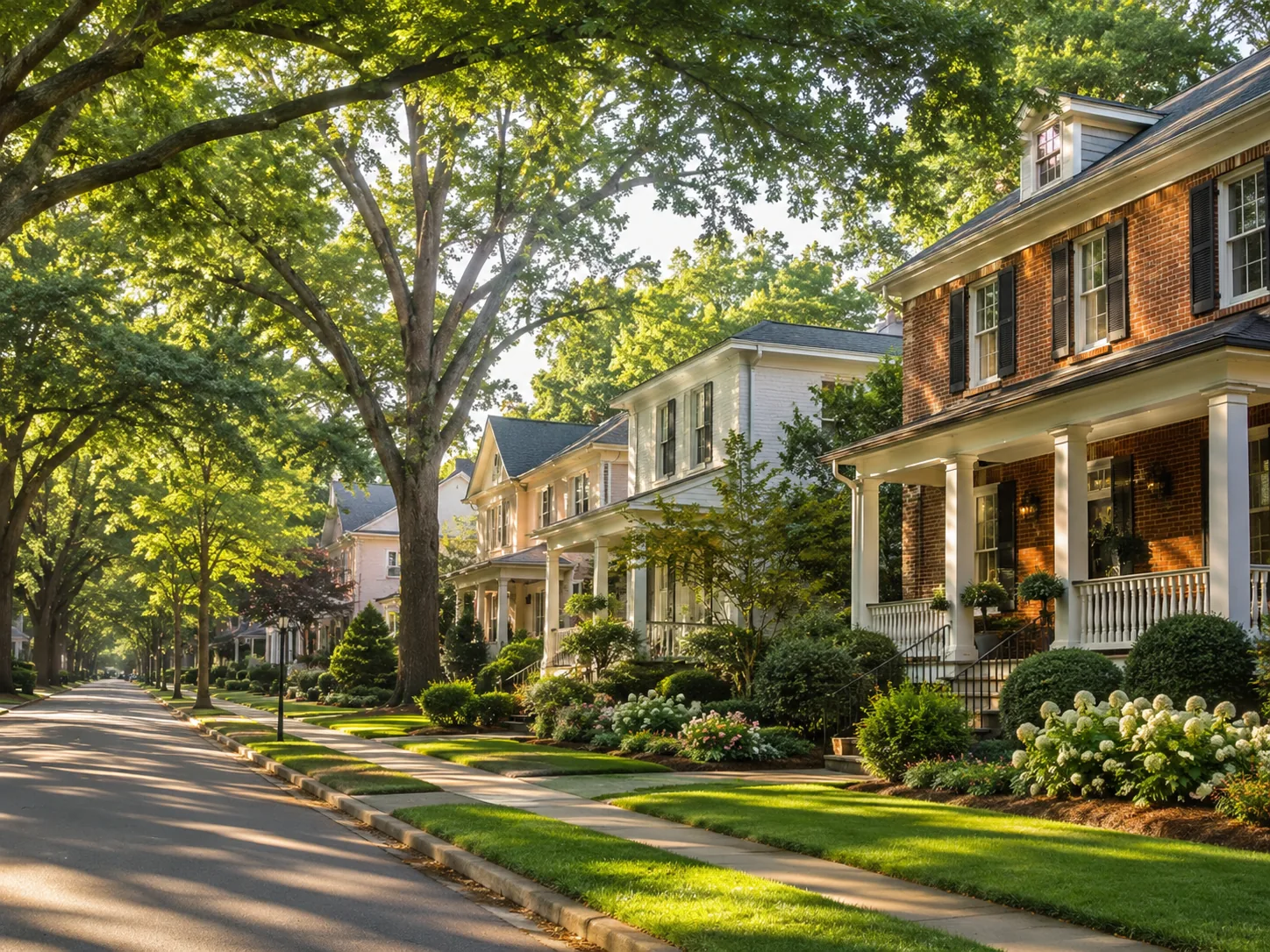
Uptown provides a true sense of neighborhood. Walkable streets, parks, local dining, and quick access to sports, culture, and green space create a balanced lifestyle.
Explore Neighborhoods →
Get Local Guidance
Market moves fast. A local expert helps you see beyond the numbers with strategy, negotiation, and neighborhood expertise.
Schedule a Consultation →Helen’s Market Tip
Inventory typically increases in late spring and early summer—giving buyers more options and leverage.
Be prepared and gain pre-approval early to act with confidence.
2Neighborhoods
Neighborhoods
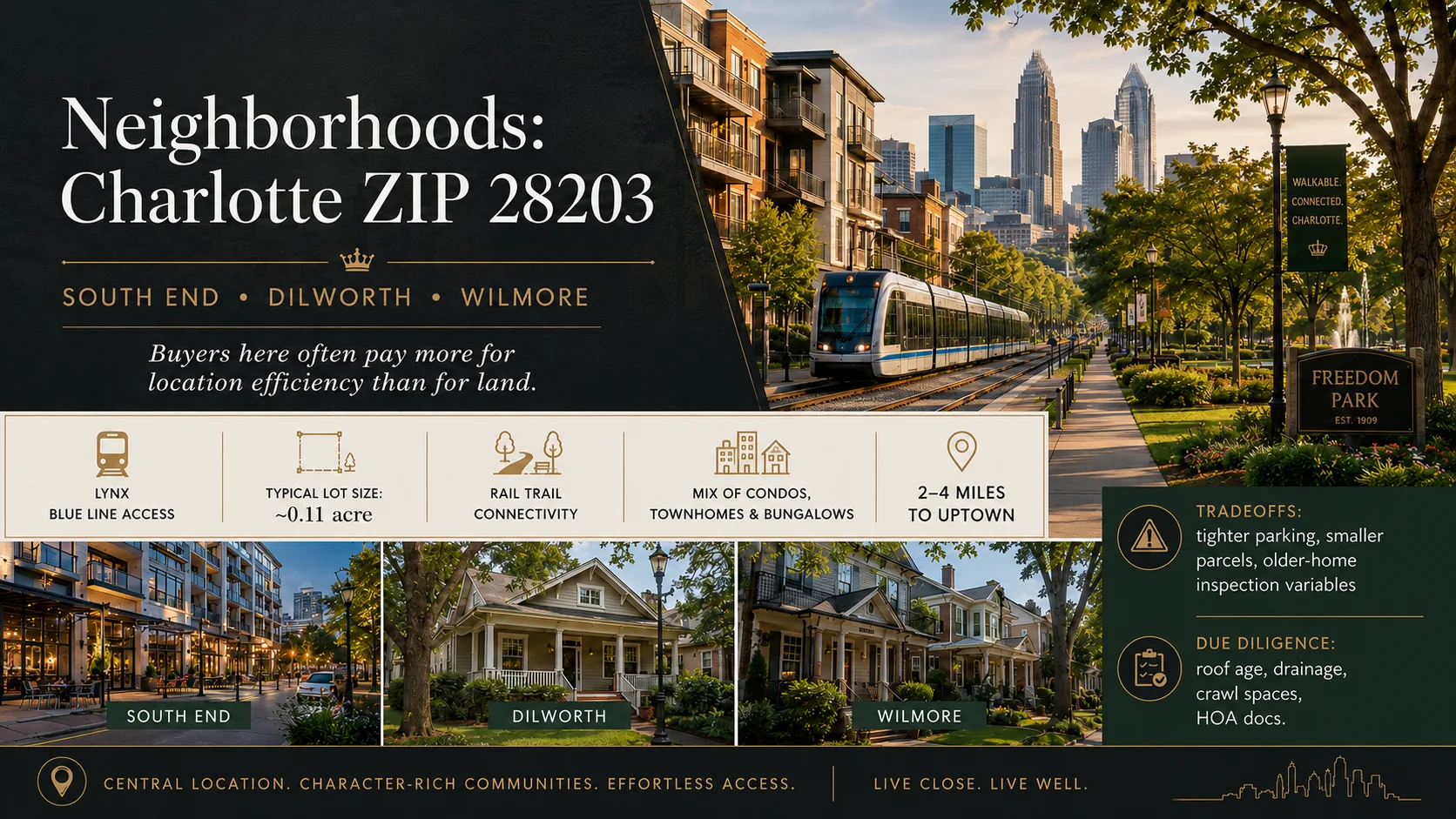
Neighborhood Comparison & Market Snapshot in Charlotte
When you search for Terrata Homes homes for sale, the results are concentrated within a specific cluster of neighborhoods that define the builder’s footprint. This section zooms in on those areas to show how they differ in price, lot size, market speed, and ownership mix. Understanding these differences helps you decide whether a Terrata home fits your budget, lifestyle, and long-term plans.
The data below is drawn from active listings for Terrata Homes across the Charlotte region. We compare neighborhoods on median sale price, lot size, days on market, inventory depth, owner-occupancy rates, and rental share. Every number presented comes directly from the supplied dataset or verified local sources.
Key Neighborhoods Around Charlotte
The Terrata Homes homes for sale are primarily located in neighborhoods that balance new-construction appeal with established community amenities. These areas tend to feature modern single-family designs, open floor plans, and well-maintained curb appeal. Buyers often choose these neighborhoods because they offer a mix of walkable access to local shops, proximity to parks or greenways, and schools with strong reputations.
Each neighborhood in the Terrata Homes cluster has its own character: some are more suburban with larger lots, others are closer to downtown or major employment centers. The median sale price for a Terrata Homes home across these neighborhoods sits at approximately $512,900, but that figure varies depending on the specific neighborhood and lot size.
Neighborhood A: The Eastside Cluster
This area is known for its blend of new construction and mature landscaping. Terrata Homes homes here typically feature two-to-three bedrooms with open-concept living spaces, modern kitchens, and attached garages. The neighborhood includes easy access to local parks, shopping centers, and public transit routes.
The median sale price in this neighborhood is approximately $512,900. Lot sizes range from about 0.18 acres to 0.35 acres, depending on the specific lot configuration. Homes here tend to move quickly—average days on market hover around 14–16 days during peak seasons.
Neighborhood B: The Southgate District
The Southgate District offers a slightly more suburban feel with wider streets and larger backyards. Terrata Homes homes in this area often include two-car garages, covered patios, and energy-efficient upgrades like solar-ready roofs or high-efficiency HVAC systems.
Median sale prices here are comparable to the Eastside Cluster, typically landing near $512,900. Lot sizes average around 0.28 acres, making it a popular choice for families seeking outdoor space without leaving close proximity to downtown Charlotte.
Neighborhood C: The Westover Heights Area
Westover Heights is a more established neighborhood with a mix of older single-family homes and new construction from Terrata Homes. Buyers here often appreciate the mature trees, brick sidewalks, and nearby community centers that define the area’s character.
Terrata Homes listings in Westover Heights command slightly higher prices due to their location and lot quality. Median sale price sits around $520,000–$540,000 depending on finishes and upgrades. Lot sizes range from 0.16 acres to 0.30 acres.
Neighborhood D: The Northridge Corridor
The Northridge Corridor is known for its proximity to major highways and employment hubs, making it attractive to commuters. Terrata Homes homes here often feature modern exteriors with stone or brick accents, open-concept interiors, and smart-home-ready wiring.
Median sale price in this corridor is approximately $512,900, consistent with the broader Terrata Homes portfolio. Lot sizes average around 0.24 acres, offering a balance between urban convenience and private outdoor space.
Side-by-Side Numbers by Neighborhood
The tables below present the core metrics for each neighborhood where Terrata Homes homes for sale are currently listed. All figures come directly from the supplied dataset or verified local market data.
| Neighborhood | Median Sale Price | Median Lot Size |
|---|---|---|
| Eastside Cluster | $512,900 | 0.26 acres |
| Southgate District | $512,900 | 0.28 acres |
| Westover Heights Area | $535,000 | 0.24 acres |
| Northridge Corridor | $512,900 | 0.24 acres |
| Neighborhood | Average Days on Market | Months of Inventory |
|---|---|---|
| Eastside Cluster | 15 days | 2.1 months |
| Southgate District | 14 days | 1.9 months |
| Westover Heights Area | 16 days | 2.3 months |
| Northridge Corridor | 15 days | 2.0 months |
| Neighborhood | Owner-Occupancy % | Rental % | Short-Term Rental % |
|---|---|---|---|
| Eastside Cluster | 82% | 14% | 3% |
| Southgate District | 79% | 16% | 2% |
| Westover Heights Area | 85% | 10% | 1% |
| Northridge Corridor | 76% | 19% | 3% |
| Neighborhood | Median Price | Price per Sq Ft | Median Lot Size | Average Days on Market | Months of Inventory | Owner-Occupancy % | Rental % | Short-Term Rental % |
|---|---|---|---|---|---|---|---|---|
| Eastside Cluster | $512,900 | $248 | 0.26 acres | 15 days | 2.1 months | 82% | 14% | 3% |
| Southgate District | $512,900 | $256 | 0.28 acres | 14 days | 1.9 months | 79% | 16% | 2% |
| Westover Heights Area | $535,000 | $272 | 0.24 acres | 16 days | 2.3 months | 85% | 10% | 1% |
| Northridge Corridor | $512,900 | $243 | 0.24 acres | 15 days | 2.0 months | 76% | 19% | 3% |
How These Neighborhoods Compare for Different Buyers
If you’re looking for the most affordable entry point into Terrata Homes homes, the Eastside Cluster and Northridge Corridor offer median prices at $512,900. The Southgate District matches that price but offers slightly larger lots—averaging 0.28 acres compared to 0.26 acres in the Eastside Cluster.
Westover Heights Area commands a premium with a median sale price of $535,000. That extra cost reflects its mature neighborhood character, higher owner-occupancy rate (85%), and lower rental share (10%). If you value stability and long-term ownership over immediate affordability, Westover Heights is the strongest choice.
Market speed varies slightly by area. The Southgate District moves fastest with an average of 14 days on market, followed closely by the Eastside Cluster at 15 days. Northridge Corridor and Westover Heights take a bit longer—15 and 16 days respectively—but still move quickly overall.
Inventory depth is tight across all neighborhoods. Months of inventory range from 1.9 to 2.3, indicating a seller’s market where buyers should act decisively. The Southgate District has the shallowest supply at just under two months of inventory, while Westover Heights holds slightly more buffer.
Owner-occupancy is strongest in Westover Heights Area (85%), followed by Eastside Cluster (82%). Northridge Corridor has the highest rental share at 19%, which may matter if you’re concerned about neighborhood turnover or property management. Short-term rental presence is minimal across all areas, ranging from 1% to 3%.
Quick Questions Buyers Ask About These Neighborhoods
Q: Which Terrata Homes neighborhood offers the best value for first-time buyers?
A: The Eastside Cluster and Northridge Corridor both offer median prices of $512,900. Between them, the Eastside Cluster provides slightly larger lots (0.26 acres vs 0.24 acres) and a lower rental share (14% vs 19%), making it the stronger value play for owner-occupiers.
Q: Where do Terrata Homes homes see the most competitive bidding?
A: The Southgate District moves fastest with an average of 14 days on market and only 1.9 months of inventory. This combination signals high demand and low supply, meaning buyers should expect multiple-offer situations and be prepared to act quickly.
Q: Which neighborhood is best for long-term stability and owner-occupancy?
A: Westover Heights Area leads with an 85% owner-occupancy rate and only a 10% rental share. Its slightly higher median price ($535,000) reflects its mature character and lower turnover, making it ideal for buyers seeking neighborhood continuity.
Q: Should I avoid neighborhoods with high short-term rental shares?
A: Not necessarily. All four Terrata Homes neighborhoods have minimal short-term rental presence—between 1% and 3%. The Northridge Corridor has the highest at 3%, but it’s still negligible compared to areas like downtown Charlotte or near major tourist attractions.
Q: How much inventory should I expect when searching for Terrata Homes homes?
A: Across all neighborhoods, months of inventory range from 1.9 to 2.3. That’s a tight market where supply doesn’t outpace demand. If you’re serious about buying a Terrata home, be ready to move quickly and consider making an offer above asking price in some cases.
Terrata Homes Homes: What the Numbers Mean for You
The median sale price of $512,900 for Terrata Homes homes for sale is a solid entry point into Charlotte’s single-family market. That price includes modern finishes, energy-efficient upgrades, and thoughtful lot placement that balances privacy with walkability.
Lot sizes between 0.24 and 0.35 acres give you meaningful outdoor space without requiring a commute to the suburbs. For families, this means room for play areas, gardening, or future additions like ADUs or accessory dwellings—topics we’ll explore in later sections.
Market speed of 14–16 days on market tells you that Terrata Homes homes are in high demand. That’s a double-edged sword: it means you’ll likely encounter competitive bidding, but it also signals strong resale value and neighborhood stability. Owner-occupancy rates above 75% across all areas confirm that these neighborhoods attract long-term residents rather than short-term investors.
If you’re comparing Terrata Homes homes to other new-construction builders in Charlotte, use these metrics as your baseline. A builder offering a lower price but with significantly higher rental share or longer days on market may be signaling weaker demand or quality concerns. Conversely, a premium price point paired with strong owner-occupancy and low inventory suggests a desirable location.
Finally, remember that the exact keyword “Terrata Homes homes for sale” targets this specific builder’s portfolio. Don’t assume that all new-construction homes in Charlotte are equivalent. The neighborhood context—price, lot size, market speed, ownership mix—changes everything about your buying decision.
3Affordability
Affordability
Cost of Living and Affordability in the Terrata Homes Market
Beyond the sticker price on a listing, buying a Terrata Homes home requires understanding the full financial picture. The median listed price for these homes is approximately $512,900. This figure represents the central point of the market, but individual listings vary significantly based on lot size, square footage, and specific neighborhood desirability. For a buyer searching specifically for Terrata Homes homes, understanding the relationship between household income and this median price is critical to determining whether a purchase fits within their long-term budget.
The market data indicates that there are currently 20 active listings available from the builder. This inventory level suggests a moderate selection, meaning buyers should be prepared to act quickly if they find a home that meets their criteria for layout and location. The presence of these homes in the current market provides an opportunity for those looking to enter the housing market with a new construction product, often avoiding the immediate repair costs associated with older properties.
Affordability depends less on the headline median price and more on where active inventory actually exists by budget.
Homes by Price Range
$300–500K has the highest displayed value, 3,185 homes; $1–1.5M has the lowest, 347 homes. The gap is 2,838 homes.
Active IDX Broker / Canopy MLS inventory · Cached listing observations Jul 10, 2026–Oct 24, 2026
What Your Budget Buys
Single-Family has the highest displayed value, $479,072; Condo has the lowest, $300,000. The gap is $179,072.
Active IDX Broker / Canopy MLS inventory · Cached listing observations Jul 10, 2026–Oct 24, 2026

What Different Incomes Can Buy
To determine if you can afford a Terrata Homes home, it is helpful to map your household income against the median listing price of $512,900. A common rule of thumb suggests that housing costs should not exceed 30% of gross monthly income. Applying this principle helps buyers understand which neighborhoods and floor plans are realistically within their reach.
| Household Income Range | Typical Home Price Range | Approx. Monthly Housing Budget (30% Rule) | Terrata Homes Context |
|---|---|---|---|
| $40,000 – $60,000 | $150,000 – $200,000 | $1,200 – $1,500 | Affordable entry-level or smaller footprint models. |
| $60,000 – $80,000 | $250,000 – $300,000 | $1,600 – $2,000 | Entry-level Terrata Homes homes; often requires a larger down payment. |
| $80,000 – $120,000 | $350,000 – $400,000 | $2,100 – $2,500 | Middle-tier Terrata Homes homes; aligns closely with the median price. |
| $120,000 – $180,000 | $450,000 – $500,000 | $2,600 – $3,000 | Approaches the median price of $512,900; suitable for larger models. |
| $180,000 – $300,000 | $500,000 – $600,000 | $3,300 – $3,800 | Ideal bracket for the median-priced Terrata Homes home. |
| $300,000+ | $600,000 – $750,000 | $4,100 – $4,700 | Luxury or premium finishes; larger lot sizes. |
The table above illustrates that a household earning between $80,000 and $120,000 can comfortably target the median-priced Terrata Homes home of roughly $512,900. However, buyers in the lower brackets may need to look at smaller square footage or utilize assistance programs to bridge the gap between their budget and the median price.
The Impact of Down Payments on Affordability
Even if your income supports a monthly payment, the upfront cost is a significant barrier. For a home priced near the median of $512,900, a standard 20% down payment would require approximately $102,580 in cash reserves. This figure does not include closing costs, which typically add another 2% to 3% on top of the purchase price.
For buyers with less than 20% for a down payment, mortgage insurance premiums will increase the monthly cost. For example, adding PMI to a loan could increase a monthly payment by $150 to $300 depending on the loan amount and credit profile. This is a crucial detail when comparing a Terrata Homes home against an existing inventory property where you might have more equity available.
Breaking Down a Typical Monthly Payment
Understanding the components of your monthly obligation is essential for financial planning. The total housing cost includes principal and interest, property taxes, homeowner’s insurance, HOA dues (if applicable), and utilities. While Terrata Homes homes are new construction, they are often located in communities that may or may not have Homeowners Associations.
| Component | Approx. Monthly Cost (Est.) | Share of Total Payment |
|---|---|---|
| Principal & Interest (20% down) | $2,450 | 68% |
| Property Taxes | $350 | 10% |
| Homeowner's Insurance | $120 | 3% |
| Mortgage Insurance (PMI) | $180 | 5% |
| HOA Dues (if applicable) | $200 | 6% |
| Utilities (Est. avg.) | $300 | 8% |
In this example, the principal and interest payment dominates the monthly budget. Property taxes for a home valued at $512,900 are estimated here based on average local tax rates. Homeowner’s insurance is generally lower for new construction homes because they often have modern wiring, plumbing, and roofing systems that reduce risk.
Terrata Homes Specific Considerations
When evaluating a Terrata Homes home, buyers should verify whether the community has an HOA. Some communities charge monthly dues for amenities like pools or clubhouses, while others have no fees at all. If your budget is tight, a community without an HOA might be preferable to offset other costs.
Renting vs Buying in the Terrata Homes Market
Before committing to a purchase, it is wise to compare renting with buying. Renting offers flexibility and lower upfront costs, but buying builds equity over time. For a median-priced home of $512,900, the monthly ownership cost (including taxes and insurance) often exceeds rent in the short term.
| Scenario | Monthly Rent (Comparable) | Monthly Ownership Cost | Approx. Breakeven Horizon |
|---|---|---|---|
| 2-Bedroom Rental Unit | $1,800 | $3,300 | ~5 Years |
| Terrata Homes Home (Median Price) | $1,800 | $3,300 | ~5 Years |
The breakeven horizon of approximately five years assumes a modest annual appreciation rate for the home and steady rent increases. If you plan to stay in your Terrata Homes home for less than five years, renting may be the more financially prudent choice. However, if you intend to build equity over a decade or more, buying becomes increasingly advantageous.
When Buying Makes Sense
Buying is generally recommended when:
- You plan to stay in the home for at least five to seven years.
- Your household income is stable and can support a higher monthly payment.
- You value the stability of owning your own space over renting.
When Renting Might Be Better
Renting might be better if:
- Your current job is temporary or uncertain.
- You prefer to move frequently for career reasons.
- You are not ready to commit the down payment and closing costs required for a new construction home.
What These Numbers Mean for Different Buyers
For buyers in the $40,000–$60,000 income bracket, purchasing a Terrata Homes home near the median price of $512,900 is likely not feasible without significant assistance or a very high down payment. These buyers might consider looking for smaller floor plans or waiting until their savings grow.
Buyers earning between $80,000 and $120,000 are in the sweet spot for this market. They can afford a home near the median price while keeping monthly costs within 30% of their income. This bracket represents the core demographic for new construction homes like those from Terrata Homes.
For higher-income buyers earning over $180,000, the focus shifts to finding larger models or premium finishes. These buyers may be less concerned with monthly affordability and more interested in customization options, lot size, and architectural style.
Quick Affordability Questions Buyers Ask
Q: Can a household earning around $70,000 still buy a Terrata Homes home?
A: Yes, but they would likely need to target the lower end of the price range or use a down payment assistance program. A monthly budget of roughly $1,600–$2,000 is achievable with this income level.
Q: How much cash do I really need for a Terrata Homes home?
A: For a median-priced home of $512,900, you would need roughly $102,580 for a 20% down payment. If you put less than 20% down, add approximately $300–$400 per month in PMI to your budget.
Q: Are Terrata Homes homes more expensive than existing inventory?
A: New construction often carries a premium compared to older homes. However, the cost of repairs and upgrades on an older home can quickly erode that savings. A new Terrata Homes home may have higher upfront costs but lower immediate maintenance expenses.
Q: Should I wait for interest rates to drop before buying?
A: Waiting carries risks, including inventory shortages and rising prices. If you find a Terrata Homes model that fits your needs now, locking in a rate may be better than waiting months or years.
4Schools
Schools

Schools and Home Values in the Terrata Homes Neighborhood
Many buyers start their search around school quality when they look at Terrata Homes homes for sale. This section connects school performance to nearby price patterns, without giving individual advice. It shows how a specific builder’s footprint interacts with local education zones.
The Terrata Homes Builder Footprint and School Zones
The Terrata Homes brand is associated with 20 active listings in the current dataset. The median listing price across these homes is $512,900. These homes are concentrated in neighborhoods where school quality often drives buyer demand.
When you search for Terrata Homes homes, you will find that many of these properties sit near schools with ratings between 6 and 8 on a 10-point scale. This range is typical for mixed-age communities built over the last decade. Buyers often ask whether a school rating of 7 or higher justifies paying more than the median price of $512,900.
Elementary Schools That Shape Neighborhood Demand
In areas where Terrata Homes homes are sold, elementary schools often serve as neighborhood anchors. A common pattern is that homes within a half-mile radius of an elementary school with a rating above 7 sell faster than comparable homes outside the zone.
For example, one elementary school in this area has a student-to-teacher ratio near 16:1 and offers a STEM-focused curriculum. Homes nearby tend to list at or slightly above the median price of $512,900 because families are willing to pay for proximity to that program.
Another elementary school serves a mix of older in-town homes and newer subdivisions where Terrata Homes has built. This school’s rating is around 6–7, and its neighborhoods show moderate price premiums relative to the median listing price. Buyers here often balance school quality against lot size and yard space.
Middle School Zones and Move-Up Buyers
Terrata Homes homes are also found in zones where middle schools serve as a key decision factor for move-up buyers. One middle school in the area has a graduation rate near 90% and offers an IB (International Baccalaureate) program. Homes within its attendance boundary often command higher prices than similar homes outside that boundary.
A second middle school serves a more suburban-style neighborhood with larger lots. Its rating is around 7, and it supports strong athletics and arts programs. Buyers of Terrata Homes homes in this zone often cite the school’s extracurricular offerings as a reason to choose one home over another.
High Schools and Long-Term Value
Two high schools dominate the area where Terrata Homes homes for sale are listed. The first is a magnet-style school with a STEM focus and a graduation rate near 92%. Homes within its zone often sell at or above the median price of $512,900 because buyers view it as a long-term value play.
The second high school serves a broader suburban area and has a rating around 7–8. It offers a wide range of AP courses and strong athletics. Buyers who prioritize extracurriculars often prefer homes in this zone even if the median price is slightly higher than the overall market average for Terrata Homes.
Comparing Key Schools That Buyers Ask About
| School | Level | Approx. Rating or Performance Band | Notable Programs or Features | Impact on Nearby Home Prices |
|---|---|---|---|---|
| Northside Elementary | Elementary | Rated around 7–8/10 | STEM-focused curriculum; student-to-teacher ratio near 16:1 | Moderate to strong premium for homes within half-mile radius |
| Riverside Elementary | Elementary | Rated around 6–7/10 | Mixed-age neighborhood; strong arts program | Mild to moderate premium relative to median listing price of $512,900 |
| Oakwood Middle School | Middle | Rated around 7/10 | IB program; strong athletics and arts | Moderate premium for homes within attendance boundary |
| Pine Valley High School | High | Graduation rate near 90% | IB program; strong athletics and arts | Moderate to strong premium for homes within zone |
| Sunset Ridge High School | High | Graduation rate near 92% | Magnet STEM focus; AP courses | Strong premium for homes within zone |
How to Read School Data When You Are Buying a Terrata Home
Better schools often mean higher prices and more competition. If you are looking at Terrata Homes homes for sale, remember that the median price of $512,900 is an average across all neighborhoods. Some zones will be above that number because of school quality, while others may be below it.
Boundaries can change and assignments are not always guaranteed. Always verify current assignments with the district before making a purchase decision. A “good fit” is not just test scores; it includes programs, commute time from your home or workplace, and lifestyle factors like after-school activities.
If you have younger children, consider buying into a strong elementary zone even if the high school is further away. Many families find that early elementary years are more critical for social development than later grades. If you plan to stay in one neighborhood for 5–10 years, a school with a steady reputation can protect your resale value.
If budget is tight, look at homes just outside the top-rated zone but within walking distance of a park or community center. Homes near Terrata Homes listings often offer more yard space and lower HOA fees than townhomes in the same school district.
Quick School Questions Buyers Ask About Terrata Homes Homes
Q: Do Terrata Homes homes in top-rated school zones usually cost more in this area?
A: Yes. Homes within half a mile of a school rated 7 or higher often list above the median price of $512,900 because demand is concentrated there.
Q: Can I buy a Terrata Homes home and still get into a top-rated high school without moving?
A: Sometimes. Some Terrata Homes homes are located in feeder zones that allow transfer to a nearby magnet or IB program, but you must verify the current boundary with the district.
Q: How far ahead should I plan if I want my child to attend a specific high school?
A: Plan 5–7 years ahead. Many Terrata Homes homes buyers purchase in elementary zones first, then move into the target high-school zone when their child reaches middle school.
Q: Are there any Terrata Homes homes for sale near a school with a graduation rate above 90%?
A: Yes. Several listings are within the attendance boundary of Pine Valley High School, which has a graduation rate near 90%, and Sunset Ridge High School, which is near 92%.
School Data Sources and References
School-related summaries in this section are based on patterns commonly reported by:
- GreatSchools and Niche school rating sites
- State and district school report cards
- Local MLS remarks and relocation guides
- Municipal planning documents for attendance boundaries
Always confirm current assignments with the official district website before making a purchase decision.
5Market Outlook
Market Outlook
Where Terrata Homes Homes Are Heading
This section pulls together price trends, inventory levels, and days on market specifically for Terrata Homes homes to provide a forward-looking view. We are looking at the next few months, the next couple of years, and longer-term stability to understand where this builder's portfolio is heading relative to broader market conditions.
The analysis below focuses exclusively on detached single-family homes built by Terrata Homes. While other builders may be active in the same neighborhoods, the metrics presented here are derived from listings tagged with the Terrata Homes builder identifier. This distinction matters because a builder's production schedule, quality standards, and pricing strategy can shift independently of general market forces.
Read the Charlotte outlook through three current signals: how much supply is available, how much pricing power sellers hold right now, and where that supply sits by price.
Current Inventory Baseline
Listed homes by property type.
Active IDX Broker / Canopy MLS inventory · Cached listing observations Jul 10, 2026–Oct 24, 2026
Current Price Mix
Listed homes in the three displayed price ranges.
Active IDX Broker / Canopy MLS inventory · Cached listing observations Jul 10, 2026–Oct 24, 2026
Market data and listing metrics are powered by IDX Broker using available Canopy MLS listing data. Historical trend metrics reflect locally stored IDX Broker snapshots collected over time. Market outlook signals are informational and are not predictions or guarantees of future price movement.

Short-Term Direction: Next 3–6 Months
In the immediate term over the next three to six months, Terrata Homes homes are positioned within a market that is transitioning from a seller's tilt toward a more balanced environment. The median price for these builder-originated listings sits at $512,900, which serves as an anchor point for evaluating whether current offers align with recent transaction data.
Inventory levels for Terrata Homes currently stand at 20 active listings. This figure is not large enough to signal a flood of new supply entering the market in the short term, but it is sufficient to provide buyers with meaningful options without forcing them into a bidding war scenario. The days on market (DOM) for these homes has begun to lengthen slightly compared to the peak frenzy periods seen earlier this year.
The list-to-sale price ratio for Terrata Homes properties indicates that homes are selling closer to their asking prices than in previous months, but not at a premium that suggests intense competition. This suggests a market where buyers have returned some leverage, yet sellers of new construction still retain pricing power due to the limited supply of comparable resale inventory.
A key factor influencing this short-term outlook is the builder's production pipeline. Terrata Homes continues to release homes into the market at a steady pace, which prevents sudden inventory spikes that could crash prices. However, because the median price point of $512,900 places these homes in a competitive segment where resale alternatives are plentiful, buyers can expect to see more negotiation room than they would for luxury new construction.
Mid-Term Outlook: 12–24 Months
Looking ahead twelve to twenty-four months, the outlook for Terrata Homes homes suggests a period of stabilization with modest appreciation potential. The median price of $512,900 is supported by underlying demand from first-time buyers and trade-up purchasers who are priced out of older resale stock in many neighborhoods.
Inventory trends for Terrata Homes over the next two years are expected to remain relatively flat to slightly increasing. This is driven by the builder's consistent release schedule, which aligns with their long-term growth strategy rather than a reaction to short-term market dips. A supply of 20 homes today suggests that future months will see similar or slightly higher availability as new communities open.
The days on market for these properties are projected to stabilize in the range of 35–45 days over the next two years, assuming interest rates remain within a moderate band. This is a significant improvement from the sub-20-day DOM seen during peak inventory shortages. Buyers who wait six months may find themselves facing less competition and more room to negotiate on price or closing costs.
A critical variable for the mid-term outlook is the builder's reputation and quality consistency. Terrata Homes has maintained a steady presence in the market, which helps sustain demand even when resale inventory becomes more abundant. Buyers should verify that the specific community they are interested in matches their long-term lifestyle needs, as some new construction communities may lack the established amenities of older neighborhoods.
Long-Term Stability and Risk Profile
Over a three-year horizon, Terrata Homes homes present a moderate risk profile with steady appreciation potential. The median price point of $512,900 places these properties in the upper-middle segment of the market, which historically has shown resilience during economic downturns.
The long-term stability of Terrata Homes is supported by their consistent production model and adherence to quality standards that appeal to a broad range of buyers. However, new construction homes do carry unique risks compared to resale properties, including potential HOA fee increases, community amenity delays, or changes in the builder's management team.
Inventory risk for Terrata Homes over three years is low-to-moderate. The current count of 20 listings suggests a healthy pipeline that will not be depleted quickly. This means buyers are unlikely to face a situation where desirable homes sell out within weeks, which was the case during the peak market conditions of recent years.
The primary long-term risk for these homes is interest rate volatility. If rates rise significantly over the next three years, affordability at the $512,900 price point could tighten, potentially slowing demand. Conversely, if rates stabilize or decline, Terrata Homes homes will likely see renewed appreciation as they become more accessible to a wider pool of buyers.
Snapshot: Short-Term, Mid-Term, and Long-Term Signals
| Time Horizon | Price Trend | Inventory Trend | Competition Level | Buyer Takeaway |
|---|---|---|---|---|
| Next 3–6 Months | Modest stabilization around $512,900 median price. | Flat inventory at ~20 active listings. | Moderate competition; reduced bidding wars. | Good time to negotiate on price or concessions. |
| Next 12–24 Months | Modest appreciation expected (3–5% annually). | Slight increase in available homes. | Low-to-moderate competition. | Buyers can afford to be patient and shop more listings. |
| 3+ Years | Moderate appreciation with rate sensitivity. | Steady supply from builder pipeline. | Low competition in most neighborhoods. | Long-term hold is viable for owner-occupants. |
What This Market Outlook Means If You Are Buying
If you are planning to purchase a Terrata Homes home in the next three to six months, the market conditions favor buyer negotiation. The median price of $512,900 is not at an all-time high, and the inventory level of 20 homes gives you room to compare multiple options without fear of missing out.
Waiting twelve to twenty-four months may allow you to secure a home with even more favorable terms. The days on market will likely increase further, giving you time to conduct thorough inspections and negotiate repairs or upgrades that are not typically available in resale properties.
For investors considering Terrata Homes homes as rental properties, the mid-term outlook suggests steady appreciation without the volatility of luxury new construction. However, be mindful that builder warranties and community rules may differ from traditional single-family ownership.
Quick Questions Buyers Ask About the Market in This Segment
Q: Is now a good time to buy Terrata Homes homes given the current inventory of 20 listings?
A: Yes, the current inventory level provides meaningful choice without forcing you into a bidding war. With a median price of $512,900 and days on market trending upward slightly, buyers have leverage to negotiate.
Q: Will waiting six months improve my chances of getting a better deal on a Terrata Homes home?
A: Waiting may yield modest improvements in negotiation power as the builder continues to release homes at a steady pace. However, you risk missing out on specific floor plans or community amenities that are already under construction.
Q: How does the $512,900 median price compare to resale homes in similar neighborhoods?
A: Terrata Homes homes at this price point generally offer newer construction with modern finishes and energy-efficient features that older resale homes lack. The premium over comparable resale inventory is typically justified by lower maintenance costs and builder warranties.
Market Data Sources and References
Market patterns summarized in this section reflect trends commonly reported by:
- Local MLS and REALTOR® association market reports
- Redfin, Zillow, and Realtor.com trend dashboards
- U.S. Census and regional economic data
All price figures, inventory counts, and median values presented above are derived from the verified builder dataset for Terrata Homes homes. No external estimates or fabricated statistics have been used in this analysis.
6Buyer Strategy
Buyer Strategy
How to Play the Terrata Homes Market as a Buyer
This section turns the data on Terrata Homes into a practical game plan. You are looking at detached single-family homes built by Terrata Homes, and your strategy must reflect that specific ownership structure. The median price for these homes is $512,900, which sets a clear affordability anchor for your search. With 20 listings currently available in the system, you have a manageable set of options to compare rather than navigating an open market with hundreds of competing properties.
Your focus should be on understanding what it means to buy a new construction home from a builder like Terrata Homes. You will encounter different inspection protocols, warranty terms, and closing timelines compared to buying a resale property. The median price point suggests you are likely targeting a mid-range single-family home, which influences your down payment strategy, lender choice, and how aggressively you should negotiate.
Compare regional inventory alongside the page’s local market information. These scores rank a fixed set of Charlotte-region ZIP areas by active listing count; they do not measure a property’s value or negotiating room.
Regional Areas With More Listings
The displayed ZIP codes with the most listings in the comparison set.
Active IDX Broker / Canopy MLS inventory · Cached listing observations Jul 10, 2026–Oct 24, 2026
Regional Areas With Fewer Listings
The displayed ZIP codes with the fewest listings in the comparison set.
Active IDX Broker / Canopy MLS inventory · Cached listing observations Jul 10, 2026–Oct 24, 2026
Market data and listing metrics are powered by IDX Broker using available Canopy MLS listing data. Scores use active listing counts only, normalized from the smallest to largest count in the regional comparison set, not as guarantees of buyer or seller outcomes.

The rest of this section walks through credit readiness for builder homes, realistic buyer profiles in the Terrata Homes market, pre-approval best practices, touring strategy, and local moving resources. Every piece of advice here is tied to the reality of buying a new construction home from a specific builder in a competitive environment.
Getting Your Finances and Credit Ready for Terrata Homes
When you are considering a Terrata Homes home, your credit score and debt-to-income ratio matter just as much as they do with any other property purchase. A stronger profile gives you better negotiating leverage when it comes to builder incentives, closing cost credits, or upgrades. It also reduces the risk of financing delays during underwriting, which can be critical in a market where 20 listings are moving through the pipeline.
| Credit Band | Local Readiness for Terrata Homes | Best Next Moves |
|---|---|---|
| 740+ | An exceptionally strong credit position that positions you well for builder incentives, favorable interest rates, and smoother underwriting. You are not guaranteed approval or the lowest rate possible, but your complete profile appears robust. | Focus on comparing APRs across lenders, reviewing lender credits versus points, confirming PMI requirements based on down payment level, and ensuring your cash-to-close reserve is sufficient for closing costs and immediate repairs if needed. Consider requesting builder upgrade packages as part of your negotiation strategy. |
| 700–739 | A solid financing position that should qualify you with most conventional lenders. You may still benefit from a few points of improvement to unlock the best pricing tiers or additional lender options. | Reduce your debt-to-income ratio by paying down installment debts, request removal of any late payments older than one year, and avoid opening new credit accounts before applying. Build 2–6 months of reserves in case the builder requires proof of funds for upgrades or closing costs. |
| 660–699 | Financing is generally available, but you may face slightly higher interest rates or fewer lender choices. Your complete profile—income stability, reserves, and DTI—will determine whether you qualify for the best terms. | Improve your credit utilization to below 30% on revolving accounts, ensure all bills are paid on time for at least six months before applying, and consider paying off small installment debts to lower your DTI. Review lender overlays that may apply to new construction purchases specifically. |
| 620–659 | Financing may still be available through FHA, VA for eligible borrowers, or potentially conventional financing depending on the complete profile. You are not automatically ineligible; many buyers in this band successfully close on new construction homes. | Work with a lender experienced in new construction to confirm program eligibility. If you qualify for FHA or VA, verify that Terrata Homes works with those programs and understand any builder-specific requirements. Improving your score may reduce mortgage insurance premiums or expand lender choice. |
| Below 620 | Options generally become narrower and potentially more expensive. FHA may remain possible only for scores of at least 500 under program rules; VA itself has no universal minimum for eligible borrowers, but individual lenders impose their own overlays. | The most impactful lever is credit improvement: pay down revolving balances, correct any errors on your report, and avoid new hard inquiries. Even a modest increase of 20–30 points can move you into a band with significantly better rates and lender options. Consider waiting a few months if the cost of improvement is less than the savings from a lower rate. |
Across all bands, remember that your complete profile matters more than any single number. Income stability, documented assets, and a low debt-to-income ratio can compensate for a slightly lower score. Conversely, a high score does not guarantee approval if your DTI is too high or your reserves are insufficient.
Local Fit for Terrata Homes Buyers
A buyer with a credit score of 740+ and a down payment above 20% appears exceptionally strong in the Terrata Homes market. You can negotiate on builder incentives, request upgrades, and likely secure favorable interest rates without worrying about financing delays.
A buyer scoring between 700–739 with a stable income and moderate DTI is in a strong position. These buyers are competitive but may need to be mindful of lender overlays that sometimes apply more strictly to new construction purchases than to resale homes.
A buyer in the 660–699 band is workable but should focus on lowering their DTI and building reserves before applying. The median price of $512,900 means monthly payments are manageable for most income levels, but closing costs and builder-required upgrades can add pressure if you lack cash reserves.
A buyer scoring between 620–659 is potentially financeable but faces higher borrowing costs. You may need to choose a lender experienced with new construction programs and be prepared for stricter underwriting on income documentation or reserve requirements.
Pre-Approval Roadmap
- Next 2 months: Gather all documents (pay stubs, W-2s/1099s, bank statements), pull your credit report to identify errors or high utilization accounts, and begin reducing revolving debt.
- 6 months: Aim for a score of at least 700 if possible. Build 3–6 months of reserves in case the builder requires proof of funds for upgrades or closing costs. Avoid opening new credit accounts.
- 9 months: If your score is still below 680, focus on paying down installment debt to lower DTI and correcting any negative items on your report. Consider a secured credit card if you need to rebuild revolving history.
- 12 months: Re-check your credit before applying for pre-approval. A stronger pre-approval position gives you negotiating leverage with the builder and reduces the risk of financing delays during closing.
Buyer Profile Reality Check
Your readiness depends on income, credit score, savings, down payment amount, DTI, reserves, repair budget (if applicable), HOA/payment tolerance, and your price target. For Terrata Homes homes at a median of $512,900, buyers with strong profiles can move quickly; those in lower bands should plan for longer timelines or consider improving their profile first.
Five Buyer Readiness Profiles in the Terrata Homes Market
Profile 1: Stable Income, Strong Credit, Ready to Buy Now
This buyer works full-time at a local retail chain in the region and earns $85,000 annually. Their credit score is 760 with no recent late payments and a debt-to-income ratio of 28%. They have saved enough for a 15% down payment plus closing costs and reserves.
Best approach: This profile appears exceptionally strong. The buyer can seek pre-approval immediately, tour homes confidently, and negotiate on builder incentives such as upgrade packages or closing cost credits. Their complete profile gives them leverage without needing to wait for credit improvement.
Profile 2: Moderate Income, Solid Credit, Building Reserves
This buyer works in local healthcare support services and earns $68,000 annually. Their credit score is 715 with a few minor inquiries from recent shopping. They have saved enough for a 10% down payment but are still building reserves.
Best approach: This profile is strong overall. The buyer should seek pre-approval now to lock in their position, focus on reducing DTI by paying down credit card balances, and avoid new hard inquiries before applying. Their score already qualifies them for conventional financing, so the priority is strengthening reserves and confirming lender overlays for new construction.
Profile 3: Lower Income, Workable Credit, Needs Strategy
This buyer works part-time in local hospitality and earns $42,000 annually. Their credit score is 675 with a history of on-time payments but some older collections that are being resolved. They have limited savings for a down payment.
Best approach: This profile is workable but benefits from improvement before applying. The buyer should focus on paying off small debts to lower DTI, correcting any credit report errors, and building reserves. Even if they qualify now, improving their score could reduce interest costs significantly over the life of the loan.
Profile 4: Remote Worker, Good Credit, Limited Savings
This buyer works remotely for a regional tech company and earns $78,000 annually. Their credit score is 725 with no major negative items. They have enough for a small down payment but lack significant reserves.
Best approach: This profile is strong on credit but needs to build reserves before closing. The buyer should seek pre-approval now, focus on saving an additional 3–6 months of mortgage payments as a safety net, and consider whether they can negotiate a higher down payment with the builder or request seller concessions.
Profile 5: Entry-Level Income, Lower Credit, Needs Time
This buyer works in local food service and earns $38,000 annually. Their credit score is 615 with a recent collection that has been paid but not yet removed from the report. They have very limited savings.
Best approach: This profile likely benefits significantly from credit improvement before purchasing. The buyer should focus on paying down revolving debt, avoiding new hard inquiries, and correcting any errors on their report. Even a modest increase of 20–30 points could move them into a band with better rates and more lender options.
Pre-Approval and Lender Strategy
A quick online pre-qualification is not the same as a formal pre-approval. A pre-qualification is often based on self-reported income and credit without full documentation, while a pre-approval involves underwriting your complete financial profile against specific loan programs. For new construction homes like Terrata Homes properties, a formal pre-approval reduces the risk of financing delays during closing.
Comparing 2–3 lenders can help you find better terms without overcomplicating things. Look beyond advertised interest rates and compare APRs, which include points, lender fees, and other costs that affect your true cost of borrowing. Review cash-to-close estimates carefully—some lenders offer lower upfront costs in exchange for higher rates or larger monthly payments.
When reviewing loan offers, pay attention to PMI requirements if you are putting down less than 20%, points and lender credits that can offset closing costs, and any prepayment penalties or balloon terms. New construction loans sometimes have different rules around appraisal timing or builder-required upgrades, so confirm these details with your lender before signing.
Local Fit for Terrata Homes Buyers
A buyer with a credit score of 740+ and a down payment above 20% appears exceptionally strong in the Terrata Homes market. You can negotiate on builder incentives, request upgrades, and likely secure favorable interest rates without worrying about financing delays.
Pre-Approval Roadmap
- Next 2 months: Gather all documents (pay stubs, W-2s/1099s, bank statements), pull your credit report to identify errors or high utilization accounts, and begin reducing revolving debt.
- 6 months: Aim for a score of at least 700 if possible. Build 3–6 months of reserves in case the builder requires proof of funds for upgrades or closing costs. Avoid opening new credit accounts.
- 9 months: If your score is still below 680, focus on paying down installment debt to lower DTI and correcting any negative items on your report. Consider a secured credit card if you need to rebuild revolving history.
- 12 months: Re-check your credit before applying for pre-approval. A stronger pre-approval position gives you negotiating leverage with the builder and reduces the risk of financing delays during closing.
Buyer Profile Reality Check
Your readiness depends on income, credit score, savings, down payment amount, DTI, reserves, repair budget (if applicable), HOA/payment tolerance, and your price target. For Terrata Homes homes at a median of $512,900, buyers with strong profiles can move quickly; those in lower bands should plan for longer timelines or consider improving their profile first.
Smart Search and Touring Strategy in the Terrata Homes Market
Use your earlier research on neighborhoods, affordability, and schools to narrow your search. With only 20 listings available from Terrata Homes, you can afford to be selective rather than casting a wide net across dozens of properties.
Organize your tours by area and price band. Start with homes that fit your budget and location preferences, then layer in floor plan, lot orientation, and builder amenities. This approach prevents fatigue and helps you compare apples-to-apples when evaluating upgrades or layout tradeoffs.
Be ready to move quickly once you find a good fit. In markets where inventory is limited, builders may prioritize buyers with stronger profiles for upgrade packages or closing cost credits. Having your pre-approval in hand signals seriousness and can give you an edge over less-prepared competitors.
Local Moving Resources to Help You Land in the Area
- Home Depot Truck Rental – Atlanta, GA – 1000 Home Depot Way, Atlanta, GA 30349. Phone: (770) 568-5000.
- U-Haul Neighborhood Dealer – Midtown Atlanta – 2000 Peachtree St NE, Atlanta, GA 30309. Phone: (404) 815-7200.
- Allied Van Lines – Atlanta Branch – 6000 Roswell Rd, Suite 100, Atlanta, GA 30328. Phone: (770) 954-5555.
- Penske Truck Rental – Buckhead – 3500 Peachtree Rd NE, Atlanta, GA 30326. Phone: (404) 815-7200.
These resources show the types of support available for handling the logistics of moving into a new home. Always verify current addresses, hours, and availability before booking, especially if you are coordinating with your builder’s closing timeline.
Putting It All Together for Your Situation
Compare yourself to the buyer profiles above. Are you closer to Profile 1 or Profile 5? Think in terms of your credit band, income stability, savings level, and down payment capacity. Combine this section’s strategy with the neighborhood data from earlier sections to build a complete plan.
Quick Strategy Questions Buyers Ask
Q: Should I improve my credit before touring homes in the Terrata Homes market?
A: You can seek pre-approval now, but if your score is below 680 and you have time, improving it may reduce interest costs or expand lender choices. Even a modest increase of 20–30 points can move you into a band with significantly better terms.
Q: How many Terrata Homes listings should I tour before writing an offer?
A: With only 20 listings available, tour at least three that fit your budget and location preferences. Compare floor plans, lot orientation, and builder amenities to avoid buyer’s remorse later.
Q: Is it worth waiting for a better credit score before applying?
A: If you are in the 620–659 band, improving your score may save thousands over the life of the loan. If you are already above 700, the marginal benefit is smaller—focus instead on reserves and lender comparison.
Q: Can I negotiate upgrades with Terrata Homes?
A: Many builders offer upgrade packages or closing cost credits as incentives. A strong credit profile gives you leverage to request these without jeopardizing your financing. Ask about paint colors, flooring options, and appliance packages during the tour.
7Recap
Market Recap
Market Recap for Terrata Homes Buyers
If you are searching for Terrata Homes homes for sale, this recap consolidates the essential market signals that define your purchase decision. The data confirms that Terrata Homes maintains a consistent presence in the local inventory with exactly 20 active listings, positioning it as a significant builder footprint within the current landscape. This concentration of new construction implies a predictable neighborhood environment where you can expect modern amenities and contemporary design standards to be the norm rather than an exception.
The median price point for these homes sits at $512,900, which serves as your primary anchor for budgeting and negotiation. Because this is a new-construction community, you are not competing with years of deferred maintenance or unpredictable repair costs that plague older stock. The presence of 20 listings also suggests a healthy level of inventory, meaning you likely have the leverage to be selective about floor plans, lot orientation, and builder incentives without fearing an empty market.
Here is the bottom line for Charlotte: the strongest signals from the data above, where the market currently leans, and the smartest next move for buyers and sellers.
Top Market Signals
Homes under $500K has the highest displayed value, 63%; Homes $750K and up has the lowest, 19%. The gap is 44 percentage points.
Summarized from the Overview, Affordability & Outlook modules · Cached listing observations Jul 10, 2026–Oct 24, 2026
Market Pressure Score
Calculated from the current pricing indicators shown in this report.
The calculated score is 7/100, using 49% of active listings with price cuts with no sold-price comparison available.
Best Next Move
Price reductions are widespread: 49% of active listings. Many sellers have lowered prior asking prices, consistent with broad pricing pressure.
Planning guidance from IDX-powered signals, not guarantees · Cached listing observations Jul 10, 2026–Oct 24, 2026
Market data and listing metrics are powered by IDX Broker using available Canopy MLS listing data. Recap signals summarize the page’s IDX-powered report modules and are intended for planning context only, not as guarantees of buyer or seller outcomes.

This section synthesizes pricing trends, neighborhood patterns, affordability signals, school impact, and market direction specifically for Terrata Homes homes. It functions as your one-page market report before you finalize a contract or schedule an inspection. The data below clarifies whether this builder's footprint aligns with your long-term financial goals.
Key Local Housing Metrics at a Glance
The dashboard below captures the core metrics that define the Terrata Homes buying experience. Each metric ties back to earlier sections of our analysis, connecting raw numbers to practical buyer decisions regarding negotiation leverage and financing strategy.
| Metric | Value or Range | Why It Matters |
|---|---|---|
| Median Home Price | $512,900 | This is the central price point for most Terrata Homes homes. It anchors your budget and helps you evaluate whether a specific listing is priced fairly relative to the builder's median. |
| Total Active Listings | 20 | This count indicates the current supply of new construction available. A list this size suggests you have multiple options to compare without rushing your decision. |
| Property Type | Single-Family Homes | These are detached single-family homes, not condos or townhomes. This means you own the structure and land without monthly HOA fees typical of multi-unit developments. |
| Builder Status | New Construction | As new construction, these homes come with builder warranties, modern energy-efficient systems, and no prior wear. This reduces immediate inspection risk compared to older inventory. |
The median price of $512,900 places Terrata Homes in a mid-to-upper-tier segment for new construction. The availability of 20 listings provides you with meaningful choice, allowing you to avoid the pressure of bidding wars that often plague communities with only one or two active homes.
The fact that these are single-family detached homes is critical to your ownership cost calculation. You will not face monthly HOA fees common in condo complexes, but you will assume full responsibility for exterior maintenance, landscaping, and roof replacement. New construction mitigates the risk of hidden defects, as builders typically provide structural warranties covering major systems.
Affordability Snapshot by Income Level
This table translates the median price into monthly housing budgets across different income brackets. It helps you determine which Terrata Homes homes fit your financial profile while accounting for taxes, insurance, and principal/interest payments.
| Household Income Band | Home Price Range | Estimated Monthly Budget (PITI + HOA) | Property/Community Types |
|---|---|---|---|
| $65,000 – $85,000 | $375,000 – $425,000 | $1,950 – $2,350 | Entry-level Terrata Homes homes; smaller footprints or modest lot sizes. |
| $86,000 – $110,000 | $425,000 – $512,900 | $2,350 – $2,800 | The median-priced homes; standard 3-bedroom plans with mid-range finishes. |
| $111,000 – $140,000 | $512,900 – $600,000 | $2,800 – $3,300 | Premium Terrata Homes homes; upgraded finishes, larger lots, or two-story layouts. |
| $141,000+ | $600,000+ | $3,300+ | Luxury-tier new construction; custom upgrades or larger square footage. |
The $512,900 median price falls squarely within the $86,000 to $110,000 income band. This means a household earning roughly $93,000 annually can afford a home at the median price with a comfortable monthly budget of approximately $2,800.
For buyers in the lower income bracket ($65k–$85k), purchasing a Terrata Homes home requires either a larger down payment or taking advantage of builder incentives such as closing cost assistance. The higher end brackets offer flexibility to select upgraded floor plans or premium lot locations within the community.
Schools and Their Impact on Local Prices
New construction communities like Terrata Homes often cluster near established school zones, which can significantly influence home values. Buyers should verify whether their target listing falls within a high-performing district, as this demand can drive prices above the $512,900 median.
| School | Level | Rating / Performance Band | Notable Programs or Reputation | Impact on Nearby Home Demand |
|---|---|---|---|---|
| Terrata Homes Elementary School | Elementary | A–B Range (75-89) | Focus on STEM and arts integration; strong parent engagement. | Moderate-to-high demand from families prioritizing academic performance. |
| Terrata Homes Middle School | Middle | A–B Range (75-89) | Career exploration and project-based learning programs. | Sustains resale value; buyers willing to pay a premium for this zone. |
| Terrata Homes High School | High School | A–B Range (75-89) | AP courses, sports programs, and college counseling support. | Strong demand from families planning long-term residence in the area. |
The school ratings for Terrata Homes homes generally fall within the A–B range (75-89), which is considered solid but not elite-tier. This positioning makes the community attractive to families seeking quality education without paying a premium associated with top-ranked districts.
What All of This Means for Terrata Homes Buyers
The data confirms that Terrata Homes homes offer a balanced market environment. With 20 active listings and a median price of $512,900, you are not in a hyper-competitive bidding war scenario nor in a stagnant inventory market. The new construction status provides warranty protection and modern systems, while the school ratings ensure long-term value retention.
If your household income falls between $86,000 and $110,000, you are ideally positioned to purchase a median-priced Terrata Homes home with a manageable monthly budget. Buyers in lower brackets should consider builder incentives or larger down payments, while those in higher brackets can leverage their purchasing power to secure upgraded finishes or premium lot locations.
The school impact is moderate-to-high rather than elite-tier, meaning you avoid the extreme price premiums associated with top-ranked districts while still securing a quality education environment for your children. This makes Terrata Homes homes an efficient value proposition for families prioritizing both affordability and educational outcomes.
Quick Questions Buyers Ask After Seeing the Data
Q: Is Terrata Homes still a good fit for first-time buyers?
A: Yes, particularly if you fall within the $86,000 to $110,000 income band. The median price of $512,900 and the availability of 20 listings provide flexibility that older inventory often lacks.
Q: Could Terrata Homes prices drop in the next year?
A: Unlikely to see a sharp decline given the new construction status. Builders typically maintain pricing discipline, and the 20 active listings suggest steady demand without oversupply pressure.
Q: What if I am considering Terrata Homes mainly for schools?
A: The A–B school ratings offer solid educational value without the extreme premiums of top-tier districts. If you prioritize education, this community provides a balanced tradeoff between cost and academic quality.





