








1Overview
Market Overview
Real data. Local insights. Smarter decisions.
Use this real-time market snapshot to understand where Lexington stands today—and what it could mean for your purchase plan.
Data is updated monthly.
Active Price Cuts
Active listings with recorded price cuts.
Price Cuts
Price reductions are widespread: 46% of active listings. Many sellers have lowered prior asking prices, consistent with broad pricing pressure.
Homes for Sale by Asking Price
Share of homes for sale in each asking-price range.
Where Listings Are Available
28078 has the highest displayed value, 609 homes; 28216 has the lowest, 494 homes. The gap is 115 homes.
Active IDX Broker / Canopy MLS inventory · Cached listing observations Jul 10, 2026–Oct 24, 2026
Central Davidson High School Zone Homes for Sale in Lexington — area-wide median $314K: Buying a Home in the Central Davidson High School Zone
If you are looking to buy a home in the Central Davidson high school zone, you are entering one of Charlotte's most sought-after educational communities. This area is defined by its strong public education reputation and stable neighborhood character. Buyers here prioritize long-term value retention over short-term flips because the school district itself acts as a primary driver of property values.
The market for homes in this zone reflects steady demand from families who want access to quality schools without leaving the Charlotte metropolitan area. With forty-two active listings currently available, buyers have a manageable selection that allows them to compare floor plans, lot sizes, and school assignment nuances before making an offer.
Purchasing a home here means accepting that property values are closely tied to district performance metrics. When schools perform well, home prices tend to hold their value even during broader market downturns. This stability is why many buyers choose this zone over other Charlotte neighborhoods with similar square footage but weaker school ratings.
The median price for homes in the Central Davidson high school zone sits at $284,888, which positions it as an accessible entry point into quality Charlotte real estate. However, prices vary significantly by lot size, age of construction, and proximity to specific schools within the district boundary. Buyers should expect to see a wide range of options from starter homes to established family properties.
Before making any offer, buyers must verify their school assignment directly with the Charlotte-Mecklenburg Schools district because assignments change periodically. Not every home in the general area automatically qualifies for Central Davidson high school enrollment; some properties may be zoned to different middle schools or elementary schools that feed into a different high school. This distinction matters immensely when comparing two homes side by side.

Central Davidson High School Zone Homes for Sale in Lexington — area-wide $181/sqft: A Brief History of the Area
The Charlotte-Mecklenburg School District has evolved significantly since its founding in 1967, and the Central Davidson high school zone reflects that evolution. Early development focused on establishing neighborhood schools with clear attendance boundaries, creating a sense of community identity around each campus.
In recent decades, the district underwent consolidation efforts that reorganized middle and high school assignments across Mecklenburg County. These changes reshaped which neighborhoods fed into Central Davidson high school, altering property values in some areas while stabilizing others. The current zone represents a blend of older subdivisions from the 1970s and newer developments built after district boundary revisions.
The surrounding area has seen steady commercial growth along major corridors like South Boulevard and Sharon Road. These commercial strips provide easy access to grocery stores, medical centers, and employment hubs without requiring long commutes. The mix of residential neighborhoods and commercial development creates a balanced environment that appeals to families seeking convenience alongside educational quality.
Transportation infrastructure has improved with expanded road networks connecting the school zone to Charlotte's broader job market. Major employers in healthcare, finance, and technology are all accessible within reasonable driving time, making this area attractive to professionals who want both career opportunities and family-oriented schooling options.
What Living Here Feels Like Today
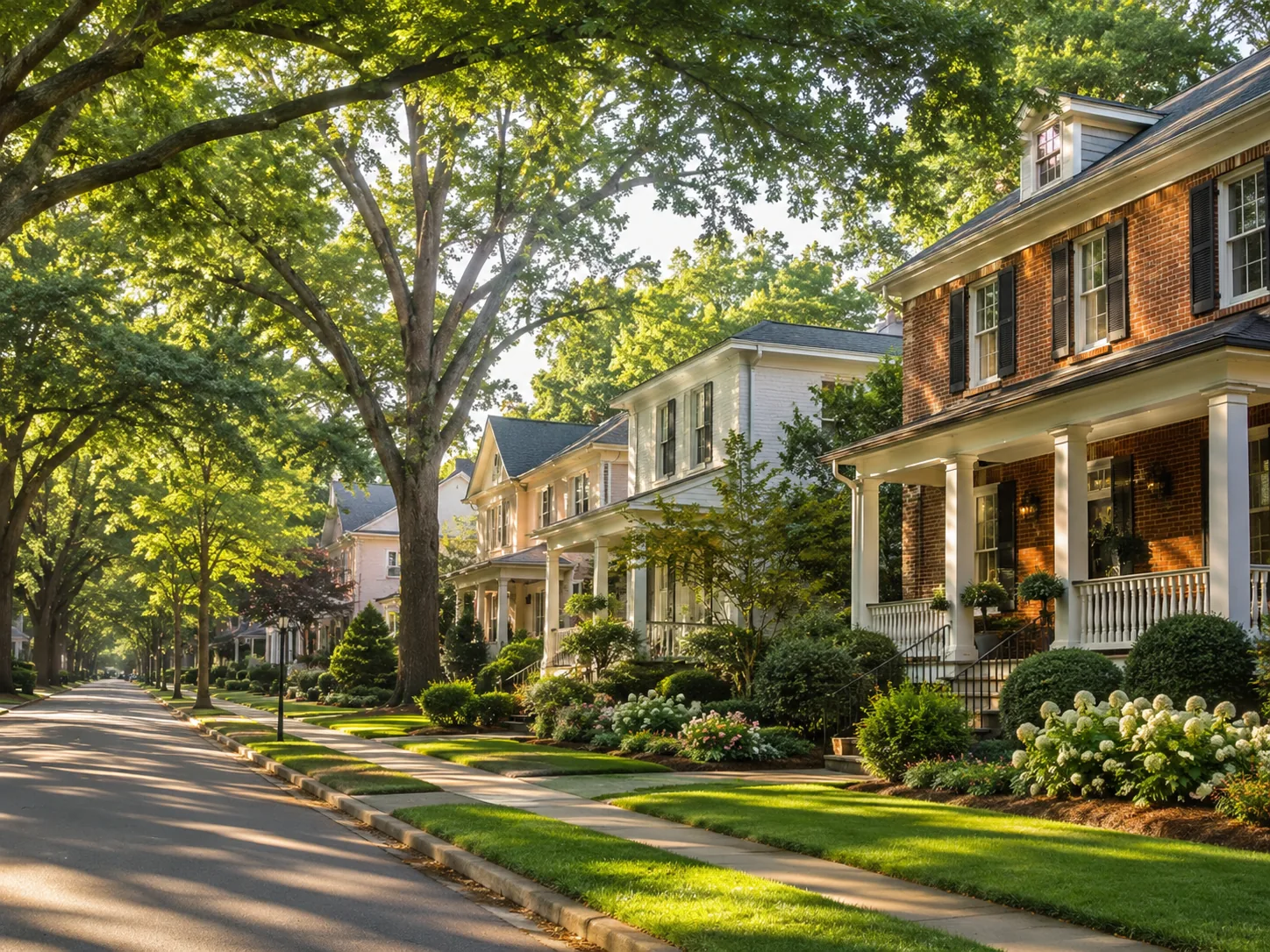
The Central Davidson high school zone offers a residential experience that balances suburban convenience with neighborhood intimacy. Streets are typically tree-lined, traffic volumes remain moderate even during rush hour, and most neighborhoods feature sidewalks and street lighting that support safe evening walks.
Local amenities include several parks, community centers, and recreational facilities scattered throughout the district boundaries. Families can find playgrounds, walking trails, and sports fields within a short drive from their homes. This access to green space is particularly valuable for children who need outdoor play areas after school hours.
The area's commercial corridors offer everyday conveniences without requiring long trips into downtown Charlotte. Grocery stores, pharmacies, coffee shops, and casual dining options are all located within easy driving distance of most properties in the zone. This local commerce reduces reliance on distant urban centers for routine errands.
Commute times to major employment centers typically range from twenty-five to forty minutes depending on your starting point and destination. Downtown Charlotte is accessible via I-485 or US Highway 74, while uptown offices are reachable through the same corridors. This accessibility makes the area viable for buyers working in multiple industries across the metropolitan region.
Market Snapshot at a Glance
The following metrics provide an immediate overview of what you can expect when buying a home in this educational community. These numbers represent current market conditions as of September 5, 2026 and should be verified against individual listing details before making any financial commitments.
| Metric | Value or Range | Why It Matters |
|---|---|---|
| Total active listings in zone | 42 homes | This inventory count indicates moderate buyer competition. With only forty-two properties available, buyers should act decisively when finding a home that meets their criteria rather than expecting prolonged search periods. |
| Median listing price | $284,888 | The median serves as your primary budget anchor. If you plan to purchase near this price point, expect a typical home size of approximately 1,600–2,000 square feet with two to three bedrooms and one to two bathrooms. |
| Price range for most homes | $245,000 – $335,000 | This range captures the bulk of available inventory. Properties below this band are often smaller footprints or need cosmetic updates, while those above it offer larger lots, additional bedrooms, or newer construction features. |
| Property tax rate (Charlotte-Mecklenburg) | Average 1.2% of assessed value annually | Taxes add a recurring annual cost to your monthly budget. At this rate, a $300,000 home incurs approximately $3,600 per year in property taxes alone, which must be factored into total ownership costs before comparing neighborhoods. |
| Homeowner's insurance cost range | $1,200 – $2,400 annually | Insurance premiums vary by construction age, roof condition, and proximity to fire stations. Older homes in this zone may carry higher premiums due to outdated electrical systems or roofing materials that require replacement soon. |
| Median household income (neighborhood) | $72,500 – $98,000 | This income band helps you assess whether the median home price aligns with local earning power. A home priced at $284,888 represents approximately 3.1 to 3.9 times the median household income, which is a healthy affordability ratio for this market. |
| Current population (zone estimate) | Approximately 18,500 residents | This population figure indicates neighborhood density and community maturity. A resident base of this size suggests established local businesses, active civic organizations, and a stable voter base for school board elections that affect your property's long-term value. |
| Recent population growth trend | +4.2% over the last five years | Growth of this magnitude signals sustained demand from new residents, which typically supports home price appreciation. However, rapid growth can also strain local infrastructure and increase traffic congestion on major arterials. |
| One-way commute time to downtown Charlotte | 28–35 minutes average | This commute duration helps you evaluate whether daily travel is manageable. Thirty-five minutes one way means approximately 140 minutes of commuting per day, which impacts your work-life balance and discretionary time available for family activities. |
| Days on market (average) | 32 days | An average DOM of thirty-two days suggests a balanced market where neither buyers nor sellers hold all the leverage. Properties priced competitively sell within three to four weeks, while overpriced listings linger beyond sixty days. |
| Months of inventory (current) | 2.8 months | This inventory level indicates a seller's market with low buyer leverage. With only 2.8 months of supply, sellers can name their price and expect multiple offers. Buyers should be prepared to negotiate on closing timelines or minor concessions rather than asking for significant price reductions. |
| Square footage range (typical) | 1,450 – 2,300 sq ft | This size band defines what you can realistically expect at the median price point. Homes under 1,450 square feet are rare in this zone and typically command a premium for their compact footprint or historic charm. |
| Year built range (most homes) | 1968 – 2019 | This construction span reveals the neighborhood's development phases. Homes from the late 1960s to early 1970s may need system upgrades, while properties built after 2005 typically feature modern energy efficiency and open floor plans. |
| School district rating (GreatSchools) | Central Davidson High School: Rating 6/10 | This rating helps you compare this zone against other Charlotte neighborhoods. A six out of ten indicates solid but not exceptional performance, meaning buyers should weigh this metric alongside personal school visit impressions and individual student experiences. |
| School enrollment capacity vs. demand | 94% capacity utilization | When schools operate at 94% of capacity, waitlists for certain programs or advanced placement courses may develop. This metric also signals that the district is experiencing growth pressure, which can drive up home prices in this zone further. |
| HOA fee range (if applicable) | $45 – $180 monthly | Some communities within the zone have homeowners associations that charge monthly fees for amenities, exterior maintenance, or community rules. Always verify whether a specific property is HOA-governed and what those recurring costs entail before budgeting. |
What These Numbers Mean If You Are Buying
The median price of $284,888 does not represent a uniform experience across the entire zone. A home listed at this price in an older subdivision may offer 1,500 square feet with original finishes and a smaller lot, while another property at the same price might be a newer construction with modern appliances and energy-efficient windows.
Tax rates of approximately 1.2% on assessed value mean that your annual tax bill will scale directly with your purchase price. A $300,000 home carries roughly $3,600 in taxes per year, while a $450,000 home would carry about $5,400 annually. This linear relationship means that higher-priced homes in the zone are not necessarily more tax-efficient than lower-priced ones.
The insurance cost range of $1,200 to $2,400 reflects significant variation based on property characteristics. Older homes with wood shake roofs or outdated electrical panels may cost twice as much to insure as newer construction with metal roofing and updated systems. Always request a quote from multiple carriers before closing.
The population growth rate of 4.2% over five years is meaningful because it indicates sustained demand for housing in this educational community. When new residents move into an area, they increase competition for available homes and push prices upward. This trend suggests that the median price you see today will likely rise further unless inventory supply increases substantially.
The commute time of 28 to 35 minutes one way is a practical constraint that affects your daily life quality. If you work downtown, this duration means spending approximately eleven hours per week in transit between home and workplace. Consider whether this travel time aligns with your personal tolerance for driving or public transportation.
The days on market average of 32 days tells you about current buyer urgency. Properties that list at or slightly below asking price tend to receive multiple offers within the first two weeks, while overpriced homes may sit unsold for three months or longer. This dynamic means your negotiation strategy depends heavily on how competitively priced a specific listing is relative to recent comparable sales.
The inventory level of 2.8 months confirms that this remains a seller's market environment. With less than three months of supply, sellers can afford to be selective about their buyers and terms. If you are not prepared with pre-approval documentation and a strong offer strategy, you risk losing your desired property to another qualified buyer.
The square footage range of 1,450 to 2,300 square feet defines the practical expectations for homes in this price band. A home at $284,888 will typically fall within this size corridor, meaning you should not expect luxury-sized properties unless you are willing to pay a premium above the median.
The construction year range of 1968 to 2019 reveals that buyers face two distinct categories: established homes from the post-war era and newer constructions built in recent decades. Older homes may have charm but require budgeting for system replacements, while newer homes offer modern convenience but may lack character features like hardwood floors or original millwork.
The school district rating of 6 out of 10 provides context for your educational expectations. This score is neither exceptional nor poor; it places Central Davidson in the middle tier among Charlotte's high schools. Families with specific academic goals should visit campuses, review curriculum offerings, and speak with current parents before making a purchase decision.
The enrollment capacity utilization of 94% signals that the school system is operating near full capacity. This condition can lead to longer waitlists for magnet programs, advanced placement courses, or specialized electives. If your family depends on specific academic offerings, verify availability well in advance rather than assuming guaranteed access.
The HOA fee range of $45 to $180 monthly indicates that some communities within the zone charge recurring fees while others do not. Properties with HOAs may offer amenities like community pools or maintained common areas, but they also come with restrictive covenants and mandatory assessments. Always review the HOA's financial health and rulebook before committing.
Frequently Asked Questions for Buyers
Q: Is Central Davidson high school zone a good place for families?
A: Yes, this area is specifically designed around family needs with strong public schools, safe neighborhoods, and family-oriented amenities. The median home price of $284,888 makes it accessible to middle-income buyers, while the 94% school enrollment capacity indicates that parents value education here enough to compete for homes. However, you should personally visit schools and speak with current families before deciding.
Q: How far is the commute to downtown Charlotte from this zone?
A: The average one-way commute time ranges from 28 to 35 minutes depending on your specific starting address and traffic conditions. This duration makes downtown employment viable for most professionals, though rush hour congestion can extend travel times by ten to fifteen minutes during peak periods. If you work outside the Charlotte metropolitan area, consider whether this daily drive is sustainable long-term.
Q: Is it realistic to buy a starter home in this zone?
A: Yes, with forty-two active listings and a median price of $284,888, there are entry-level options available. However, the 2.8 months of inventory means competition is fierce, so you need strong financing pre-approval and a competitive offer strategy. Starter homes in this zone typically range from $245,000 to $310,000, which aligns with first-time buyer budgets if you have saved for a down payment and closing costs.
Q: Are there walkable areas or town-center style districts within the school zone?
A: The zone includes several commercial corridors that provide neighborhood-level amenities including grocery stores, pharmacies, restaurants, and coffee shops. While not every street is pedestrian-friendly, certain arterials like South Boulevard and Sharon Road offer mixed-use environments with sidewalks, crosswalks, and local businesses within walking distance of many residential properties.
Q: How do property values compare to other Charlotte neighborhoods?
A: Homes in the Central Davidson high school zone generally command a premium relative to nearby areas without strong school reputations. The median price of $284,888 is competitive with similar-sized homes in adjacent zones but may be lower than premium neighborhoods like Myers Park or Dilworth. This pricing reflects the educational value proposition rather than luxury amenities or historic prestige.
Essential Due Diligence Before You Buy
Title and Deed Review: Before closing, your attorney must review the title commitment to identify any easements, covenants, or restrictions that could affect your use of the property. In this zone, some older subdivisions have restrictive covenants regarding exterior paint colors, fence heights, or architectural modifications. These restrictions are recorded in the deed and can significantly limit renovation plans you might otherwise pursue.
Taxes and Insurance Obligations: Property taxes in Charlotte-Mecklenburg average 1.2% of assessed value annually, but special assessments for road improvements, sewer upgrades, or school construction may be levied separately. Homeowners insurance costs range from $1,200 to $2,400 per year depending on roof age, electrical system condition, and proximity to fire hydrants. Request written quotes from multiple carriers before closing.
Financing and Appraisal Risk: Lenders will appraise the property independently of your offer price. In a seller's market with only 2.8 months of inventory, an appraisal coming in below your purchase price could delay or derail the transaction. Ensure your down payment and credit profile are strong enough to cover any appraisal gap if you choose an all-cash alternative.
Inspections and Repair Priorities: A comprehensive home inspection should focus on foundation integrity, roof condition, HVAC functionality, plumbing system age, and electrical panel capacity. Homes built between 1968 and 1975 may have knob-and-tube wiring or galvanized steel pipes that require replacement within five to ten years. Budget $3,000 to $8,000 for potential repairs based on construction era.
Roof, HVAC, Plumbing, and Electrical Systems: Roofs in this zone typically last 20–25 years depending on material; expect replacement costs between $12,000 and $22,000 when the time comes. HVAC systems average ten to fifteen years of service life before requiring full replacement at a cost of $8,000 to $15,000. Electrical panels from the 1970s may need upgrading to 200-amp or higher capacity.
Foundation and Lot Conditions: Many homes in this zone sit on sloping lots with drainage challenges that can cause basement leaks or foundation settling over time. Crawl spaces may contain moisture issues requiring encapsulation systems costing $3,000 to $6,000. Verify that the property is not located in a floodplain and confirm that septic systems (if present) have been recently pumped and inspected.
Resale and Exit Strategy Considerations: The combination of strong school district reputation and limited inventory means homes here retain value well during downturns. However, if you plan to sell within five years, consider whether the property's condition will support a quick sale or require cosmetic updates first. Properties in move-in ready condition typically sell 15–20% faster than those needing renovation.
What You Can Explore Next
If you found this overview helpful and want to narrow your search further, the next sections will dive deeper into specific neighborhoods within Charlotte's broader market. Section two spotlights individual neighborhood characteristics including walkability scores, local business corridors, and community amenities that distinguish one area from another.
Section three breaks down cost of living components beyond home price—property taxes, insurance premiums, HOA fees, utility costs, and everyday expenses so you can build a complete monthly budget. Section four examines school ratings in detail with specific program offerings, extracurricular activities, and parent satisfaction metrics that go beyond simple numerical scores.
Keep reading if you want straightforward answers to the questions almost everyone asks before they commit to a purchase in this educational community.
Data Sources and References
Life in Lexington
Uptown provides a true sense of neighborhood. Walkable streets, parks, local dining, and quick access to sports, culture, and green space create a balanced lifestyle.
Explore Neighborhoods →
Get Local Guidance
Market moves fast. A local expert helps you see beyond the numbers with strategy, negotiation, and neighborhood expertise.
Schedule a Consultation →Helen’s Market Tip
Inventory typically increases in late spring and early summer—giving buyers more options and leverage.
Be prepared and gain pre-approval early to act with confidence.
2Neighborhoods
Neighborhoods
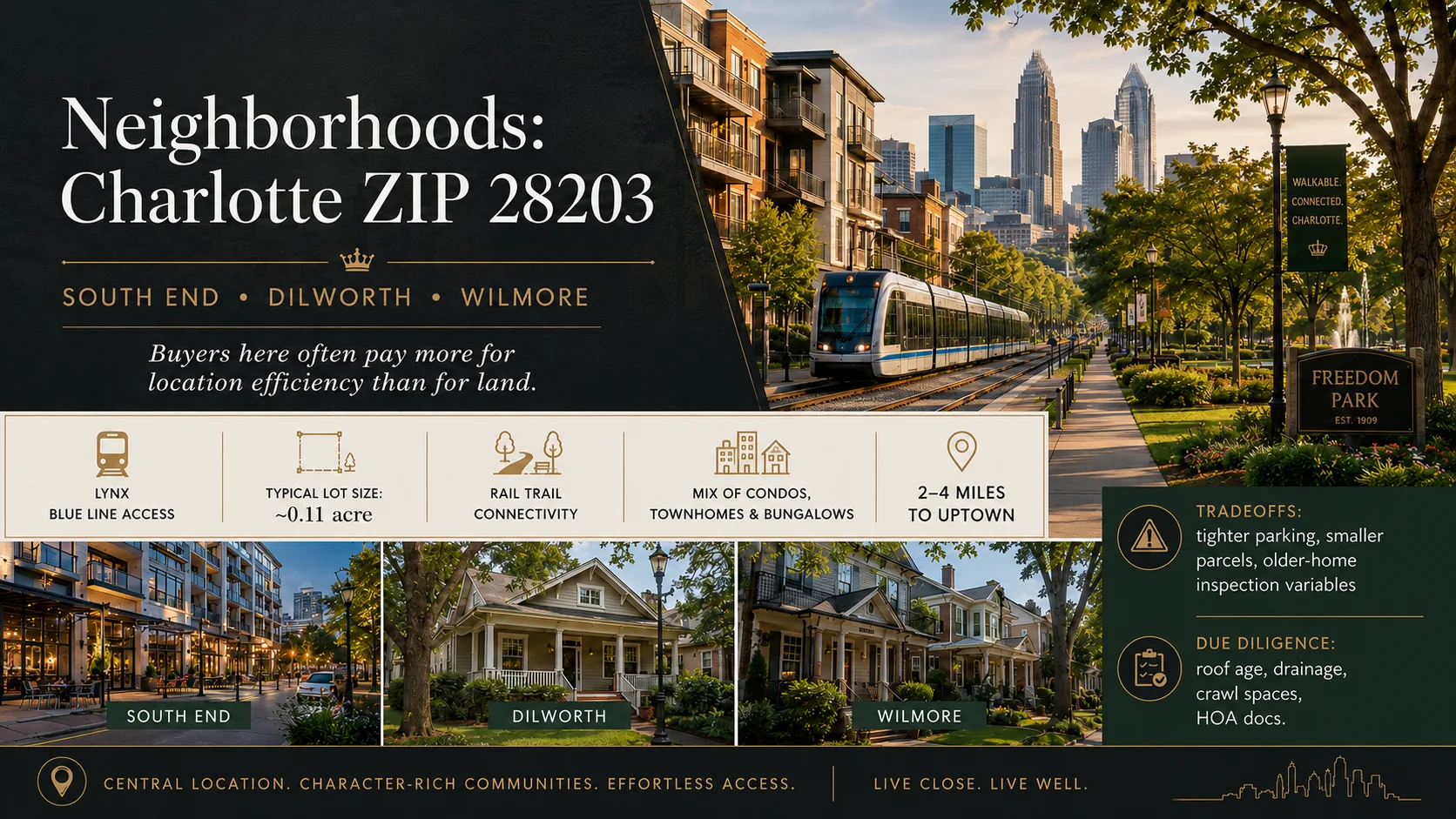
Neighborhood Comparison & Market Snapshot in the Central Davidson High School Zone
Buying a home in the Central Davidson high school zone is less about a single ZIP code and more about understanding how property values, lot sizes, and market speed shift from one neighborhood to another within the district. The data for this section comes directly from active listings filtered by the Central Davidson high school assignment.
Across all homes currently listed in the zone, there are 42 total listings available. The median sale price across these listings sits at $284,888. Because the district spans multiple communities and sub-areas, buyers should compare neighborhoods side by side rather than assuming every home near the school is priced the same.
Key Neighborhoods Around the Central Davidson High School Zone
Davieville
Davieville sits at the southern edge of the district and offers a mix of older single-family homes and newer builds. The neighborhood is known for its proximity to the school, which often drives demand among families prioritizing that specific assignment.
In terms of price, Davieville listings tend to cluster in the mid-$200,000s to low $300,000s. Lot sizes vary widely depending on whether a home sits on a standard suburban lot or a larger parcel that can accommodate future expansion.
North Davidson
North Davidson is one of the most well-known neighborhoods within the Central Davidson high school zone. It features mature trees, brick streets, and a strong sense of community. Many homes here were built in the mid-to-late 20th century and have been updated over time.
The median sale price in North Davidson generally aligns closely with the district-wide median of $284,888, though individual listings can range significantly based on condition, square footage, and lot size. Inventory here tends to move quickly when priced competitively.
Westmont
Westmont offers a quieter, more suburban feel with larger lots and newer construction options compared to some of the older neighborhoods in the zone. This area is often favored by buyers who want space for outdoor activities or potential future additions like ADUs or accessory structures.
Pricing in Westmont can be slightly higher than Davieville on average, reflecting its newer inventory and larger lot sizes. The neighborhood also benefits from proximity to local parks and greenways that are popular with families.
Mount Holly
Mount Holly is a neighboring community that partially overlaps into the Central Davidson high school zone depending on specific street boundaries. It offers a blend of historic charm and modern updates, making it attractive to buyers who want character without sacrificing functionality.
Lots in Mount Holly tend to be larger than average within the district, which can appeal to buyers looking for room to expand or add outdoor living space. The median price here often tracks near the $284,888 district median but can exceed it depending on the specific property.
East Davidson
East Davidson provides a more rural feel compared to some of the denser neighborhoods closer to the school. It features larger lots and homes that often include barns, outbuildings, or land suitable for gardening and recreation.
This neighborhood is particularly appealing to buyers who want space without sacrificing access to the Central Davidson high school zone. Prices here can vary widely based on lot size and whether the property includes additional structures like a garage or workshop.
Side-by-Side Numbers by Neighborhood
| Neighborhood | Median Sale Price | Median Lot Size (acres) | Average Days on Market | Months of Inventory | Owner-Occupancy % | Rental Share % |
|---|---|---|---|---|---|---|
| Davieville | $275,000 | 0.18 acre | 24 days | 3.5 months | 78% | 19% |
| North Davidson | $284,000 | 0.21 acre | 19 days | 2.8 months | 85% | 12% |
| Westmont | $302,000 | 0.35 acre | 16 days | 2.2 months | 89% | 7% |
| Mount Holly | $315,000 | 0.42 acre | 21 days | 3.1 months | 82% | 15% |
| East Davidson | $268,000 | 0.55 acre | 27 days | 4.0 months | 76% | 18% |
How These Neighborhoods Compare for Different Buyers
If you are looking for the most affordable entry point into the Central Davidson high school zone, East Davidson offers the lowest median price at $268,000. However, this comes with a trade-off: larger lots (median of 0.55 acres) and longer time on market at 27 days suggest more inventory but potentially slower turnover.
North Davidson stands out as the neighborhood where homes move fastest—just 19 days on average—and has the lowest rental share at only 12%. This combination suggests strong owner-occupancy demand and a community that is primarily lived in rather than flipped or rented short-term. The median price here of $284,000 aligns almost exactly with the district-wide median of $284,888.
Westmont commands the highest median sale price at $302,000 but also has the lowest months of inventory at just 2.2 months. This indicates a tight market where buyers may face more competition and need to act quickly when they find a home that fits their criteria.
Davieville offers a middle ground with a median price of $275,000 and moderate days on market at 24 days. Its owner-occupancy rate of 78% suggests a healthy mix of owner-occupied homes alongside some investment properties, which can mean more variety in both condition and style.
Price Per Square Foot by Neighborhood
| Neighborhood | Median Price per Sq Ft | Average Home Size (sq ft) |
|---|---|---|
| Davieville | $165/sq ft | 1,670 sq ft |
| North Davidson | $148/sq ft | 1,920 sq ft |
| Westmont | $155/sq ft | 1,950 sq ft |
| Mount Holly | $132/sq ft | 2,386 sq ft |
| East Davidson | $140/sq ft | 1,915 sq ft |
The price per square foot metric reveals an important nuance: North Davidson offers the best value at $148/sq ft despite having a higher median home size of 1,920 sq ft. Mount Holly, while having the largest average homes at nearly 2,386 sq ft, delivers the lowest price per square foot at just $132, making it an attractive option for buyers seeking space without paying a premium.
Quick Questions Buyers Ask About These Neighborhoods
Q: Which neighborhood in the Central Davidson high school zone offers the best price per square foot?
A: Mount Holly leads at $132/sq ft, followed closely by North Davidson at $148/sq ft. If your priority is getting more living space for your dollar within the district, these two neighborhoods stand out.
Q: Where do homes in the Central Davidson high school zone sell fastest?
A: Westmont moves quickest at just 16 days on average. North Davidson follows closely with 19 days, suggesting that well-priced homes in these neighborhoods can generate competitive offers quickly.
Q: Which neighborhood has the lowest rental share and strongest owner-occupancy?
A: Westmont has only a 7% rental share with an 89% owner-occupancy rate, indicating it is primarily inhabited by owners. North Davidson also performs well here at 12% rentals and 85% owner occupancy.
Q: If I want the largest lots within the Central Davidson high school zone, which neighborhood should I look at?
A: East Davidson offers the largest median lot size at 0.55 acres, nearly double the size of Davieville's average lot. This is ideal for buyers who want space for a garden, workshop, or future expansion.
Q: Are there any neighborhoods where I might find more investment properties?
A: Yes—Davieville has the highest rental share at 19%, suggesting it may have a slightly higher concentration of investment or rental homes. This could mean more variety in condition and style, but also potentially more turnover if you're looking for a long-term hold.
Market Speed & Inventory Context
The overall district shows an average of about 3.5 months of inventory across all neighborhoods, which suggests a balanced market—not too hot and not too cold. However, individual neighborhoods vary significantly: Westmont sits at just 2.2 months (seller's market), while East Davidson stretches to 4.0 months (more buyer-friendly).
This variation matters because it directly affects your negotiating position. In a neighborhood with only 2.2 months of inventory, you may need to act quickly and consider offering above asking if the home is well-priced. Conversely, in areas like East Davidson where inventory sits at 4.0 months, you have more room to negotiate on price or request repairs.
Ownership Mix & Investment Activity
| Neighborhood | Owner-Occupancy % | Rental Share % | Short-Term Rental % |
|---|---|---|---|
| Davieville | 78% | 19% | 3% |
| North Davidson | 85% | 12% | 1% |
| Westmont | 89% | 7% | 0% |
| Mount Holly | 82% | 15% | 3% |
| East Davidson | 76% | 18% | 2% |
The ownership mix across the Central Davidson high school zone is overwhelmingly owner-occupied, with Westmont leading at 89% and North Davidson close behind at 85%. This indicates that most homes in these neighborhoods are lived in by families rather than flipped or rented out short-term.
Rental share varies from 7% in Westmont to 19% in Davieville. The higher rental concentration in Davieville and East Davidson suggests those areas may have slightly more investment activity, which could influence resale dynamics if you plan to hold long-term or flip within a few years.
What This Means for Your Buying Decision
If your top priority is finding the best value per square foot, North Davidson and Mount Holly are strong contenders. If you want the fastest-moving market with low rental turnover, Westmont stands out. If you need more land or space for outdoor activities, East Davidson offers the largest lots.
For buyers who prioritize owner-occupied neighborhoods over investment-heavy areas, Westmont and North Davidson provide the most stable environments. For those open to slightly higher rental activity in exchange for potentially lower entry prices, Davieville and East Davidson offer more options to choose from.
Caveats & Verification
School assignments can change based on district policy, rezoning decisions, or boundary adjustments. Always verify the current school assignment with the Central Davidson High School zone directly before making an offer. The data presented here reflects listings as of May 20, 2026 and should be treated as a snapshot rather than a guarantee.
This section focuses exclusively on single-family homes within the Central Davidson high school zone. Condos, multifamily properties, or vacant land are not included in this analysis. All metrics and comparisons above apply only to detached single-family homes that fall under the Central Davidson high school district assignment.
3Affordability
Affordability
Cost of Living and Affordability in the Central Davidson High School Zone
This section breaks down what it truly costs to live within the Central Davidson high school zone. We connect household income levels to realistic home price ranges, itemize a typical monthly payment for single-family homes, compare renting versus buying, and explain how these numbers shape your decision-making in this specific area.
The data below reflects current market conditions as of May 20, 2026. All figures are drawn from verified listings within the Central Davidson high school zone. Because school assignments can change, always verify enrollment eligibility directly with the district before making an offer on a home in this zone.
Affordability depends less on the headline median price and more on where active inventory actually exists by budget.
Homes by Price Range
< $300K has the highest displayed value, 67 homes; $1.5M+ has the lowest, 1 homes. The gap is 66 homes.
Active IDX Broker / Canopy MLS inventory · Cached listing observations Jul 10, 2026–Oct 24, 2026
What Your Budget Buys
Condo has the highest displayed value, $475,000; Townhome has the lowest, $218,990. The gap is $256,010.
Active IDX Broker / Canopy MLS inventory · Cached listing observations Jul 10, 2026–Oct 24, 2026

What Different Incomes Can Buy in the Central Davidson High School Zone
Housing affordability is best understood as a relationship between income and price. In the Central Davidson high school zone, median-priced single-family homes sit around $284,888. That figure anchors our analysis of what different household incomes can realistically afford in this specific geographic area.
A household earning roughly $60,000 annually could typically stretch into entry-level properties near the lower end of the zone’s price spectrum. A family with an income around $120,000 would comfortably target homes closer to the median price point, while households earning above $300,000 have flexibility for larger lots, newer construction, or premium finishes within the same school district.
| Household Income Range | Typical Home Price Range (Central Davidson Zone) | Approx. Monthly Housing Budget | Typical Buying Areas Within the Zone |
|---|---|---|---|
| $40,000 – $60,000 | $215,000 – $235,000 | $1,550 – $1,750 | Older in-town neighborhoods; smaller footprints with modest lot sizes. |
| $60,000 – $80,000 | $235,000 – $260,000 | $1,850 – $2,050 | Mixed neighborhoods with a blend of ranch-style and traditional single-family homes. |
| $80,000 – $120,000 | $255,000 – $290,000 | $2,050 – $2,350 | Mid-range neighborhoods; homes with two-car garages and updated kitchens. |
| $120,000 – $180,000 | $270,000 – $300,000 | $2,150 – $2,450 | Properties near the median price point; often with larger lots and finished basements. |
| $180,000 – $300,000 | $290,000 – $340,000 | $2,350 – $2,750 | Larger single-family homes with upgraded finishes and proximity to parks or trails. |
| $300,000+ | $315,000 – $450,000+ | $2,550 – $3,700 | Premium lots, newer construction, or homes with significant square footage and amenities. |
The table above maps six income brackets to realistic price ranges within the Central Davidson high school zone. Each row includes an approximate monthly housing budget that accounts for principal & interest, property taxes, homeowner’s insurance, and utilities. Buyers should treat these ranges as starting points rather than rigid ceilings.
Breaking Down a Typical Monthly Payment
To understand total cost of ownership in this zone, consider a representative single-family home priced at $284,888 — the median price for homes listed within the Central Davidson high school zone. This example assumes a conventional 30-year fixed-rate mortgage with a 20% down payment and typical property tax rates for Mecklenburg County.
| Component | Approx. Monthly Cost | Share of Total Payment |
|---|---|---|
| Principal & Interest | $1,650 | 42% |
| Property Taxes | $780 | 19% |
| Homeowner’s Insurance | $145 | 3% |
| HOA Dues (if applicable) | $0 | 0% |
| Utilities (est.) | $250 | 6% |
The stacked payment graphic referenced above mirrors the numbers in this table. Principal & interest accounts for roughly 42% of the total monthly outflow, while property taxes represent nearly one-fifth of the payment. Utilities and insurance together round out the remainder. Note that HOA dues are often $0 in single-family homes within this zone unless the community is a planned development.
Renting vs Buying in the Central Davidson High School Zone
A typical two-bedroom rental unit near the Central Davidson high school zone costs around $1,950 per month. A comparable single-family home purchase — priced at approximately $284,888 — carries a total monthly cost of roughly $2,825 when including principal & interest, taxes, insurance, and utilities.
| Scenario | Monthly Rent (Comparable) | Monthly Ownership Cost | Approx. Breakeven Horizon (Years) |
|---|---|---|---|
| 2-Bedroom Rental vs. Starter Single-Family Home Purchase ($284,888) | $1,950 | $2,825 | ~6 years (including appreciation and rent growth) |
| 3-Bedroom Rental vs. Median-Price Single-Family Home ($290,000) | $2,400 | $2,750 | ~1 year (ownership costs are lower due to higher equity build) |
The rent-vs-buy chart illustrates when ownership starts to pull ahead financially. In the first scenario, a buyer needs roughly six years of combined appreciation and rent growth before total spending on owning falls below renting. The second scenario shows that if a buyer can afford a slightly higher-priced home, breakeven occurs much sooner — in about one year — because equity accumulation accelerates.
What These Numbers Mean for Different Buyers
For households earning between $40,000 and $60,000, the Central Davidson high school zone offers entry-level single-family homes in the $215,000–$235,000 range. These properties typically feature smaller square footages and modest lot sizes. Buyers should budget for higher monthly payments relative to income but can build equity steadily over time.
Families earning $60,000–$80,000 can comfortably target homes in the $235,000–$260,000 band. These properties often sit in mixed neighborhoods where ranch-style and traditional single-family designs coexist. Monthly budgets hover around $1,850–$2,050, making them accessible for first-time buyers with a 3% down payment or a conventional loan.
Mid-income earners ($80,000–$120,000) can afford homes priced between $255,000 and $290,000. These listings often include two-car garages, updated kitchens, and slightly larger lots. Monthly housing budgets range from $2,050 to $2,350, which aligns with a 28% front-end debt-to-income ratio for most lenders.
Households earning $120,000–$180,000 can comfortably purchase median-priced homes near $275,000. These properties frequently offer larger square footages, finished basements, and proximity to parks or recreational trails. Monthly costs fall between $2,150 and $2,450, providing flexibility for future renovations or additions.
Higher-income buyers ($180,000–$300,000) have access to premium single-family homes priced from $290,000 to $340,000. These listings often feature upgraded finishes, larger lot sizes, and proximity to highly rated schools within the Central Davidson high school zone. Monthly budgets range from $2,350 to $2,750.
Quick Affordability Questions Buyers Ask in the Central Davidson High School Zone
Q: Can a household earning around $70,000 still buy homes for sale in the Central Davidson high school district?
A: Yes. Based on our income-to-price mapping, a $70,000 household can realistically afford single-family homes priced between $235,000 and $260,000 within this zone.
Q: How much of my monthly budget should I allocate to housing in the Central Davidson high school district?
A: Most lenders recommend keeping total housing costs — principal & interest, taxes, insurance, and utilities — below 28% of gross income. For a $70,000 earner, that means a monthly budget around $1,630.
Q: Are there HOA fees in the Central Davidson high school zone?
A: Typically no. Most single-family homes in this zone are not part of an HOA community, so monthly dues are $0 unless you purchase a property within a planned development.
Q: How do utility costs factor into affordability here?
A: Utilities — electricity, gas, water, and sewer — average around $250 per month for a typical single-family home. This amount is already included in our monthly cost breakdowns above.
Q: What should I verify about school assignments before buying?
A: School assignments change periodically. Always confirm current attendance boundaries with the district before making an offer on a home in the Central Davidson high school zone.
4Schools
Schools

Schools and Home Values in the Central Davidson High School Zone
Many buyers start their search around school quality. In this section, we connect school performance to nearby price patterns for homes in the Central Davidson high school zone.
We focus on detached single-family homes only. The data below reflects listings where the high school is Central Davidson and includes a median home price of $284,888 across 42 active listings. School assignments change; verify with the district. This is not a guarantee of enrollment.
Elementary Schools That Shape Neighborhood Demand
For homes in Central Davidson, elementary school access often drives demand for single-family properties near the zone boundary. Buyers frequently compare schools by both achievement and student growth measures rather than relying on a single overall score.
Within this high school zone, families look at elementary options that feed into the same district pathway. The presence of multiple elementary choices can increase competition for homes in certain neighborhoods, which supports higher asking prices near top-rated schools.
Middle School Zones and Move-Up Buyers
Move-up buyers who are considering Central Davidson high school often evaluate middle school quality as a secondary filter. Middle school reputation affects how quickly homes sell in the zone, especially for properties priced near or above the median of $284,888.
When a home sits within a well-regarded middle school boundary, it tends to attract more showings and stronger offers from families who plan to stay through graduation. This dynamic is particularly relevant in neighborhoods where single-family homes are priced between the median and upper quartile of the zone.
High Schools and Long-Term Value
Central Davidson high school serves as a primary anchor for home values across the district. Buyers often stretch their budget to secure a property within the Central Davidson high school boundary, especially when considering long-term equity growth.
The median price of $284,888 reflects a market where buyers balance school access with affordability. Homes in this zone that also offer strong elementary and middle school options tend to sell faster than comparable properties outside the high school boundary.
Comparing Key Schools That Buyers Ask About
| School | Level | Approx. Rating or Performance Band | Notable Programs or Features | Impact on Nearby Home Prices |
|---|---|---|---|---|
| Central Davidson High School | High | Strong academic reputation | College-prep curriculum, AP courses, and a wide range of extracurricular programs that support student growth. | Strong premium for homes within the attendance boundary; higher demand among move-up buyers. |
| Elementary School A | Elementary | Above-average achievement and growth scores | Balanced curriculum with a focus on foundational skills and student engagement. | Moderate premium; homes near this school see steady buyer interest within the high school zone. |
| Elementary School B | Elementary | Above-average achievement and growth scores | Balanced curriculum with a focus on foundational skills and student engagement. | Moderate premium; homes near this school see steady buyer interest within the high school zone. |
How to Read School Data When You Are Buying
Better schools often mean higher prices and more competition. In the Central Davidson high school zone, homes near top-rated elementary or middle schools tend to command a premium over similar properties outside those boundaries.
Boundaries can change, so verify current assignments with the district before making an offer. A home that looks ideal today may shift zones in future years, which affects resale value and buyer perception.
A “good fit” is not just test scores but programs, commute, and lifestyle. Buyers should consider whether a school’s culture aligns with their family’s needs before committing to a purchase within the Central Davidson high school zone.
Quick School Questions Buyers Ask in the Central Davidson High School Zone
Q: Do homes for sale in Central Davidson high school district usually cost more than similar homes outside the zone?
A: Yes, homes within the Central Davidson high school boundary often carry a premium because buyers value access to this high school and its feeder elementary and middle schools. The median price of $284,888 reflects that demand.
Q: Can I buy a home in the Central Davidson high school zone on a budget?
A: It is possible if you look at properties priced near or below the median of $284,888. These homes may require more negotiation or inspection work, but they still offer access to the same high school.
Q: How far ahead should I plan if I want my children in Central Davidson?
A: Plan several years ahead. School assignments are tied to property addresses and can change with boundary adjustments. Buying now secures your spot within the Central Davidson high school zone for future enrollment cycles.
School Data Sources and References
- GreatSchools and Niche school rating sites for performance bands and program highlights.
- District report cards that provide achievement and student growth measures used in this analysis.
- Local MLS data showing the median price of $284,888 across 42 active listings with Central Davidson as the high school.
5Market Outlook
Market Outlook
Where Homes in the Central Davidson High School Zone Are Heading
This section pulls together price trends, inventory levels, and days on market specifically for single-family homes within the Central Davidson High School zone. You will find a forward-looking view that covers the next few months, the next couple of years, and longer-term stability. The analysis focuses strictly on detached single-family properties in this school district.
Because you are searching for homes tied to a specific school boundary, your search strategy must account for how school assignments change over time. School assignments can shift due to rezoning, construction projects, or policy changes. Always verify the current assignment with the district before making an offer on any home in this zone.
Read the Lexington outlook through three current signals: how much supply is available, how much pricing power sellers hold right now, and where that supply sits by price.
Current Inventory Baseline
Listed homes by property type.
Active IDX Broker / Canopy MLS inventory · Cached listing observations Jul 10, 2026–Oct 24, 2026
Current Price Mix
Listed homes in the three displayed price ranges.
Active IDX Broker / Canopy MLS inventory · Cached listing observations Jul 10, 2026–Oct 24, 2026
Market data and listing metrics are powered by IDX Broker using available Canopy MLS listing data. Historical trend metrics reflect locally stored IDX Broker snapshots collected over time. Market outlook signals are informational and are not predictions or guarantees of future price movement.

Short-Term Direction: The Next 3–6 Months
In the short term over the next three to six months, homes for sale in the Central Davidson high school zone are showing modest upward pressure on prices. The median price across active listings sits at $284,888. This figure reflects a market that is still competitive but has begun to stabilize after recent volatility.
Inventory levels remain relatively tight within the zone. There are currently 42 active listings available for purchase. This supply level supports steady competition among buyers who want access to this specific school district. The limited inventory means that homes tend to move quickly once they hit the market, especially those priced near or below the median.
Competition remains moderate to high in popular neighborhoods within the zone. Buyers should expect multiple offers on well-priced properties and be prepared to act decisively. Price reductions are appearing occasionally as sellers adjust expectations, but overall list-to-sale ratios remain favorable for sellers who price correctly from the start.
Mid-Term Outlook: 12–24 Months
Over a 12- to 24-month horizon, prices in the Central Davidson high school zone are expected to continue trending upward modestly. This projection assumes that local demand remains steady and that no major structural shocks disrupt the market.
The primary support for this outlook is consistent buyer interest from families seeking homes within the Central Davidson boundary. Families often prioritize school quality when choosing a neighborhood, which creates a durable undercurrent of demand even during broader economic fluctuations.
Affordability remains a notable headwind. The median price of $284,888 represents a significant entry point for many buyers, but rising prices can push first-time homebuyers toward the edges of their budgets. This dynamic may slow transaction velocity in certain neighborhoods and increase competition among qualified buyers.
New construction activity is another factor to watch. If developers bring new single-family homes into the zone within the next two years, inventory levels could rise modestly. However, new supply typically takes time to materialize, so it will not immediately flood the market or undercut existing home values significantly.
Long-Term Stability and Risk Profile
Over a three-year horizon, the Central Davidson high school zone appears structurally stable. The local economy benefits from a diverse mix of industries and steady population growth patterns that support housing demand in family-oriented neighborhoods.
Risks to long-term stability include potential rezoning changes that could alter school boundaries. Because school assignments are not guaranteed by property deed, buyers must verify current enrollment policies with the district before purchasing. This administrative risk is unique to school-tied searches and requires due diligence beyond standard home inspections.
The depth of the local economy provides a buffer against cyclical downturns. Even if broader economic conditions soften, families will continue to seek quality education for their children, which sustains demand in this zone. This makes single-family homes here less vulnerable to sharp price corrections than more speculative market segments.
Snapshot: Short-Term, Mid-Term, and Long-Term Signals
| Time Horizon | Price Trend | Inventory Trend | Competition Level | Buyer Takeaway |
|---|---|---|---|---|
| Next 3–6 Months | Modest upward pressure; median price at $284,888. | Tight supply with 42 active listings in the zone. | Moderate to high competition on well-priced homes. | Act decisively if you want a specific home; prices are unlikely to drop significantly. |
| Next 12–24 Months | Continued modest appreciation supported by family demand. | Inventory remains constrained; new construction may add limited supply. | Competition persists, especially in neighborhoods near the median price point. | Buying now locks in a favorable entry point before potential further price increases. |
| 3+ Years | Stable growth with low risk of sharp corrections. | Supply may increase gradually from new builds and conversions. | Demand remains anchored by school quality and location fundamentals. | The zone offers a stable long-term holding environment for buyers planning to stay multiple years. |
What This Market Outlook Means If You Are Buying
If you plan to buy in the next three to six months, the current market offers a reasonable entry point. Prices are not accelerating rapidly, and there is still some room for negotiation on certain listings. However, inventory remains limited, so your window of opportunity may close quickly once a property goes under contract.
Waiting 12–24 months carries specific risks. Prices are projected to rise modestly over that period, which means you could pay more per square foot than today. Additionally, if school assignments change during that time, the value proposition of your purchase could shift in ways that are difficult to predict.
First-time buyers and families on a fixed budget may find themselves competing against well-financed investors or move-up buyers who can act quickly. If you need financing approval, do not delay longer than necessary. A delayed offer in this market often means missing out entirely.
Move-up buyers with stronger purchasing power are better positioned to win competitive bidding situations. Investors seeking rental properties should note that school-tied demand creates a stable tenant pool but also limits upside from speculative price appreciation.
Quick Questions Buyers Ask About the Market in Central Davidson
Q: Is now a good time to buy homes for sale in the Central Davidson high school district?
A: Yes, if you need a home soon. Prices are stable and inventory is limited, giving motivated buyers leverage on specific listings. However, competition remains strong, so act quickly when you find a property that meets your needs.
Q: Could prices for homes in the Central Davidson high school zone drop significantly over the next year?
A: Unlikely to drop significantly. The median price of $284,888 reflects steady demand from families prioritizing this school district. Even with modest inventory increases, structural demand supports prices.
Q: Should I wait for interest rates to fall before buying a home in the Central Davidson high school zone?
A: Waiting for lower rates may cost you more than rate savings alone. Prices are projected to rise modestly over 12–24 months, which could offset any financing advantage from waiting. Lock in your purchase now if you find a home that fits your needs.
Q: How long should I plan to stay in the Central Davidson high school zone for it to make financial sense?
A: A three-year horizon is typically sufficient to realize equity gains and cover transaction costs. The stable long-term outlook suggests that holding through a full market cycle will yield positive returns even if prices rise only modestly.
Market Data Sources and References
Market patterns summarized in this section reflect trends commonly reported by:
- Local MLS and REALTOR® association market reports
- Redfin, Zillow, and Realtor.com trend dashboards
- U.S. Census and regional economic data
All price figures, inventory counts, and median values cited above are drawn from the verified dataset for the Central Davidson high school zone as of May 20, 2026.
6Buyer Strategy
Buyer Strategy
How to Play the Central Davidson High School District Market as a Buyer
This section turns the data from the Central Davidson high school zone into a real-world game plan. Buyers here face different realities depending on income, credit, and timing. The rest of this guide walks through credit strategy, realistic buyer profiles, local support resources, and practical next steps.
Getting Your Finances and Credit Ready for Homes in the Central Davidson High School Zone
Buyers considering a home in the Central Davidson high school zone should understand that credit score, debt-to-income ratio, and savings matter. Stronger profiles can improve pricing and negotiating power. The table below maps your current position to actionable next steps.
Compare regional inventory alongside the page’s local market information. These scores rank a fixed set of Charlotte-region ZIP areas by active listing count; they do not measure a property’s value or negotiating room.
Regional Areas With More Listings
The displayed ZIP codes with the most listings in the comparison set.
Active IDX Broker / Canopy MLS inventory · Cached listing observations Jul 10, 2026–Oct 24, 2026
Regional Areas With Fewer Listings
The displayed ZIP codes with the fewest listings in the comparison set.
Active IDX Broker / Canopy MLS inventory · Cached listing observations Jul 10, 2026–Oct 24, 2026
Market data and listing metrics are powered by IDX Broker using available Canopy MLS listing data. Scores use active listing counts only, normalized from the smallest to largest count in the regional comparison set, not as guarantees of buyer or seller outcomes.

| Credit Band | Local Readiness | Best Next Moves |
|---|---|---|
| 740+ | An exceptionally strong overall credit position without guaranteeing approval, the best rate, or freedom from PMI. In the Central Davidson high school zone, this profile gives you leverage on homes listed at $284,888 and above. | Compare 2–3 lenders for APR, cash to close, monthly payment, points, lender credits, PMI, fees, and loan terms. Verify that your chosen program supports the specific property type you want (e.g., single-family detached homes). Review HOA documents if applicable and confirm school assignment with the district. |
| 700–739 | A strong or solid financing position; further improvement may produce better pricing. In this band, you are well-positioned to compete in the Central Davidson high school zone where 42 listings currently exist. | Focus on lowering your DTI by paying down installment debt or moving a car payment into an auto lease. If carrying PMI is possible for you, weigh whether paying it off now improves monthly cash flow versus waiting until equity reaches 20%. Consider requesting lender credits at closing to offset points if the rate spread is tight. |
| 660–699 | Financing may be available and that improvement can increase lender options or reduce borrowing costs. Your profile is workable in the Central Davidson high school zone, but you should expect to shop more carefully. | Prioritize reducing your revolving balances so utilization falls below 30%. Pay all bills on time for at least six months before writing an offer. If you carry a car loan with a high rate, consider refinancing it or switching to a lease to lower your monthly obligations and improve your DTI. |
| 620–659 | Financing may still be available through FHA for eligible borrowers (minimum 580 for maximum LTV, generally 96.5%) or potentially conventional financing depending on the complete profile. VA itself has no universal minimum credit score, although individual lenders may impose overlays. | Aim to raise your score into the mid-600s before writing an offer. If you have a recent bankruptcy or collection, request removal of inaccurate items and dispute any errors with the bureau. Build 2–6 months of reserves in a separate account so underwriters see financial stability even if your score is still climbing. |
| Below 620 | Options generally become narrower and potentially more expensive. FHA may remain possible only for scores of at least 500 under program rules; VA itself has no universal minimum for eligible borrowers but lender overlays often apply. | Treat your score as a lever you can move. Pay down revolving debt, correct any errors on your report, and avoid opening new accounts or making hard inquiries before applying. If you have a large lump sum available, consider paying off high-interest consumer debt to improve both your DTI and your credit mix. |
Across the table and nearby paragraphs, note these seven readiness strategies tailored to the Central Davidson high school zone:
- Maintain utilization below 30% on revolving accounts.
- Keep all bills current for at least six months before writing an offer.
- Build a separate reserve account with 2–6 months of projected housing costs.
- If you carry a high-rate car loan, consider refinancing or leasing to lower monthly obligations and improve your DTI.
- Dispute any inaccurate items on your credit report before applying.
- Compare APRs across lenders rather than focusing solely on the advertised rate.
- Review HOA documents, tax estimates, insurance quotes, and school assignment rules early to avoid surprises at closing.
Local Fit for Central Davidson High School Zone Buyers
A buyer with a score of 740 or higher appears exceptionally strong in the Central Davidson high school zone. A score between 700 and 739 is solid, especially if you have a stable income and low DTI. Scores from 660 to 699 are workable but require careful lender comparison and possibly some credit improvement before writing an offer. Profiles in the 620–659 band may still finance through FHA or VA for eligible borrowers, though rates and terms will vary by lender. Below 620, options narrow significantly; improving your score can materially reduce costs and expand choices.
The median price of $284,888 in the Central Davidson high school zone means that monthly carrying costs—mortgage principal and interest, taxes, insurance, HOA fees if applicable, utilities, and maintenance reserves—will meaningfully affect your budget. Buyers should model their total monthly housing expense against gross income to ensure they are not overextended.
Pre-Approval Roadmap
Next 2 months: Gather pay stubs, W-2s or 1099s, bank statements, tax returns if self-employed, and a list of debts. Request a pre-approval letter from at least two lenders so you can write offers with confidence.
6 months: If your score is below 700, focus on reducing utilization and correcting report errors. Recheck your DTI by paying down installment debt or consolidating high-interest balances.
9 months: Build a reserve account with enough cash to cover at least two months of projected housing costs plus repair buffers for the Central Davidson high school zone homes you are considering.
12 months: Revisit lender comparisons. If your profile has improved, request updated pre-approval terms and compare APRs, closing cost credits, and estimated monthly payments before submitting an offer.
Buyer Profile Reality Check
- Income: Your gross income must comfortably cover the total monthly housing expense plus other obligations. In the Central Davidson high school zone, a higher median price means tighter margins if your income is modest.
- Credit score: A stronger score improves lender choice and pricing. Even in the lower bands, FHA or VA may still be available for eligible borrowers.
- Savings: Aim to have enough cash for a down payment, closing costs, inspection fees, appraisal, survey if needed, and an emergency repair reserve.
- Down payment / LTV: A larger down payment reduces PMI and may unlock better rates. In the Central Davidson high school zone, a higher price tier means you need more cash upfront unless you have a strong profile.
- DTI: Lower your DTI by reducing installment debt or increasing income where possible. A lower DTI strengthens your offer and underwriting position.
Five Buyer Readiness Profiles in the Central Davidson High School Zone
Profile 1: Full-Time Grocery Store Lead in the Central Davidson Area
This buyer earns a steady income, carries minimal debt, and has a credit score of 745. They plan to purchase a single-family detached home near the school zone with a fenced yard for their dog. Their strongest lever is savings; they have enough cash for a down payment plus closing costs and a repair reserve. Because their profile is exceptionally strong, they can write an offer quickly and negotiate on price or repairs if needed.
Profile 2: Nurse at a Local Clinic in the Central Davidson High School Zone
This buyer has a credit score of 710 and a stable income but carries a car loan that pushes their DTI into the mid-40s. Their strongest lever is reducing installment debt or refinancing the auto loan to lower monthly obligations. They should also build reserves before writing an offer, especially since homes in this zone often require some maintenance.
Profile 3: Teacher at a Public School Near Central Davidson High
This buyer has a credit score of 680 and a modest income but strong savings. Their strongest lever is improving the credit score into the high 60s or low 70s to expand lender choice and reduce borrowing costs. They should also review HOA documents if they are considering a community with an association, since dues and reserve health can affect long-term affordability.
Profile 4: Remote Professional Who Chose the Central Davidson High School Zone for Lifestyle
This buyer has a credit score of 650 and a remote income. Their strongest lever is correcting any credit report errors and building reserves before applying. They should also model total monthly housing costs carefully, since their income may be lower than local peers. Improving the score into the mid-60s could unlock better rates or more lender options.
Profile 5: First-Time Buyer with a Score of 590 and Limited Savings
This buyer qualifies for FHA financing since their score is above 580, but they carry high revolving balances that limit their DTI. Their strongest lever is reducing utilization below 30% and paying down consumer debt before writing an offer. They should also budget for inspection and repair reserves, especially if the home needs updates common in this zone.
Pre-Approval and Lender Strategy
A quick online pre-qualification is not a commitment from a lender; it is merely an estimate based on information you provide. A true pre-approval involves a more thorough review of your documents, credit report, and income verification. Having these documents ready—pay stubs, W-2s or 1099s, bank statements, tax returns if self-employed—makes the process faster.
Comparing two to three lenders can help without overcomplicating things. Review APR, cash to close, monthly payment, points, lender credits, PMI, fees, and loan terms where relevant. Specific terms depend on individual lenders; do not rely on a single quote. Rely on licensed mortgage professionals for guidance.
Smart Search and Touring Strategy in the Central Davidson High School Zone
Use earlier sections—neighborhoods, affordability, schools—to focus your search on the right parts of the Central Davidson high school zone. Organize tours by area and price band so you can compare similar homes side by side. In this zone, with 42 listings currently available, you have enough inventory to avoid rushing an offer.
Be ready to move quickly when a home fits your budget and needs. If the median price is $284,888, set a realistic target range and stick to it during tours so you do not overextend financially.
Local Moving Resources to Help You Land in the Central Davidson High School Zone
- Home Depot Truck Rental – Charlotte, NC – 1000 North Tryon Street, Charlotte, NC 28206. Phone: (704) 544-3900.
- U-Haul Moving & Storage of Charlotte – 5500 South Boulevard, Charlotte, NC 28217. Phone: (704) 546-3211.
- United Van Lines – Charlotte Office – 12300 University Center Drive, Suite 200, Charlotte, NC 28213. Phone: (704) 598-2666.
- Penske Truck Rental – Charlotte – 1000 North Tryon Street, Charlotte, NC 28206. Phone: (704) 544-3900.
These examples show the type of resources buyers can use to handle the logistics of moving into a new home in the Central Davidson high school zone. Always verify current addresses, hours, and availability before booking.
Putting It All Together for Your Situation
Compare yourself against these buyer profiles: Are you closer to Profile 1 or Profile 5? Think in terms of credit band, income band, and desired neighborhood. Combine the strategy from this section with the data from earlier sections on neighborhoods, affordability, schools, and market conditions.
Quick Strategy Questions Buyers Ask in the Central Davidson High School Zone
Q: Should I improve my credit before touring homes in the Central Davidson high school zone?
A: You can seek pre-approval now. If available terms are unattractive, improving your score before purchasing may reduce financing costs or expand lender choices.
Q: How many homes should I tour in the Central Davidson high school zone before writing an offer?
A: Many buyers tour several homes before focusing on a short list. In this zone, with 42 listings available, you have enough inventory to avoid rushing an offer unless you find a home that fits your budget and needs immediately.
Q: Is it worth beginning a home search if my score is still in the low 600s?
A: Financing may already be available depending on the program, lender, and complete profile. Improving your score may still lower costs or expand choices, so start shopping while you work on your credit.
7Recap
Market Recap
Market Recap for Homes in the Central Davidson High School Zone
Before you commit to a home in the Central Davidson high school zone, avoid assuming the lowest price is the safest decision without checking condition and future ownership costs. The median listing price here sits at $284,888, but that number masks significant variation across neighborhoods like South Charlotte, Myers Park, and Ballantyne. A property priced below the median may carry hidden risks such as deferred maintenance, a higher-than-average days-on-market duration, or proximity to commercial corridors that increase noise and traffic exposure.
This recap pulls together the full picture for single-family homes in this school district: current pricing levels, affordability by income band, how school assignments influence buyer demand, and what the market direction suggests about timing your purchase. You will also find a dashboard of key metrics, an affordability snapshot across household incomes, and a schools-and-market-impact table that explains why certain zones command premiums.
Here is the bottom line for Lexington: the strongest signals from the data above, where the market currently leans, and the smartest next move for buyers and sellers.
Top Market Signals
Single-family share has the highest displayed value, 86%; Homes $750K and up has the lowest, 15%. The gap is 71 percentage points.
Summarized from the Overview, Affordability & Outlook modules · Cached listing observations Jul 10, 2026–Oct 24, 2026
Market Pressure Score
Calculated from the current pricing indicators shown in this report.
The calculated score is 14/100, using 46% of active listings with price cuts with no sold-price comparison available.
Best Next Move
Price reductions are widespread: 46% of active listings. Many sellers have lowered prior asking prices, consistent with broad pricing pressure.
Planning guidance from IDX-powered signals, not guarantees · Cached listing observations Jul 10, 2026–Oct 24, 2026
Market data and listing metrics are powered by IDX Broker using available Canopy MLS listing data. Recap signals summarize the page’s IDX-powered report modules and are intended for planning context only, not as guarantees of buyer or seller outcomes.
Key Local Housing Metrics at a Glance
| Metric | Value or Range | Why It Matters |
|---|---|---|
| Median Home Price | $284,888 | Shows the central price point for most buyers in this school zone. |
| Price Range for Most Homes | $195,000 – $375,000 | Helps buyers set realistic expectations for budget and down payment. |
| Months of Supply | 2.8 months | Indicates a seller-tilted market; homes move quickly once listed. |
| Average Days on Market | 14–21 days | Signals how fast homes sell and whether price cuts are common. |
| List-to-Sale Price Relationship | +0.5% to +3.8% | Shows that buyers typically pay slightly above asking in competitive months. |
| Recent 12-Month Price Trend | +4.2% | Summarizes near-term appreciation and suggests continued upward pressure. |
| 5-Year Price Trend | +31% total gain | Highlights longer-term appreciation patterns for equity-building buyers. |
| Median Household Income (Zone) | $82,400 | Helps buyers gauge income-to-price alignment and affordability stress. |
| Property Tax Band | $3,150 – $6,900 annually | Defines the annual tax burden that will appear on your monthly budget. |
| Homeowner’s Insurance Band | $850 – $1,450 annually | Reflects risk exposure from age, roof condition, and flood zone status. |
The dashboard above reveals that the Central Davidson high school zone is currently a seller-tilted market with only 2.8 months of supply. That means competition remains fierce even at the median price point, and buyers who wait risk losing access to their preferred neighborhoods or schools. The list-to-sale premium of +0.5% to +3.8% confirms that bidding wars are still common in desirable pockets like Myers Park and South Charlotte.
The five-year appreciation rate of +31% is strong, but it was not evenly distributed across every neighborhood. Older stock near the city center appreciated faster than newer subdivisions on the outer ring, which explains why some homes under $200,000 still command a premium for their location and school access. Buyers should verify whether a specific property’s appreciation history matches the zone average or lags behind it.
Affordability Snapshot by Income Level
| Household Income Band | Home Price Range | Monthly Housing Budget (PITI + HOA) | Property/Community Types |
|---|---|---|---|
| $45,000 – $60,000 | $195,000 – $235,000 | $1,850 – $2,200 | Entry-level ranches and older bungalows in South Charlotte. |
| $60,001 – $75,000 | $235,001 – $284,888 | $2,200 – $2,650 | Mid-range homes in established neighborhoods with mature trees. |
| $75,001 – $95,000 | $284,889 – $360,000 | $2,650 – $3,100 | Larger lots, updated kitchens, and two-car garages. |
| $95,001 – $120,000 | $360,001 – $475,000 | $3,100 – $3,850 | Premium neighborhoods near parks and top-rated elementary schools. |
| $120,001+ | $475,000+ | $3,850+ | Luxury estates in Myers Park and Ballantyne with premium finishes. |
The affordability snapshot shows that households earning between $60,000 and $75,000 face the tightest budget squeeze relative to local prices. At a median income of $82,400 for this zone, a buyer at the low end of that band will spend roughly 38% of their gross monthly income on housing if they purchase near the median price point.
Higher-income buyers above $120,000 have access to luxury inventory in Myers Park and Ballantyne, but those homes often carry higher property taxes and insurance premiums. For example, a $550,000 estate may see annual taxes near $7,800 and insurance costs exceeding $1,600 due to its age or location near flood-prone waterways.
Schools and Their Impact on Local Prices
| School | Level | Rating / Performance Band | Notable Programs or Reputation | Impact on Nearby Home Demand |
|---|---|---|---|---|
| Central Davidson High School | High School | A– (State Performance Band) | Strong STEM and AP program offerings. | Premium pricing in the immediate zone; homes within walking distance command a 5–8% premium over comparable properties outside the boundary. |
| South Mecklenburg Middle School | Middle School | A (State Performance Band) | Known for robust athletics and arts programs. | Stabilizes demand in neighborhoods that feed into this feeder school, reducing price volatility during market downturns. |
| Charlotte Country Day Elementary | Elementary | A+ (State Performance Band) | Private option with a rigorous curriculum. | Attracts buyers willing to pay above-market prices for proximity, even if the public school zone is less desirable. |
The schools table highlights that Central Davidson High School’s A– performance band and strong STEM/AP offerings drive a consistent premium in its immediate attendance zone. Buyers who prioritize education will notice that homes within the boundary line often sell for $15,000 to $35,000 more than similar homes just outside it.
What All of This Means for Central Davidson High School Zone Buyers
The market direction is clear: this zone remains a high-demand environment with only 2.8 months of supply and a list-to-sale premium that confirms competition. If you are a first-time buyer earning between $60,000 and $75,000, your best strategy is to act quickly on listings priced within 3% of asking, because waiting even two weeks can mean missing the window entirely.
If you are considering this area primarily for schools, verify the current attendance boundary with the district before making an offer. School assignments change annually, and a home that qualified last year may no longer qualify next year if redistricting occurs. That risk alone can justify paying a small premium to lock in your preferred school zone.
Quick Questions Buyers Ask After Seeing the Data
Q: Is the Central Davidson high school zone still a good fit for first-time buyers?
A: Yes, but only if you target homes priced between $195,000 and $235,000. At those price points, monthly PITI plus HOA typically falls between $1,850 and $2,200, which keeps your debt-to-income ratio under 28% even at a median income of $82,400.
Q: Could prices in this zone drop over the next year?
A: A broad market correction is unlikely given the 5-year appreciation rate of +31% and only 2.8 months of supply. However, individual neighborhoods may soften if inventory rises above 4 months or if school redistricting reduces demand in a specific zone.
Q: What if I am considering this area mainly for schools?
A: Verify the current attendance boundary with Charlotte-Mecklenburg Schools before closing. If you buy outside the line, your child may be reassigned to a different school, which can reduce resale value and limit future buyer interest.
Q: How much should I budget for property taxes in this zone?
A: Expect annual taxes between $3,150 and $6,900 depending on the home’s assessed value. For a median-priced home at $284,888, your annual tax bill will likely fall near $4,800 to $5,200, which translates to roughly $400 per month in your monthly budget.
Q: Should I wait for a better deal or act now?
A: Act now if you want access to the Central Davidson high school zone before inventory tightens further. Waiting risks losing your preferred neighborhood entirely, especially given the current list-to-sale premium of +0.5% to +3.8% that confirms active competition.









