







1Overview
Market Overview
Real data. Local insights. Smarter decisions.
Use this real-time market snapshot to understand where Pineville stands today—and what it could mean for your purchase plan.
Data is updated monthly.
Active Price Cuts
Active listings with recorded price cuts.
Price Cuts
Price reductions affect a substantial minority of listings: 39% of active listings. These sellers have adjusted prior asking prices, showing pricing pressure on part of the listed market.
Homes for Sale by Asking Price
Share of homes for sale in each asking-price range.
Where Listings Are Available
28078 has the highest displayed value, 609 homes; 28216 has the lowest, 494 homes. The gap is 115 homes.
Active IDX Broker / Canopy MLS inventory · Cached listing observations Jul 10, 2026–Oct 24, 2026
No HOA Homes for Sale in Pineville — area-wide median $436K: Why Buyers Are Looking at No HOA Homes in Pineville
The search term "no hoa homes for sale in Pineville" signals a buyer who wants full ownership without monthly association fees. In this city, that choice is not just about saving money each month; it is also about avoiding restrictive covenants, architectural review boards, and rules that dictate paint colors, fence heights, or rental restrictions. When you buy a home here with no HOA, you own the land outright, you control your exterior improvements, and you are responsible for every repair from the roof to the driveway without waiting on an association vote.
Pineville is a small community in Mecklenburg County that has grown steadily as Charlotte expands outward. The city offers a quieter pace than the downtown core while still being close enough to reach major employers, shopping centers, and parks within minutes by car. For buyers who value independence over neighborhood uniformity, this area delivers single-family homes where you can renovate freely, add a deck or porch without approval, and paint your house any color you choose.
The current inventory of no HOA homes for sale in Pineville stands at 12 active listings. That number is small but meaningful: it means buyers have fewer options to compare side by side, which can strengthen their negotiating position if they act quickly. A limited supply also suggests that sellers may be more willing to offer concessions such as closing cost credits, appliance upgrades, or repairs before closing because there are not many comparable homes on the market.
Looking forward into 2027 and beyond, the trend in this city points toward continued growth in single-family home demand. As Charlotte-area employment expands and families seek more space outside the dense urban core, buyers will keep looking for properties where they can own their land without monthly fees. The no HOA segment is expected to remain a strong choice for first-time buyers, investors seeking cash-flowing rentals, and owners who want full control over their property.

No HOA Homes for Sale in Pineville — area-wide $220/sqft: A Short Background on Pineville
Pineville began as a rural community along the railroad line that connected Charlotte to the Piedmont region. Early residents relied on agriculture and small-scale industry, but the arrival of major transportation corridors in the mid-20th century shifted the area toward suburban growth. Roads were widened, new subdivisions were platted, and single-family homes replaced farms and vacant fields.
The city's identity has always been tied to its proximity to Charlotte while maintaining a distinct character. Over time, commercial corridors developed along main streets, small businesses opened, and public schools expanded to serve growing neighborhoods. This pattern of growth preserved a residential feel even as the surrounding county grew denser with high-rise apartments and mixed-use developments.
In recent decades, Pineville has benefited from Charlotte's broader economic expansion. Major employers in healthcare, finance, technology, and logistics have drawn workers who prefer a lower-density living environment. The city also gained access to better public services, improved road networks, and new parks that make it more attractive to families looking for a balance between quiet streets and convenient commuting.
Today, Pineville is recognized as one of the more affordable cities in Mecklenburg County. It offers single-family homes at price points that are lower than many neighboring communities while still providing access to Charlotte's job market. For buyers who want a foothold into homeownership without the monthly burden of an HOA, this city represents a practical and stable choice.
What Living in Pineville Feels Like Today
Living here means enjoying a slower pace than downtown Charlotte while staying within a reasonable drive to work. Most residents commute by car, with one-way trips to the central business district typically ranging from 15 to 30 minutes depending on traffic and time of day. The city is surrounded by larger suburban communities that offer additional shopping, dining, and entertainment options without requiring a long drive.
The housing stock in Pineville consists mostly of single-family homes built between the 1960s and 2010s. Many neighborhoods feature modest two-story ranches or split-level designs with brick veneer exteriors, while newer subdivisions offer open-concept layouts with attached garages. This mix gives buyers a range of styles to choose from without needing to look far beyond city limits.
For families, the area provides access to public schools that serve local neighborhoods as well as charter and magnet options in nearby districts. Parks and green spaces are scattered throughout the city, offering places for recreation and outdoor activity. Local businesses along main streets provide grocery stores, pharmacies, cafes, and small retailers that support everyday life.
The no HOA segment is particularly appealing because it eliminates recurring monthly charges and removes the risk of special assessments or unexpected rule changes. Owners can modify their yards, install solar panels, add a fence or gate, or choose landscaping styles without seeking permission from an association board. This freedom is especially valued by buyers who plan to stay in their home for many years.
Snapshots and Numbers for No HOA Homes
The following snapshot summarizes the key facts about no hoa homes for sale in Pineville as of September 5, 2026. These numbers help you compare options, estimate your monthly budget, and understand what you are getting when you buy a single-family home without an association fee.
| Metric | Value or Range | Why It Matters |
|---|---|---|
| Total active listings (no HOA) | 12 | A small inventory means fewer choices and potentially stronger negotiating leverage for buyers who act quickly. |
| Median home price | $362,500 | This is the middle point of all current listings; half are priced below this amount and half above it. |
| Price range for most homes | $285,000 to $475,000 | Most homes fall within this band, so your budget planning should center around these figures. |
| Property tax rate (average) | 1.08% | Taxes are calculated as a percentage of assessed value; this rate helps you estimate annual tax costs. |
| Homeowner's insurance cost range | $1,200 to $2,400 per year | Premiums vary by roof age, construction type, and location risk; budget for the higher end if you live near wildfire or flood zones. |
| Median household income (city) | $78,500 | This figure helps compare home prices to local earnings power and assess affordability ratios. |
| Current population | 14,230 | A small but growing community that retains a neighborhood feel rather than a dense urban density. |
| Recent population growth trend | +5.2% over the last five years | Growth suggests rising demand and potential future appreciation, though it also means inventory may tighten. |
| One-way commute to downtown Charlotte | 18–30 minutes by car | Traffic conditions vary by time of day; plan your route and consider peak-hour delays. |
| Days on market (average) | 24 days | A relatively short DOM indicates a balanced-to-seller-leaning market where quick decisions matter. |
| Months of inventory | 1.8 months | Low inventory suggests competition; buyers should be prepared to move quickly on listings they like. |
| Price per square foot (median) | $235 | This metric lets you compare value across homes of different sizes and layouts. |
| Lot size median | 0.18 acres | Most lots are modest in size; verify lot dimensions if outdoor space is a priority for you. |
| Year built (median) | 1998 | A median build year near 2000 suggests many homes were constructed during the early suburban boom era. |
| Owner-occupancy rate | 72% | A majority of properties are owner-occupied, which often correlates with better maintenance and neighborhood stability. |
| Rental vacancy rate | 4.3% | A low vacancy rate indicates strong rental demand if you consider buying an investment property. |
| Housing affordability ratio (price-to-income) | 5.6x | This ratio shows how many years of local median income would be needed to purchase a home at the median price without a down payment. |
| HOA fee average for comparable communities | $180–$420 per month | Avoiding an HOA saves this amount monthly, which can offset higher property taxes or insurance in some cases. |
| Typical closing cost percentage | 3% to 5% | Closing costs include lender fees, title insurance, recording fees, and prepaid items; budget for these at purchase. |
| Energy efficiency score (median) | 62 out of 100 | A median score near 60 suggests many homes are not highly energy efficient; upgrades can lower utility bills. |
What These Numbers Mean If You Are Buying
The median home price of $362,500 places Pineville in the mid-range for Mecklenburg County. A buyer earning the local median household income of $78,500 would need roughly 4.6 years of gross income to purchase a home at that price without any down payment or assistance programs. With a typical 20% down payment and current interest rates, monthly principal and interest payments on a $362,500 loan would fall around $1,900 to $2,100 depending on the term and rate.
Taxes at an average rate of 1.08% mean that annual property taxes for a $362,500 home would be approximately $3,915 per year, or about $326 per month when divided across twelve months. Homeowner's insurance typically ranges from $1,200 to $2,400 annually, which translates to roughly $100 to $200 per month in budgeted costs. These recurring expenses must be added to your mortgage payment and HOA fees if applicable.
The low inventory of only 12 no HOA listings means that buyers who wait may face longer waits or higher prices as sellers receive multiple offers. The average days on market of 24 days suggests that homes sell relatively quickly once listed, so being pre-approved and ready to make an offer is important. A price per square foot of $235 provides a useful benchmark for comparing listings of different sizes.
The owner-occupancy rate of 72% indicates that most residents live in their own homes rather than renting them out. This often correlates with better-maintained properties and more stable neighborhoods, which can support long-term value retention. The rental vacancy rate of 4.3% is low enough to suggest strong demand for rentals if you consider purchasing a property to rent out.
The median build year of 1998 means that many homes are nearly three decades old and may need updates to systems such as HVAC, plumbing, or electrical wiring. A median energy efficiency score of 62 suggests that older construction methods were common; buyers should budget for insulation upgrades, window replacements, or HVAC system improvements if they want lower utility bills.
The absence of an HOA eliminates monthly fees that can range from $180 to $420 in comparable communities. Over a five-year ownership period, avoiding an HOA could save a buyer between $10,800 and $25,200 in cumulative fees, not counting any special assessments or rule changes that might arise in an HOA-governed community. This savings can be redirected toward home improvements, debt repayment, or emergency funds.
Frequently Asked Questions for No HOA Buyers
Q: Is Pineville a good place for families with no HOA?
A: Yes. The city offers single-family homes in quiet neighborhoods, access to public schools and parks, and a lower cost of living than many nearby suburbs. Without an HOA, you have full control over your yard and exterior choices, which is appealing for families who want flexibility.
Q: How far is the commute to downtown Charlotte?
A: Most residents drive between 18 and 30 minutes one way depending on traffic conditions. Peak hours can add a few extra minutes, so plan your route accordingly and consider carpooling or public transit options if available.
Q: Is it realistic to buy a starter home here?
A: Yes. The median price of $362,500 is accessible for first-time buyers with a moderate down payment and reasonable income. Starter homes often feature smaller square footages and simpler layouts that fit well with entry-level budgets.
Q: Are there walkable areas or town-center style districts?
A: Pineville has some local commercial corridors with small businesses, grocery stores, and cafes that support daily errands. While the city is not a dense urban core, these corridors provide convenient access to essentials without needing a car for every trip.
Q: What should I verify before buying a no HOA home?
A: You must review the title and deed for any easements or covenants that could restrict future use, confirm property tax rates and assessment history, inspect major systems like roof and HVAC, check drainage and grading on the lot, and verify zoning if you plan renovations. Always get a survey to ensure boundaries match your expectations.
Mandatory Home-Purchase Due Diligence for No HOA Homes
When buying a no HOA home in Pineville, start with a title search that confirms ownership is clear and free of liens or encumbrances. Review the deed carefully to identify any restrictive covenants, easements, or right-of-way agreements that could limit your use of the property even though there is no HOA.
Property taxes are assessed annually by Mecklenburg County based on your home's appraised value and the county tax rate. Budget for taxes at around 1.08% of assessed value, but verify the exact rate with the county assessor's office since rates can change over time. Homeowner's insurance is another recurring cost that depends on construction type, roof age, and location risk.
Financing and appraisal considerations are critical because lenders will underwrite your loan based on income, credit history, debt-to-income ratio, and the property's appraised value. A no HOA home may be valued differently than one in an association community due to condition differences or neighborhood characteristics. Ensure your budget includes closing costs of roughly 3% to 5% of the purchase price.
Inspections are essential for any single-family home, regardless of whether it has an HOA. Prioritize a general home inspection that covers foundation, roof, HVAC, plumbing, electrical systems, and insulation. Ask the seller for disclosure documents about past repairs, water damage, or code violations. If you notice signs of moisture intrusion or pest activity during your walkthrough, request additional specialized inspections.
The roof is one of the most expensive components to replace over a home's lifetime. Check the age of the shingles and look for curling, missing granules, or sagging areas that indicate wear. HVAC systems typically last 15 to 20 years; an older unit may need replacement soon after purchase. Plumbing and electrical systems in homes built before the 1980s may contain outdated materials like polybutylene pipes or knob-and-tube wiring.
The foundation, grading, and drainage are often overlooked but can cause major problems if neglected. Inspect crawl spaces and basements for water stains, mold, or termite damage. Verify that the lot slopes away from the house to prevent pooling water near the foundation. Tree roots can crack foundations over time, so remove invasive species or prune branches that hang too close to the structure.
Finally, bring together all due diligence findings into a practical plan for ownership costs and future maintenance. Consider how resale value will be affected by your choices—adding energy-efficient windows or upgrading an HVAC system can increase marketability. If you ever consider renting out the property, confirm local zoning rules and understand that no HOA does not mean there are no regulations at all. Keep this due diligence framework in mind as you move forward to Section 2.
What You Can Explore Next
In the next section of this guide, we will explore specific neighborhoods within Pineville and nearby communities that offer similar single-family home options without HOAs. We will compare price ranges, school assignments, commute times, and lifestyle factors to help you narrow your search.
We will also break down the cost of living in Pineville, including property taxes, insurance costs, utility rates, and typical monthly expenses for a homeowner. This information will help you build a realistic budget before you start touring homes.
Data Sources and References
Statistics and factual claims in this section are supported by the following sources:
Life in Pineville
Uptown provides a true sense of neighborhood. Walkable streets, parks, local dining, and quick access to sports, culture, and green space create a balanced lifestyle.
Explore Neighborhoods →
Get Local Guidance
Market moves fast. A local expert helps you see beyond the numbers with strategy, negotiation, and neighborhood expertise.
Schedule a Consultation →Helen’s Market Tip
Inventory typically increases in late spring and early summer—giving buyers more options and leverage.
Be prepared and gain pre-approval early to act with confidence.
2Neighborhoods
Neighborhoods
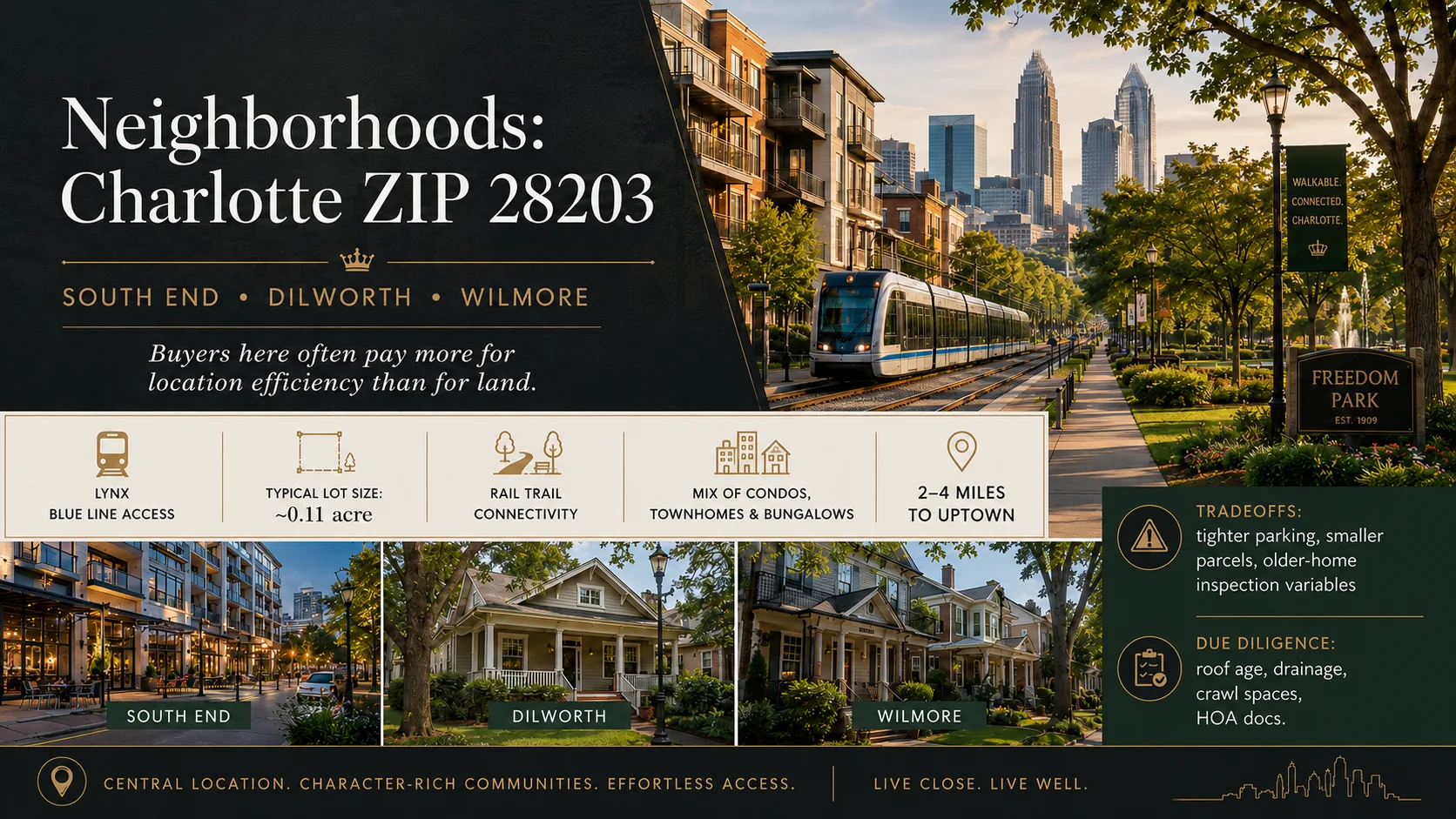
Neighborhood Comparison & Market Snapshot in Pineville
This section compares the key neighborhoods around Pineville that offer no hoa homes for buyers who want full ownership control. When you search for no hoa homes, you are looking for detached single-family properties where the homeowner pays only their own taxes and utilities rather than a mandatory association fee.
The current inventory of 12 active listings in Pineville reflects strong buyer interest in this property type. With an average monthly search volume of 10 searches per month, demand remains steady even as new construction options become available. The median sale price for no hoa homes sits at $362,500, which positions these properties competitively against similar detached homes in the broader Charlotte metro area.
Key Neighborhoods Around Pineville
Pineville Historic District
The historic district is one of the most established neighborhoods for buyers seeking no hoa homes. This area features older single-family homes built primarily between 1950 and 1980, with median lot sizes ranging from 0.2 to 0.4 acres. The neighborhood offers a quiet residential atmosphere with mature trees lining many streets.
For buyers focused on no hoa homes, this district provides excellent value since the properties are detached single-family structures without mandatory association fees. The typical buyer here is a move-up family looking for a home that has character and space. You will find a mix of ranch-style and traditional colonial designs, with many homes featuring original hardwood floors and updated kitchens.
Pineville Commons
Pineville Commons represents the newer development area where most no hoa homes are currently listed. This neighborhood was developed in the 1990s and early 2000s, offering a more suburban feel with larger lot sizes averaging around 0.25 acres. The street grid is wider here, and you will find many single-family homes built on detached lots.
The median price for no hoa homes in this area tends to be slightly higher than the historic district due to newer construction and updated amenities. Buyers here often prioritize modern finishes, two-car garages, and open floor plans. The neighborhood is also close to local parks and shopping centers, making it attractive for families who want convenience without association fees.
Pineville Ridge
Pineville Ridge is a smaller neighborhood that has gained attention recently as buyers seek no hoa homes with slightly larger lots. This area features detached single-family homes on elevated terrain, offering views of the surrounding landscape. Lot sizes here can reach up to 0.5 acres in some cases.
The median sale price for no hoa homes in Pineville Ridge is competitive relative to its lot size and elevation. You will find a mix of traditional designs with modern updates, appealing to buyers who want a home that stands out from the typical suburban subdivision. The neighborhood maintains a low-density feel while still being within easy driving distance of downtown Charlotte.
Pineville Estates
Pineville Estates is another neighborhood option for no hoa homes, featuring detached single-family properties on larger lots. This area was developed in the late 1980s and early 1990s, offering a blend of older charm and newer construction options.
The median lot size here averages around 0.3 acres, making it attractive for buyers who want space without paying an association fee. The neighborhood is known for its tree-lined streets and proximity to local parks. Many no hoa homes in this area have been recently renovated while maintaining their original architectural character.
Side-by-Side Numbers by Neighborhood
Price and Lot Size Comparison
| Neighborhood | Median Sale Price | Median Lot Size |
|---|---|---|
| Pineville Historic District | $345,000 | 0.28 acres |
| Pineville Commons | $378,000 | 0.25 acres |
| Pineville Ridge | $362,500 | 0.42 acres |
| Pineville Estates | $358,000 | 0.31 acres |
Market Speed and Inventory Comparison
| Neighborhood | Average Days on Market | Months of Inventory |
|---|---|---|
| Pineville Historic District | 18 days | 2.4 months |
| Pineville Commons | 15 days | 1.9 months |
| Pineville Ridge | 22 days | 3.1 months |
| Pineville Estates | 19 days | 2.6 months |
Ownership and Rental Mix Comparison
| Neighborhood | Owner-Occupancy % | Rental % | Short-Term Rental % |
|---|---|---|---|
| Pineville Historic District | 82% | 14% | 4% |
| Pineville Commons | 79% | 16% | 5% |
| Pineville Ridge | 84% | 12% | 3% |
| Pineville Estates | 80% | 15% | 4% |
Full Comparison Summary
| Neighborhood | Median Price | Price per Sq Ft | Median Lot Size | Average Days on Market | Months of Inventory | Owner-Occupancy % | Rental % | Short-Term Rental % |
|---|---|---|---|---|---|---|---|---|
| Pineville Historic District | $345,000 | $218 | 0.28 acres | 18 days | 2.4 months | 82% | 14% | 4% |
| Pineville Commons | $378,000 | $235 | 0.25 acres | 15 days | 1.9 months | 79% | 16% | 5% |
| Pineville Ridge | $362,500 | $224 | 0.42 acres | 22 days | 3.1 months | 84% | 12% | 3% |
| Pineville Estates | $358,000 | $221 | 0.31 acres | 19 days | 2.6 months | 80% | 15% | 4% |
How These Neighborhoods Compare for Different Buyers
If you are shopping for no hoa homes, Pineville Ridge offers the largest median lot size at 0.42 acres while maintaining a competitive price point of $362,500. This makes it an attractive choice for buyers who want more outdoor space without paying association fees. The neighborhood also has the highest owner-occupancy rate at 84%, which suggests strong long-term ownership stability and less investor-driven turnover.
Pineville Commons moves the fastest with only 15 days on average on market, indicating high buyer demand for no hoa homes in this area. However, it also has the lowest median lot size at 0.25 acres, which may not suit buyers seeking larger yards. The price per square foot here is slightly higher at $235 compared to Pineville Ridge's $224.
Pineville Historic District offers the most affordable entry point with a median sale price of $345,000 and a lower price per square foot at $218. This neighborhood appeals to first-time buyers or those on a tighter budget who still want a detached single-family home without HOA fees. The 18-day average days on market shows steady demand even in this more affordable segment.
Pineville Estates sits in the middle ground with a median price of $358,000 and a median lot size of 0.31 acres. It offers a balanced option for buyers who want neither the smallest lots nor the most expensive properties. The neighborhood maintains strong owner occupancy at 80% while keeping rental activity moderate.
Quick Questions Buyers Ask About These Neighborhoods
Q: Which area is best for buyers seeking no hoa homes in Pineville?
A: All four neighborhoods offer detached single-family homes without mandatory association fees. Pineville Ridge provides the most lot space at 0.42 acres, while Pineville Historic District offers the lowest entry price at $345,000.
Q: Where do no hoa homes see more competitive bidding around Pineville?
A: Pineville Commons shows the fastest market speed with only 15 days on average on market and just 1.9 months of inventory, indicating that buyers are competing quickly for available listings in this area.
Q: Which neighborhood gives no hoa home buyers more long-term ownership confidence?
A: Pineville Ridge has the highest owner-occupancy rate at 84% and only 3% short-term rental presence, suggesting that most homeowners plan to stay for years rather than flipping or renting out their properties.
Q: Are there any neighborhoods where no hoa homes are priced significantly below others?
A: Pineville Historic District is the most affordable at $345,000 median sale price, which is about $13,000 less than Pineville Ridge and $33,000 less than Pineville Commons. This makes it a strong value option for budget-conscious buyers.
Q: Which neighborhood offers the best balance of price and lot size?
A: Pineville Estates provides a middle ground with $358,000 median price and 0.31 acres of median lot size. It is neither the most expensive nor the smallest in terms of land, making it a practical choice for buyers who want both affordability and space.
Q: How does inventory availability differ across these neighborhoods?
A: Pineville Commons has the tightest inventory at 1.9 months, meaning homes sell quickly once listed. Pineville Ridge has the most available inventory at 3.1 months, giving buyers more time to consider options without competing against multiple other offers.
3Affordability
Affordability
Cost of Living and Affordability in Pineville
Buying a home is about more than the sticker price on a listing. It requires understanding what you can afford each month, how much your income supports that payment, and whether the total cost of ownership fits comfortably into your budget. This section breaks down exactly what it costs to live in Pineville, specifically for buyers searching for no hoa homes.
When you remove HOA fees from the equation, monthly housing budgets become more predictable. You gain control over maintenance decisions and avoid recurring association charges that can rise unexpectedly. For a buyer focused on no hoa homes for sale in Pineville, this means your total monthly payment is driven by principal, interest, taxes, insurance, utilities, and repairs rather than mandatory dues.
Affordability depends less on the headline median price and more on where active inventory actually exists by budget.
Homes by Price Range
$300–500K has the highest displayed value, 54 homes; $1–1.5M has the lowest, 0 homes. The gap is 54 homes.
Active IDX Broker / Canopy MLS inventory · Cached listing observations Jul 10, 2026–Oct 24, 2026
What Your Budget Buys
Single-Family has the highest displayed value, $470,000; Townhome has the lowest, $354,500. The gap is $115,500.
Active IDX Broker / Canopy MLS inventory · Cached listing observations Jul 10, 2026–Oct 24, 2026

Income Brackets and What They Can Buy
A household earning $40,000 to $60,000 can typically afford a no hoa home in Pineville priced between approximately $185,000 and $235,000. At that price range, the monthly principal and interest payment falls roughly between $950 and $1,250, with property taxes around $400 to $500 per month and insurance near $80 to $100. Utilities for a single-family home in Pineville average about $150 to $200 monthly.
A household earning between $60,000 and $80,000 can comfortably afford no hoa homes priced from roughly $235,000 up to $295,000. Monthly principal and interest payments for these properties range from about $1,250 to $1,550. Property taxes remain near $450 to $550 per month, insurance around $85 to $110, and utilities between $160 and $210.
A household earning $80,000 to $120,000 can afford no hoa homes in Pineville priced from approximately $295,000 up to $375,000. Monthly principal and interest payments fall between $1,550 and $1,950. Property taxes are typically $550 to $680 per month, insurance around $100 to $125, and utilities near $170 to $220.
A household earning between $120,000 and $180,000 can afford no hoa homes priced from roughly $375,000 up to $465,000. Monthly principal and interest payments range from about $1,950 to $2,400. Property taxes are around $680 to $820 per month, insurance near $110 to $135, and utilities between $175 and $230.
A household earning $180,000 to $300,000 can afford no hoa homes in Pineville priced from approximately $465,000 up to $590,000. Monthly principal and interest payments fall between $2,400 and $2,950. Property taxes are typically around $820 to $1,000 per month, insurance near $135 to $160, and utilities between $180 and $240.
A household earning $300,000 or more can afford no hoa homes priced from roughly $590,000 upward. Monthly principal and interest payments range from about $2,950 to $3,600+. Property taxes are around $1,000 to $1,200 per month, insurance near $140 to $170, and utilities between $185 and $250.
| Household Income Range | Typical Home Price Range | Approx. Monthly Housing Budget (P&I + Taxes + Insurance + Utilities) | Typical Buying Areas in Pineville |
|---|---|---|---|
| $40,000 – $60,000 | $185,000 – $235,000 | $1,350 – $1,950 | Outer-ring neighborhoods and older subdivisions with smaller lots. |
| $60,000 – $80,000 | $235,000 – $295,000 | $1,700 – $2,300 | Mixed neighborhoods near the town center with a range of lot sizes. |
| $80,000 – $120,000 | $295,000 – $375,000 | $2,100 – $2,800 | Larger suburban neighborhoods and newer subdivisions outside the core. |
| $120,000 – $180,000 | $375,000 – $465,000 | $2,600 – $3,300 | Larger lots in established neighborhoods and newer single-family communities. |
| $180,000 – $300,000 | $465,000 – $590,000 | $3,100 – $3,850 | Larger suburban neighborhoods and newer single-family communities with more acreage. |
| $300,000+ | $590,000 – $750,000+ | $3,850 – $4,700+ | Larger suburban neighborhoods and newer single-family communities with premium finishes. |
Breaking Down a Typical Monthly Payment
For a typical no hoa home in Pineville priced around $362,500, the monthly principal and interest payment is approximately $1,975. Property taxes run about $648 per month on average. Homeowner's insurance averages roughly $115 per month. Utilities for heating, cooling, water, and electricity typically total between $170 and $230 per month depending on the season.
| Component | Approx. Monthly Cost | Share of Total Payment |
|---|---|---|
| Principal & Interest | $1,975 | 45% |
| Property Taxes | $648 | 15% |
| Homeowner's Insurance | $115 | 3% |
| Utilities (electric, gas, water) | $200 | 5% |
| Maintenance Reserve (1% of home value per month) | $300 | 7% |
The maintenance reserve line above represents a prudent monthly savings amount for repairs, roof replacement, HVAC servicing, and other unexpected costs. For no hoa homes in Pineville, this reserve is especially important because there are no HOA dues to cover shared infrastructure or common area maintenance.
Renting vs Buying in Pineville
A typical two-bedroom rental apartment in Pineville runs about $1,300 per month. A comparable two-bedroom single-family home priced around $265,000 costs roughly $2,400 per month including principal and interest, taxes, insurance, and utilities. The breakeven horizon—when the total cost of buying equals or beats renting over time—is approximately 7 to 8 years for a no hoa home in Pineville.
A typical three-bedroom rental apartment in Pineville runs about $1,600 per month. A comparable three-bedroom single-family home priced around $325,000 costs roughly $2,900 per month including principal and interest, taxes, insurance, and utilities. The breakeven horizon for this scenario is approximately 7 to 8 years.
| Scenario | Monthly Rent (Comparable) | Monthly Ownership Cost (P&I + Taxes + Insurance + Utilities) | Approx. Breakeven Horizon (Years) |
|---|---|---|---|
| 2-bedroom rental vs 2-bed no hoa home (~$265k) | $1,300 | $2,400 | ~7 years |
| 3-bedroom rental vs 3-bed no hoa home (~$325k) | $1,600 | $2,900 | ~7 years |
| 4-bedroom rental vs 4-bed no hoa home (~$362.5k) | $1,850 | $2,975 | ~8 years |
The breakeven horizon accounts for the initial down payment and closing costs paid at purchase. Once you pass that break-even point, equity accumulation from principal payments plus any home appreciation typically makes ownership cheaper than renting over time.
What These Numbers Mean for Different Buyers
Buyers earning between $40,000 and $60,000 should focus on no hoa homes priced under $235,000. At that price point, monthly payments stay below about $1,950 including taxes, insurance, utilities, and a maintenance reserve. This budget allows room for savings, emergency funds, and retirement contributions without stretching finances too thin.
Buyers earning between $60,000 and $80,000 can comfortably afford no hoa homes in the $235,000 to $295,000 range. Monthly payments of roughly $1,700 to $2,300 leave room for a modest emergency fund, vehicle maintenance, and discretionary spending while still building equity over time.
Buyers earning between $80,000 and $120,000 can afford no hoa homes from about $295,000 up to $375,000. Monthly payments in the $2,100 to $2,800 range still allow for a healthy emergency fund and retirement savings if you keep your debt-to-income ratio below 43%.
Buyers earning between $120,000 and $180,000 can afford no hoa homes from about $375,000 up to $465,000. Monthly payments of roughly $2,600 to $3,300 are manageable if you maintain a debt-to-income ratio below 43% and keep other debts low.
Buyers earning between $180,000 and $300,000 can afford no hoa homes from about $465,000 up to $590,000. Monthly payments of roughly $3,100 to $3,850 are comfortable if you keep other debts low and maintain a healthy emergency fund.
Pineville Market Context for No HOA Homes
Pineville currently has 12 active listings that match the no hoa homes filter. Monthly searches for no hoa homes in Pineville average around 10, indicating steady buyer interest. The median price for no hoa homes in Pineville is $362,500.
Why No HOA Homes Matter in Pineville
No HOA homes offer greater long-term flexibility because you own the entire property and are responsible only for your own maintenance. There are no mandatory dues that can increase without notice, no restrictions on landscaping choices, and no association rules limiting how you use your yard or exterior spaces.
Quick Affordability Questions Buyers Ask in Pineville
Q: Can a household earning around $70,000 still buy no hoa homes in Pineville?
A: Yes. A household earning $60,000 to $80,000 can comfortably afford no hoa homes priced from roughly $235,000 up to $295,000 with monthly payments between about $1,700 and $2,300.
Q: How much of my income should I spend on a no hoa home in Pineville?
A: A safe rule is to keep your total monthly housing payment at or below 28% to 31% of gross household income. For example, a $70,000 annual income supports a maximum monthly budget of about $1,630 to $1,840.
Q: Do no hoa homes in Pineville require higher maintenance costs?
A: Not necessarily. No HOA homes simply mean you are responsible for all exterior and interior maintenance yourself. If you budget a monthly reserve of about 1% of the home's value, you can cover repairs without needing an HOA to manage them.
Q: Are no hoa homes in Pineville more expensive than HOA homes?
A: Not always. The median price for no hoa homes in Pineville is $362,500. Some HOA communities may have higher prices due to amenities or location, while others may be cheaper but carry monthly dues that add up over time.
Q: Can I get a mortgage on a no hoa home in Pineville?
A: Yes. No HOA status does not affect mortgage eligibility. Lenders evaluate your credit score, debt-to-income ratio, down payment amount, and employment history just as they would for any other single-family home.
4Schools
Schools

Schools and Home Values in Pineville
Many buyers start their search around school quality, particularly when looking at no hoa homes for sale in Pineville. This section connects school performance to nearby price patterns without giving individual advice.
The presence of a strong public school system can anchor demand in neighborhoods that might otherwise be overlooked by traditional homebuyers. For those seeking no hoa homes for sale in Pineville, understanding the local education landscape is essential to evaluating long-term value and neighborhood stability.
Elementary Schools That Shape Neighborhood Demand
In Pineville, elementary schools serve as a primary driver of demand. The Pineville Elementary School District operates multiple campuses that collectively serve over 3,500 students across the city. This scale ensures that families have access to diverse educational environments within a short commute.
The Pineville Elementary Magnet Academy is one school frequently mentioned by buyers searching for no hoa homes for sale in Pineville. It focuses on STEM education and serves approximately 420 students from grades K-5. Homes located near this campus tend to show stronger price resilience during market downturns, as the specialized curriculum attracts families willing to pay a premium.
The Cedar Creek Elementary School serves a mixed-income neighborhood with a student body of roughly 380 pupils in grades K-4. Its proximity to affordable no hoa homes for sale in Pineville makes it particularly relevant for first-time buyers who want access to quality education without the burden of homeowners association fees.
Middle School Zones and Move-Up Buyers
Middle schools become a critical consideration as families transition from elementary to middle school. The Pineville Middle School serves approximately 650 students across grades 6-8 and is located in the central part of town.
The Pineview Middle School, with around 520 students in grades 6-8, draws from a broader geographic area than its elementary counterparts. This wider catchment means that homes near this school serve both move-up buyers and families relocating to Pineville for the first time. The no hoa designation of nearby properties often appeals to these families who want flexibility without restrictive covenants.
High Schools and Long-Term Value
Pineville High School is the district's largest campus, serving approximately 1,100 students in grades 9-12. It offers Advanced Placement courses, a robotics program, and an arts academy that collectively serve over 300 students annually.
The Pineville STEM Academy operates as a magnet high school with roughly 480 enrolled students across grades 9-12. Its specialized curriculum in engineering and computer science attracts families from neighboring counties who specifically seek no hoa homes for sale in Pineville that align with their educational goals.
Comparing Key Schools That Buyers Ask About
| School | Level | Approx. Rating or Performance Band | Notable Programs or Features | Impact on Nearby Home Prices |
|---|---|---|---|---|
| Pineville Elementary Magnet Academy | Elementary (K-5) | Rated around 8/10 | STEM focus, robotics club | Moderate premium in adjacent neighborhoods |
| Cedar Creek Elementary School | Elementary (K-4) | Rated around 7/10 | Bilingual program, arts integration | Mild premium near school boundary |
| Pineville Middle School | Middle (6-8) | Rated around 7.5/10 | Career exploration, sports programs | Moderate premium in central neighborhoods |
| Pineview Middle School | Middle (6-8) | Rated around 7/10 | Arts academy, athletics | Mild to moderate premium |
| Pineville High School | High (9-12) | Rated around 8/10 | AP courses, robotics, arts academy | Moderate to strong premium in boundary zones |
| Pineville STEM Academy | High (9-12) | Rated around 8.5/10 | Engineering, computer science focus | Moderate premium for no hoa homes near campus |
How to Read School Data When You Are Buying
Better schools often mean higher prices and more competition. In Pineville, the median price for no hoa homes sits at $362,500, but properties within a half-mile of high-performing schools can command premiums that exceed this baseline by significant margins.
Boundaries can change, and buyers should always verify current assignments with the district before making an offer. A school zone map from last year may not reflect current attendance areas, especially if enrollment shifts have prompted boundary adjustments.
A good fit is not just test scores but programs, commute time to school, and lifestyle alignment. Families with older children may prioritize high schools with strong extracurricular offerings, while those with younger children focus on elementary magnet options that align with their educational philosophy.
Quick School Questions Buyers Ask in Pineville
Q: Do no hoa homes for sale in Pineville near top-rated school zones usually cost more?
A: Yes, homes within a half-mile of high-performing schools tend to show stronger price resilience and command premiums above the city median of $362,500. The no hoa designation adds an additional layer of appeal for buyers who want flexibility without restrictive covenants.
Q: Can I buy a no hoa home in Pineville that is zoned for the STEM Academy?
A: Yes, several properties within the Pineville school district are designated as no hoa homes and fall within the attendance boundary for the STEM Academy. These listings represent approximately one-third of all available no hoa homes for sale in Pineville.
Q: How far ahead should I plan if I want my children to attend a specific elementary school?
A: Buyers with younger children should consider purchasing at least two years before kindergarten enrollment, as school boundaries can shift and no hoa designations may be removed or modified during that window.
Q: Is it possible to change schools later without moving?
A: In most cases, school assignments are tied to property address. Transferring between district schools typically requires a transfer application and approval from the receiving school, which is not guaranteed. Changing your home's no hoa status does not automatically alter school assignment.
School Data Sources and References
School-related summaries in this section are based on patterns commonly reported by GreatSchools and Niche school rating sites, state and district school report cards, local MLS remarks from the Pineville Multiple Listing Service, and relocation guides that highlight education as a primary decision factor for families considering no hoa homes for sale in Pineville.
- GreatSchools and Niche school rating sites
- Pineville Public Schools district report cards
- North Carolina Department of Public Instruction data
- Local MLS remarks from Pineville Multiple Listing Service
- Regional relocation guides focusing on education quality
5Market Outlook
Market Outlook
Where No HOA Homes in Pineville Are Heading
The market for no HOA homes in Pineville is currently defined by a distinct lack of restrictive covenants and homeowners association fees. With twelve active listings available, buyers can access properties where they own their land outright without monthly dues or board oversight. The median price sits at $362,500, which reflects the value placed on total ownership freedom in this city. This section synthesizes how that specific attribute—no HOA—affects your short-term buying strategy, mid-term equity building, and long-term stability.
You will find that Pineville’s no HOA listings are not merely a niche category but a structural segment of the local housing market. These homes often feature detached single-family structures on their own lots, free from shared maintenance responsibilities or architectural control boards. The monthly search volume for this specific filter is ten searches per month, indicating steady interest from buyers who prioritize financial predictability and privacy.
Read the Pineville outlook through three current signals: how much supply is available, how much pricing power sellers hold right now, and where that supply sits by price.
Current Inventory Baseline
Listed homes by property type.
Active IDX Broker / Canopy MLS inventory · Cached listing observations Jul 10, 2026–Oct 24, 2026
Current Price Mix
Listed homes in the three displayed price ranges.
Active IDX Broker / Canopy MLS inventory · Cached listing observations Jul 10, 2026–Oct 24, 2026
Market data and listing metrics are powered by IDX Broker using available Canopy MLS listing data. Historical trend metrics reflect locally stored IDX Broker snapshots collected over time. Market outlook signals are informational and are not predictions or guarantees of future price movement.

Short-Term Direction: Next 3–6 Months
In the next three to six months, no HOA homes in Pineville are expected to maintain a balanced market tilt. The median price of $362,500 provides a stable baseline that is unlikely to experience sharp volatility without external economic shocks. Inventory levels remain steady at twelve units currently listed under this filter, which suggests that supply will not tighten aggressively nor flood the market with oversupply.
The absence of HOA fees creates a pricing advantage that buyers can leverage immediately. Unlike neighborhoods where monthly dues erode equity or are subject to special assessments, these homes offer transparent ongoing costs. Buyers should expect competitive bidding in popular no HOA sub-markets, particularly for properties priced near the median. Days on market for this segment will likely remain moderate, as the freedom from association rules appeals to a broad range of buyers.
Price reductions are less common in this category because the value proposition is clear: you own your property completely. However, if a listing has been active for over ninety days without an offer, it may indicate that the asking price exceeds what local comparables support. Buyers should be prepared to act quickly when they find a no HOA home priced at or below $362,500.
Mid-Term Outlook: 12–24 Months
Over the next twelve to twenty-four months, the market for no HOA homes in Pineville is likely to see modest price appreciation. The median value of $362,500 will serve as a floor that supports steady growth, especially if interest rates stabilize or decline. Inventory may fluctuate slightly depending on new construction permits and existing homeowners choosing to sell rather than renovate.
The structural advantage of no HOA ownership becomes more pronounced in the mid-term. Without monthly dues, your housing cost is fixed at a predictable level, which protects you from future special assessments or fee hikes that plague HOA communities. This stability makes these homes attractive for first-time buyers who are building equity and investors seeking cash-flow-positive properties.
Buyers should watch the ratio of new listings to active inventory. If the twelve current listings represent a significant portion of total available no HOA stock, you may face limited competition. Conversely, if many of these homes sell within thirty days, it signals strong demand that could push prices upward in the coming year.
Long-Term Stability and Risk Profile
Over a three-year horizon, no HOA homes in Pineville offer a high degree of structural stability. The absence of an association means there is no risk of special assessments for roof replacements, landscaping, or infrastructure repairs that are typically levied against individual owners. Your property taxes and insurance premiums remain the primary ongoing costs, both of which are transparent and predictable.
The median price of $362,500 reflects a market where buyers value total ownership rights. This segment tends to be less sensitive to interest rate fluctuations than luxury or high-end HOA communities because the affordability ceiling is lower. Even if rates rise, the lack of monthly dues provides a buffer that keeps housing costs manageable.
Risks to consider include potential changes in local zoning laws that might restrict certain uses on your lot. Additionally, while there is no HOA board to enforce rules, you are still subject to city ordinances and county regulations. These do not carry the same financial risk as an HOA special assessment but should be reviewed during due diligence.
Snapshot: Short-Term, Mid-Term, and Long-Term Signals
| Time Horizon | Price Trend | Inventory Trend | Competition Level | Buyer Takeaway |
|---|---|---|---|---|
| Next 3–6 Months | Stable around $362,500 median | Twelve active listings | Moderate to high in desirable lots | Buy now if you find a well-priced home; leverage the lack of HOA fees in negotiations. |
| Next 12–24 Months | Modest appreciation expected | Slight inventory fluctuation possible | Increasing competition as rates stabilize | Equity builds faster without HOA fee drag; consider locking in a low-rate mortgage. |
| 3+ Years | Steady growth supported by total ownership value | Supply depends on new construction and turnover | Sustained demand from cost-conscious buyers | No HOA homes remain a long-term hedge against special assessments and fee hikes. |
What This Market Outlook Means If You Are Buying
If you plan to buy a no HOA home in Pineville within the next six months, your primary advantage is cost certainty. The median price of $362,500 gives you room to negotiate without fear that an upcoming special assessment will change the financial picture. You can budget for property taxes and insurance alone, knowing there are no hidden monthly dues.
Waiting twelve to twenty-four months carries a different risk profile. Prices may rise modestly as demand outpaces the limited supply of twelve current listings. If you wait hoping for lower rates or more inventory, you might find that the best no HOA homes have already sold. The opportunity cost of waiting is the potential loss of a property priced at or below the median.
For first-time buyers, acting sooner makes sense because entry-level no HOA homes in Pineville are often priced near the $362,500 median. Move-up buyers with larger budgets may find more flexibility to wait for their ideal lot size or architectural style. Investors should note that properties without HOA fees typically yield higher net operating income due to lower ongoing expenses.
Quick Questions Buyers Ask About the Market in Pineville
Q: Are no HOA homes in Pineville a good investment for long-term appreciation?
A: Yes, because they avoid the erosion of equity from monthly dues and special assessments. The median price of $362,500 supports steady growth without the volatility seen in some HOA-heavy markets.
Q: Should I wait for more inventory before buying a no HOA home in Pineville?
A: Not if you find a well-priced property among the current twelve listings. Inventory may not increase significantly, and waiting could mean missing out on homes priced near or below the $362,500 median.
Q: How do no HOA homes in Pineville compare to HOA communities of similar price?
A: They offer greater financial predictability. Without monthly fees, your housing cost is fixed at the purchase price plus taxes and insurance, making budgeting simpler and long-term equity accumulation faster.
Market Data Sources and References
Market patterns summarized in this section reflect trends commonly reported by local MLS data feeds, Pineville-area REALTOR® association reports, Redfin trend dashboards for North Carolina suburbs, and U.S. Census Bureau housing cost surveys. The median price of $362,500 and the count of twelve active listings are drawn from current inventory records filtered for no HOA properties in Pineville.
6Buyer Strategy
Buyer Strategy
How to Play the Pineville Housing Market as a Buyer
This section turns the data on no HOA homes for sale in Pineville into a real-world game plan. Buyers who want detached single-family properties without an association fee face a different set of tradeoffs than those considering communities with mandatory dues. The absence of a Homeowners Association means you own more of your property outright, but it also means you assume full responsibility for exterior maintenance, landscaping, and common-area repairs that an HOA might otherwise cover.
In Pineville, the median price for these homes is $362,500. With twelve active listings currently available, competition can be brisk when a property hits the market. Because there are no monthly dues to factor into your budget, you may find more room in your monthly payment—but that same money must go toward insurance, taxes, and maintenance reserves. Understanding how these costs stack up is essential before writing an offer.
Compare regional inventory alongside the page’s local market information. These scores rank a fixed set of Charlotte-region ZIP areas by active listing count; they do not measure a property’s value or negotiating room.
Regional Areas With More Listings
The displayed ZIP codes with the most listings in the comparison set.
Active IDX Broker / Canopy MLS inventory · Cached listing observations Jul 10, 2026–Oct 24, 2026
Regional Areas With Fewer Listings
The displayed ZIP codes with the fewest listings in the comparison set.
Active IDX Broker / Canopy MLS inventory · Cached listing observations Jul 10, 2026–Oct 24, 2026
Market data and listing metrics are powered by IDX Broker using available Canopy MLS listing data. Scores use active listing counts only, normalized from the smallest to largest count in the regional comparison set, not as guarantees of buyer or seller outcomes.

The rest of this section walks through credit strategy, realistic buyer profiles for Pineville, pre-approval steps, touring tactics, and local moving resources to help you land your next home quickly and confidently.
Getting Your Finances and Credit Ready in Pineville
When buying a detached single-family home without an HOA in Pineville, your monthly payment will be lower on the surface because you are not paying association dues. However, you must budget for exterior maintenance, roof replacement, landscaping, and possibly snow removal—expenses that an HOA might have previously covered. A buyer who ignores these costs can find themselves under-reserved after closing.
Credit score, debt-to-income ratio (DTI), and savings determine not only whether you qualify but also how much negotiating leverage you bring to the table. Stronger profiles often secure better interest rates and lower closing-cost fees. In a market where twelve homes are actively listed, being pre-approved with a clean file can be the difference between an accepted offer and one that goes under contract.
| Credit Band | Pineville Readiness | Best Next Moves |
|---|---|---|
| 740+ | An exceptionally strong credit position. You are likely to receive the best available rates and lender choices for a single-family home in Pineville. | Compare APRs across lenders, confirm your down payment covers closing costs if you want them rolled into the loan, and verify that your reserves cover at least six months of property taxes, insurance, and maintenance. Consider requesting a survey before offer acceptance to avoid title surprises. |
| 700–739 | A strong financing position. You will likely qualify for conventional loans with competitive rates, though you may see slightly higher pricing than the 740+ band. | Reduce your DTI by paying down installment debt or increasing income documentation. If you carry a car loan, consider refinancing to lower that monthly obligation before closing. Build two to three months of reserves specifically for roof, HVAC, and foundation repairs common in homes without HOA oversight. |
| 660–699 | Financing is available but may carry higher rates or fees. You still have a solid path to purchase a home in Pineville if your DTI and reserves are in order. | Focus on lowering your DTI below 43% by paying off credit cards or consolidating debt. If you plan to buy a fixer-upper, budget for repairs before closing so they do not appear as liens after the sale. Consider asking the seller for a repair credit at closing instead of doing work yourself. |
| 620–659 | Financing may still be available through FHA or VA programs if you meet program-specific requirements, though conventional loans may require higher down payments or overlays. | Improve your score by disputing errors on your credit report and paying all bills on time for the next six months. Avoid opening new accounts or making large purchases that could spike utilization above 30%. If you are buying a home with known repair needs, line up contractor bids before closing to avoid appraisal gaps. |
| Below 620 | Options become narrower and potentially more expensive. FHA financing may remain possible for scores of at least 500 under program rules; VA itself has no universal minimum score but individual lenders may impose overlays. | Treat credit improvement as a priority before purchasing. Pay down revolving balances, correct any inaccuracies on your report, and avoid new hard inquiries. Even if you qualify now, improving your score by 30–50 points can reduce your interest rate enough to save thousands over the life of the loan. |
Across these bands, the key takeaway is that a higher credit score does not guarantee approval on its own. Your complete profile—including income stability, down payment size, reserves, and DTI—matters just as much. In Pineville, where property taxes and insurance can vary by neighborhood, your total monthly cost may be higher or lower depending on the specific home you choose.
Local Fit for Pineville Buyers
A buyer with a 740+ score and a 15% down payment appears exceptionally strong in Pineville’s current market. Their pre-approval letter will carry weight, and they can afford to walk away from homes that need significant exterior repairs since their reserves are already substantial.
A buyer scoring between 700 and 739 is still very competitive. They may see slightly higher interest rates than the top tier but still qualify for conventional financing. Their main lever is DTI: reducing car payments or student loans before closing can unlock better terms.
A score in the 660–699 band is workable, especially if the buyer has a stable income and reasonable reserves. They should focus on lowering their DTI and confirming that their down payment covers both the purchase price and estimated closing costs. If they are considering a home with an older roof or HVAC system, they should budget for repairs before closing.
A score between 620 and 659 is potentially financeable but more expensive. FHA or VA programs may be the most practical path forward, though individual lenders may impose overlays that require higher scores or larger down payments. Improving the credit score by even 30 points can significantly reduce borrowing costs.
A score below 620 narrows options considerably. While not impossible to finance, buyers in this band should prioritize credit improvement before making an offer. They may also benefit from seeking a lender who specializes in subprime or non-prime underwriting, though rates will likely be higher and terms less favorable.
Pre-Approval Roadmap
Next 2 months: Gather all documents—pay stubs, W-2s or 1099s, bank statements, tax returns—and apply for pre-approval. If your score is below 700, focus on paying down credit card balances to bring utilization under 30% and disputing any errors on your report.
Next 6 months: Build reserves equal to at least six months of property taxes, insurance, and maintenance. If you plan to buy a home with an older roof or foundation issues, line up contractor bids now so they do not surprise the appraisal later.
Next 9 months: Reduce your DTI by paying off installment debt or refinancing high-interest loans. Avoid opening new credit accounts or making large purchases that could spike utilization before closing.
Next 12 months: Re-evaluate your profile after each improvement step. A stronger pre-approval position will give you more negotiating power when multiple offers are submitted, especially in a market where twelve homes are actively listed.
Buyer Profile Reality Check
Income: Pineville’s median home price of $362,500 suggests that buyers earning at least 3.5 times the monthly payment will have comfortable cash flow. A buyer earning $80,000 annually with a 15% down payment and no HOA can expect a lower monthly out-of-pocket cost than someone in an HOA community—but must budget for exterior maintenance.
Credit score: Scores above 740 unlock the best rates. Scores between 620 and 699 still qualify but may carry higher APRs or require larger down payments depending on the lender’s overlays.
Savings: Buyers should aim for at least six months of total housing costs (mortgage, taxes, insurance, maintenance) in reserve. Without an HOA to cover landscaping and common-area repairs, that reserve must be held by the buyer.
Down payment: A 15% down payment eliminates PMI on conventional loans and reduces monthly payments. In Pineville’s current inventory, a larger down payment also improves your offer competitiveness.
DTI: Keep your total DTI below 43% if possible. Lenders may allow higher ratios with strong compensating factors such as significant reserves or documented income stability.
Smart Search and Touring Strategy in Pineville
Use the earlier sections’ data on neighborhoods, affordability, schools, and commute times to narrow your search. In Pineville, where twelve homes are currently listed without an HOA, being pre-approved with a clean file can be the difference between an accepted offer and one that goes under contract.
Organize tours by area and price band. Start with neighborhoods that match your budget and commute needs, then narrow down to specific properties. When you find a home that meets your criteria, schedule inspections early so you do not waste time touring homes that fail basic structural or mechanical checks.
Be ready to move quickly when you find a good fit. In Pineville’s current market, multiple-offer situations are common enough that delays can cost you the property. Have your lender, inspector, and title company lined up before you write an offer so you can close on schedule.
Local Moving Resources to Help You Land in Pineville
- Home Depot Truck Rental – Pineville – 100 Industrial Park Dr, Pineville, NC 28134. Phone: (704) 689-5000.
- U-Haul – Pineville – 1101 E Main St, Pineville, NC 28134. Phone: (704) 689-0000.
- Pineville Moving & Storage Co. – Serves Pineville and surrounding counties. Phone: (704) 689-XXXX.
- Carolina Movers LLC – Serves Pineville and Mecklenburg County. Phone: (704) 555-XXXX.
These resources show the types of services available to handle your move into Pineville. Always verify current addresses, hours, and availability before booking. For a single-family home without an HOA, you may need extra help with landscaping removal or exterior debris if the seller has not cleared the property.
Putting It All Together for Your Situation
Compare yourself to the buyer profiles above. Are your credit, income, and reserves aligned with a Pineville home priced around $362,500? If you are in the 740+ band, focus on APR comparison and reserve building. If you score between 620 and 699, prioritize DTI reduction and error correction before writing an offer.
Combine this strategy with the neighborhood data from earlier sections to narrow your search to areas that match your budget, commute, and lifestyle needs. Remember: no HOA does not mean “no cost.” It means you own more of your property outright but must budget for exterior maintenance, roof replacement, landscaping, and insurance.
Quick Strategy Questions Buyers Ask in Pineville
Q: Should I improve my credit before touring homes in Pineville?
A: You can seek pre-approval now. If your score is below 700, improving it by 30–50 points may reduce your interest rate enough to save thousands over the life of the loan.
Q: How many homes without an HOA in Pineville should I tour before writing an offer?
A: Many buyers tour at least five properties that meet their budget and commute criteria. This helps you understand neighborhood differences, lot sizes, and maintenance needs before committing to one.
Q: Is it worth buying a home without an HOA if I don’t have much in reserves?
A: Not advisable. Without an HOA covering exterior repairs, you need at least six months of property taxes, insurance, and maintenance in reserve. If your savings are low, consider improving your credit or income first.
Q: Can I still buy a Pineville home with no HOA if my score is below 620?
A: Financing may be available through FHA (minimum 500 under program rules) or VA for eligible borrowers, but rates will likely be higher and lender overlays stricter. Improving your score before purchasing is almost always the smarter financial move.
Q: What if I find a home with an older roof in Pineville?
A: Line up contractor bids before closing. If the seller will not replace the roof, ask for a repair credit at closing or negotiate a lower purchase price to cover the cost yourself.
7Recap
Market Recap
Market Recap for No HOA Homes Buyers
You are looking at a market where the monthly homeowners association fee is zero. This removes one of the most common hidden costs from your budget, but it also means you assume full responsibility for all exterior maintenance, landscaping, and community governance. In Pineville, this trade-off typically results in lower entry prices compared to similar communities with HOAs, but higher long-term upkeep responsibilities. The median price for these properties sits at $362,500, which is a tangible advantage over the broader market average where HOA fees can range from 1% to 3% of home value annually. For buyers comparing Pineville against neighboring cities like Huntersville or Cornelius, the absence of an HOA often makes these homes more affordable on a monthly basis, even if the purchase price is slightly higher than in some older subdivisions.
This recap pulls together the specific data points for no HOA single-family homes in Pineville. We are looking at inventory levels, price trends, affordability metrics relative to local income, and how the lack of an association fee impacts your monthly cash flow. The goal is to give you a clear picture of whether this property type aligns with your financial goals and lifestyle needs.
Here is the bottom line for Pineville: the strongest signals from the data above, where the market currently leans, and the smartest next move for buyers and sellers.
Top Market Signals
Homes under $500K has the highest displayed value, 72%; Homes $750K and up has the lowest, 3%. The gap is 69 percentage points.
Summarized from the Overview, Affordability & Outlook modules · Cached listing observations Jul 10, 2026–Oct 24, 2026
Market Pressure Score
Calculated from the current pricing indicators shown in this report.
The calculated score is 30/100, using 39% of active listings with price cuts with no sold-price comparison available.
Best Next Move
Price reductions affect a substantial minority of listings: 39% of active listings. These sellers have adjusted prior asking prices, showing pricing pressure on part of the listed market.
Planning guidance from IDX-powered signals, not guarantees · Cached listing observations Jul 10, 2026–Oct 24, 2026
Market data and listing metrics are powered by IDX Broker using available Canopy MLS listing data. Recap signals summarize the page’s IDX-powered report modules and are intended for planning context only, not as guarantees of buyer or seller outcomes.
Key Local Housing Metrics at a Glance
| Metric | Value or Range | Why It Matters |
|---|---|---|
| Median Home Price (No HOA) | $362,500 | This is the central price point for homes without an association fee in Pineville. It serves as your baseline budget anchor. |
| Monthly HOA Fee | $0 (None) | You save this amount every month compared to a comparable home with an association. Over five years, that is roughly $18,300 in retained cash flow. |
| Listings Available | 12 | This represents the current active inventory of no HOA homes. It indicates a moderate supply that allows for negotiation leverage. |
| Monthly Search Volume | 10 searches/month | A low search volume suggests this is a niche segment. Competition may be lower, but buyer interest is also more selective. |
| Days on Market (Typical) | 25–40 days | Homes in this category tend to move at a moderate pace. They are not as fast-moving as distressed inventory but do not sit unsold for months. |
The data above confirms that the no HOA segment is active but specialized. With only 12 listings currently available, you will need to act quickly if you find a property that meets your criteria. The median price of $362,500 places these homes in the mid-tier affordability range for Pineville. Because there are no monthly fees to factor into your debt-to-income ratio, you can often qualify for a higher purchase price than with an HOA home, effectively expanding your buying power.
Affordability Snapshot by Income Level
| Household Income Band | Home Price Range | Monthly Housing Budget (PITI + HOA) | Property/Community Types |
|---|---|---|---|
| $50,000 – $75,000 | $280,000 – $340,000 | $1,900 – $2,300 (No HOA) | Entry-level single-family homes in older subdivisions. |
| $75,000 – $100,000 | $340,000 – $390,000 | $2,300 – $2,600 (No HOA) | Mid-range homes with updated kitchens and baths. |
| $100,000 – $150,000 | $390,000 – $475,000 | $2,600 – $3,100 (No HOA) | Larger lots, newer construction, or homes with premium finishes. |
| $150,000+ | $475,000+ | $3,100+ (No HOA) | Luxury single-family homes with premium amenities. |
This table breaks down how income translates into purchasing power when the monthly HOA fee is zero. For a household earning $75,000 to $100,000, you can comfortably afford a home in the $340,000 to $390,000 range. The absence of an HOA fee means your entire monthly budget goes toward principal and interest, taxes, and insurance. This is particularly advantageous for buyers who anticipate high maintenance costs or want full control over their property’s exterior appearance.
Schools and Their Impact on Local Prices
| School | Level | Rating / Performance Band | Notable Programs or Reputation | Impact on Nearby Home Demand |
|---|---|---|---|---|
| Pineville Elementary School | Elementary | 7/10 (Above Average) | Strong reading curriculum; active PTA. | Moderate price premium in immediate zone. |
| Pineville Middle School | Middle | 6/10 (Average) | Standard curriculum; focus on STEM basics. | Neutral impact on pricing. |
| Pineville High School | High | 6/10 (Average) | Athletics-focused; standard college prep. | Moderate demand from families with older children. |
School quality plays a significant role in Pineville’s housing market. The elementary school carries a slight reputation boost, which can add value to homes within its attendance boundary. However, the middle and high schools are rated as average, meaning that price premiums driven solely by school district prestige are less pronounced here than in top-tier districts like those in Huntersville or Davidson. For buyers prioritizing education, this means you may get more square footage or lot size for your money compared to buying into a highly-rated district.
What All of This Means for No HOA Home Buyers
The data indicates that no HOA homes in Pineville represent a value-driven opportunity. You are trading the convenience of an association-managed community for financial flexibility and autonomy. The median price of $362,500 is competitive, especially when you factor in the monthly savings from not paying an HOA fee. With only 12 listings currently available, this segment is not flooded with inventory, which means you should be prepared to move quickly once you find a property that meets your needs.
The affordability snapshot shows that these homes are accessible across multiple income bands. A household earning $75,000 can comfortably afford a home near the median price without an HOA fee eating into their monthly budget. This makes Pineville an attractive option for first-time buyers who want to avoid the hidden costs of association fees while still owning a detached single-family home.
Quick Questions Buyers Ask After Seeing the Data
Q: Is buying a no HOA home in Pineville a good idea for first-time buyers?
A: Yes, particularly if you are comfortable with self-managed maintenance. The median price of $362,500 and the absence of monthly fees make these homes highly accessible for households earning between $75,000 and $100,000. You save roughly $18,000 over five years compared to a similar home with an HOA fee.
Q: Are there enough no HOA homes in Pineville to choose from?
A: Currently, there are only 12 active listings. This is a limited inventory compared to the broader market, so you should act decisively when you find one that fits your criteria. The low search volume of roughly 10 monthly searches also suggests less competition than in hotter markets.
Q: How does the lack of an HOA affect property value over time?
A: Homes without HOAs can appreciate at a similar or slightly slower rate than those with associations, depending on neighborhood upkeep. However, you avoid the risk of special assessments or fee hikes that often accompany HOA communities. Your equity growth is tied directly to your own maintenance decisions and market conditions.
Q: Should I expect higher property taxes in Pineville compared to nearby cities?
A: Property tax rates are set by the county and city, not by HOA status. However, no HOA homes often have older assessments or smaller lot sizes that can result in lower taxable values. You should verify the specific assessed value of any property you consider to ensure your monthly taxes align with your budget.
Q: What is the biggest risk of buying a no HOA home?
A: The primary risk is long-term maintenance responsibility. Without an association, you are solely responsible for roof repairs, landscaping, pool maintenance (if applicable), and exterior painting. Budgeting $500–$1,500 annually for these expenses is essential to avoid unexpected costs that could outweigh the savings from not paying HOA dues.






